
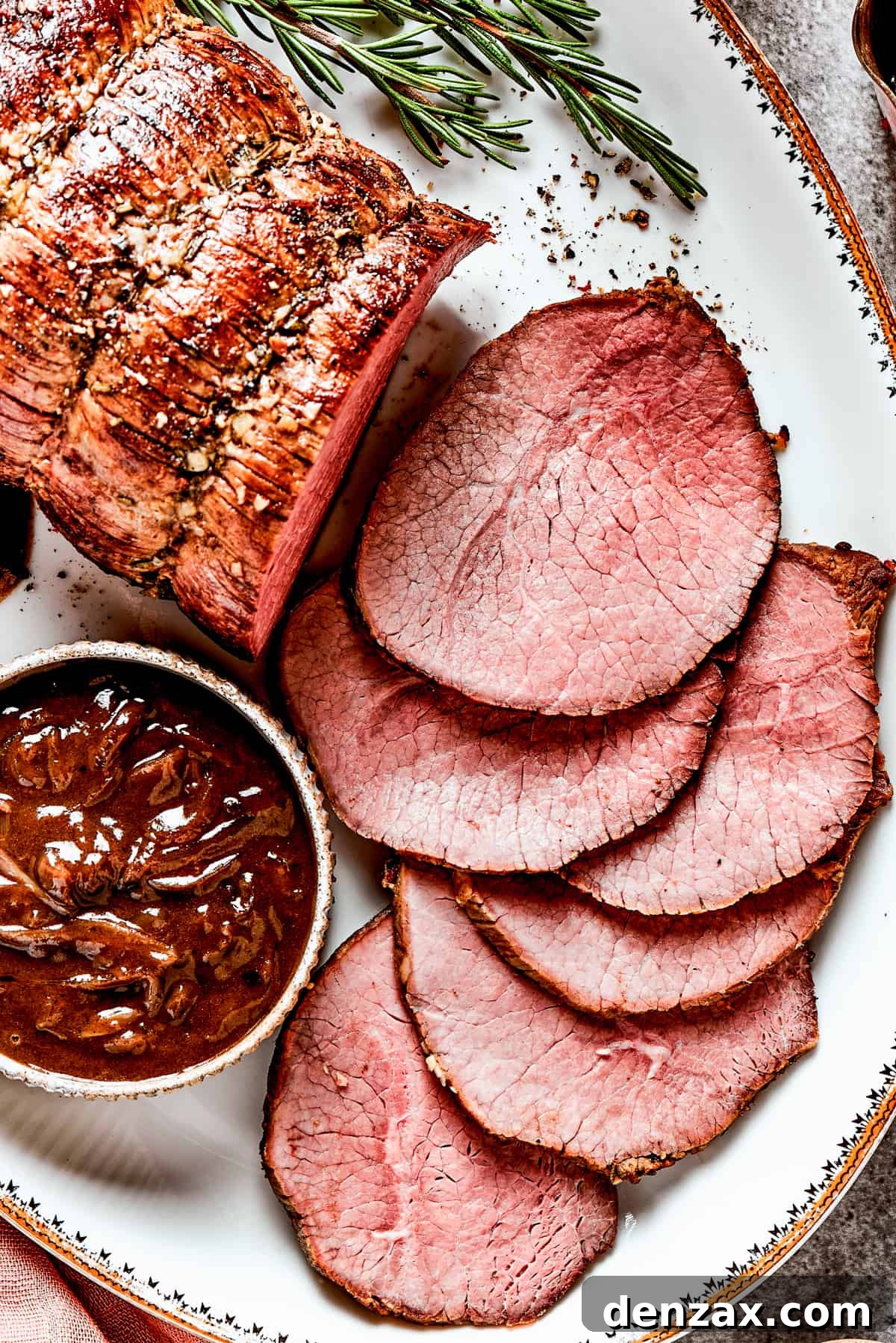
Unlock the secret to a truly memorable meal with this incredible **top round roast recipe**. Designed to deliver a juicy, tender, and incredibly flavorful experience, it’s the perfect centerpiece for elegant holiday feasts, special occasions, or a comforting Sunday dinner. Paired simply with a rich caramelized onion brown gravy and classic mashed potatoes, this dish promises to impress even the most discerning palates and become a cherished addition to your culinary repertoire.
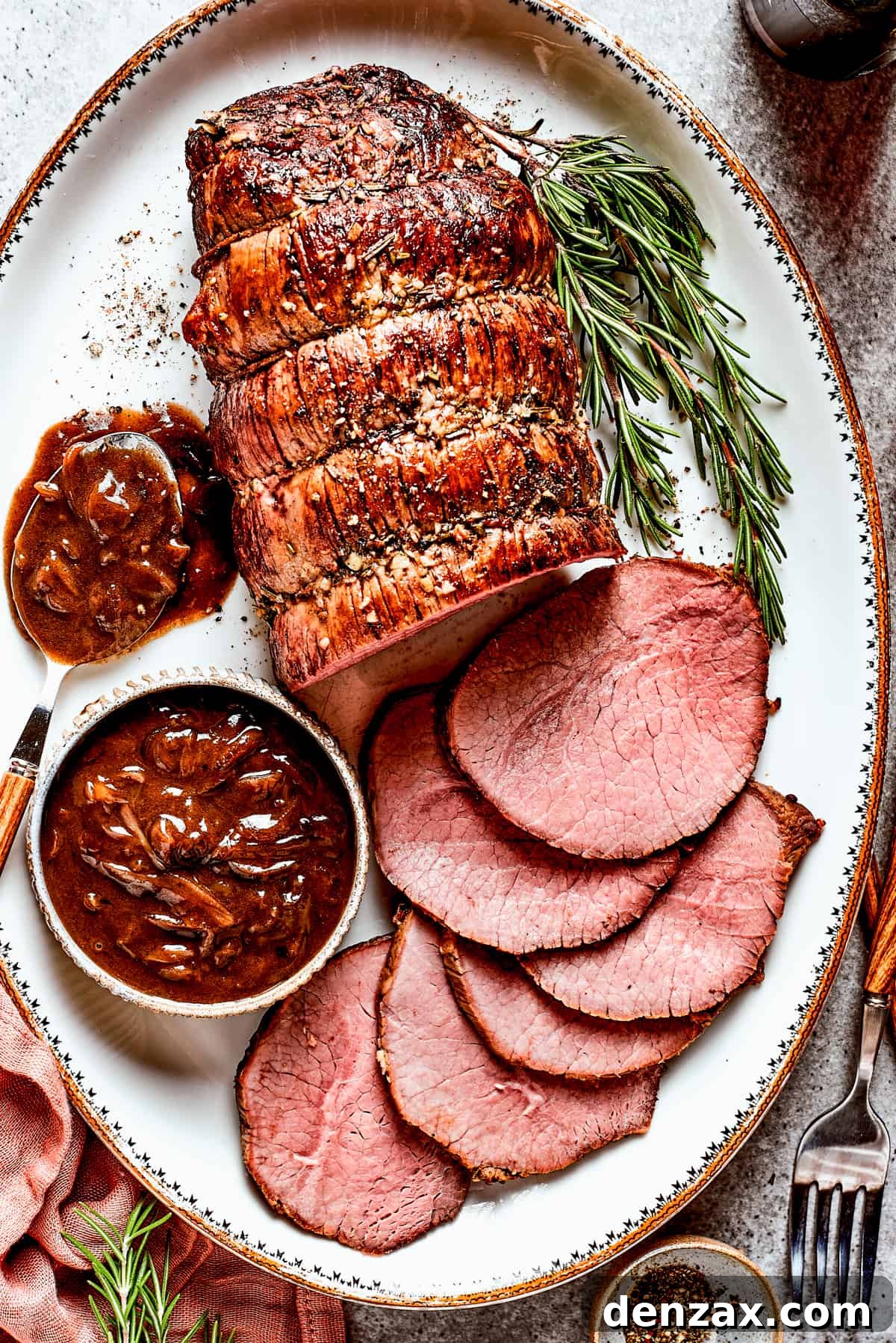
Why This Top Round Roast Recipe Shines
There are countless reasons why this particular top round roast recipe has become a favorite. It masterfully combines simplicity with sophistication, making gourmet-quality roast beef accessible to every home cook. Here’s why you’ll absolutely adore it:
- Effortless Elegance: Don’t let the impressive presentation fool you. This recipe is surprisingly straightforward. If you can confidently season meat and tie a simple knot, you have all the skills needed to create this spectacular dish. It’s perfect for those who want a show-stopping meal without spending all day in the kitchen.
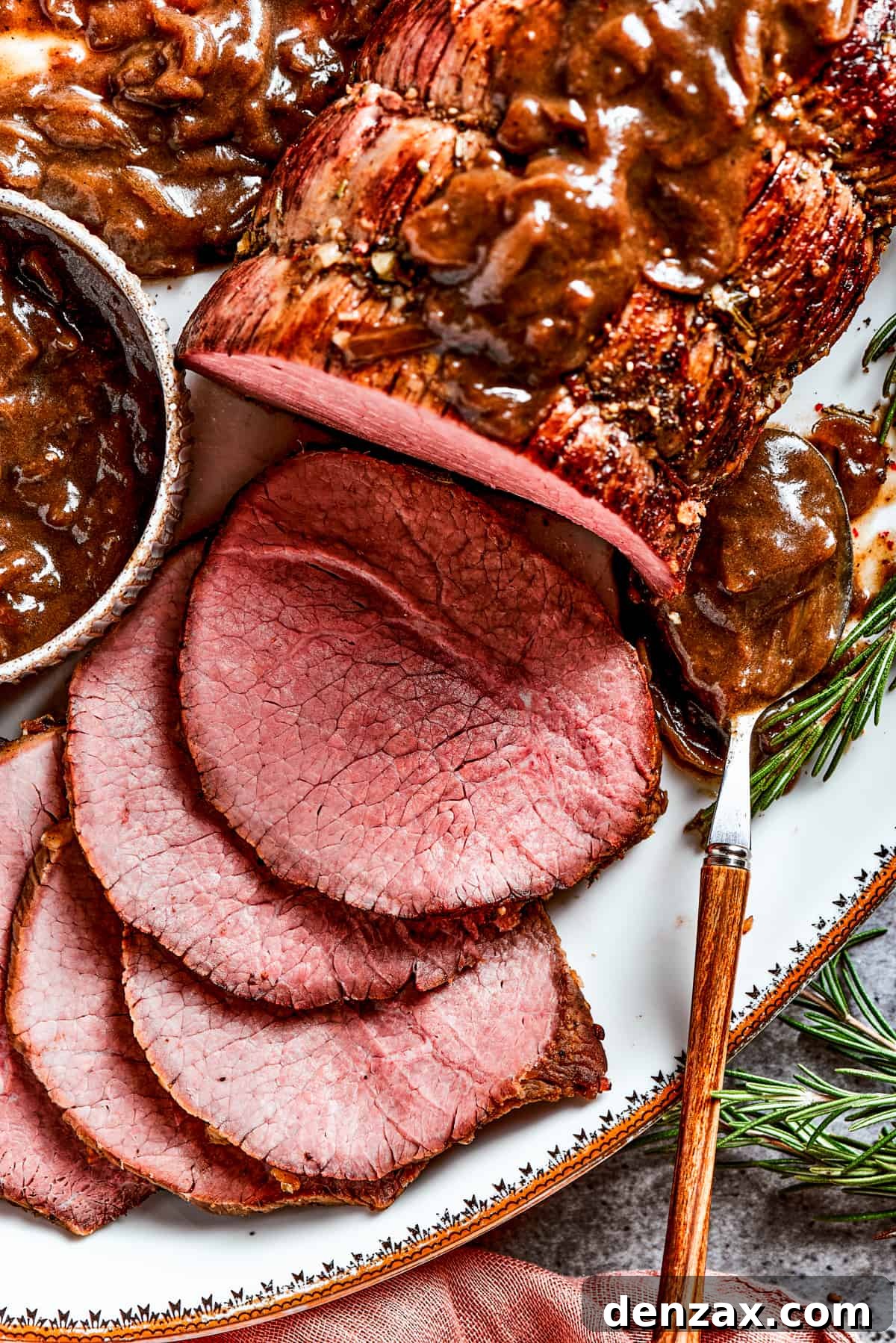
- A Truly Impressive Presentation: The final result is a beautifully seared and perfectly cooked top round roast, radiating warmth and inviting aromas. Its golden-brown crust and tender, rosy interior make it an absolute showstopper, ideal for gracing any holiday table or special Sunday gathering.
- Bursting with Flavor: Despite its lean nature, the top round cut is transformed into a succulent masterpiece through generous seasoning with fresh herbs like rosemary and pungent garlic. These aromatics penetrate deep into the meat, creating a delicious symphony of flavors that is both robust and refined. The accompanying caramelized onion gravy adds another layer of rich, savory depth.
- Budget-Friendly Indulgence: While it presents like a luxurious meal, top round roast is one of the more economical cuts of beef available. This recipe allows you to serve an exceptionally fancy dinner without breaking the bank, proving that incredible flavor and tenderness don’t always come with a hefty price tag.
Understanding and Selecting Top Round Beef
Before diving into the cooking process, it’s essential to understand the cut you’re working with. Top round is a lean, flavorful cut of beef derived from the inner muscle of the cow’s hind leg. It’s known for its low fat content and firm texture, making it an excellent choice for roasting when prepared correctly.
Many people often confuse top round with other cuts, or even with a cooking method like “London Broil.” To clarify, London Broil is not a specific cut of meat; rather, it’s a preparation method typically used for tougher cuts like flank steak or top round itself, often involving marinating and broiling or grilling. For a true roast, ensure you’re purchasing a “beef top round roast” from your butcher.
When selecting your top round roast, look for a piece with a vibrant red color and a minimal amount of visible fat. While it is a lean cut, a thin layer of fat on one side (known as the fat cap) can add flavor and moisture during cooking; however, this recipe focuses on maximizing flavor through searing and herb infusion rather than fat marbling. Aim for a roast that feels firm to the touch and has a consistent shape, which will contribute to more even cooking.
Essential Ingredients for Your Succulent Top Round Roast
Crafting the perfect top round roast requires a selection of fresh, high-quality ingredients that work in harmony to elevate the meat’s natural flavor. Each component plays a crucial role in achieving the desired tenderness and aroma.
- Beef Top Round Roast: As discussed, the core of our recipe. A 4-pound roast is ideal for feeding approximately 6-8 people. Bringing it to room temperature before cooking is a critical step for even heat distribution.
- Fresh Rosemary: The aromatic backbone of our herb rub. Fresh rosemary provides a piney, peppery flavor that beautifully complements beef. If fresh rosemary isn’t available, fresh thyme is an excellent alternative, offering a slightly more earthy, minty note.
- Fresh Garlic: Minced garlic cloves are indispensable for creating a robust flavor profile. Their pungent and savory notes infuse the roast, making every bite delicious. Use fresh garlic for the best results; pre-minced jarred garlic lacks the vibrant flavor.
- Olive Oil: Used both for searing the roast and creating the herb paste. A good quality olive oil can enhance the overall flavor without overpowering the other ingredients.
- Kosher Salt & Freshly Ground Black Pepper: Generous seasoning is vital for a lean cut like top round. Kosher salt provides a clean, briny flavor and helps draw out moisture initially, while black pepper adds a gentle warmth and spice.
For The Rich Caramelized Onion Gravy:
- Unsalted Butter: The foundation for caramelizing the onions, adding a rich, creamy base to the gravy.
- Yellow Onions: Thinly sliced yellow onions are cooked slowly until deeply caramelized, contributing a sweet and savory complexity to the gravy. The patience required for this step is well worth the effort.
- Beef Broth: Provides the liquid base for the gravy. Opt for a high-quality, low-sodium beef broth to control the seasoning and ensure a rich flavor. Vegetable or chicken broth can be used as substitutes, though beef broth offers the most traditional taste.
- Dry Red Wine: A dry red wine, such as Cabernet Sauvignon or Merlot, adds incredible depth and complexity to the gravy by deglazing the pan and releasing all those flavorful browned bits. If you prefer to avoid alcohol, an equal amount of additional beef broth or even a splash of balsamic vinegar can be used, though the flavor will differ slightly.
- Cornstarch: Essential for thickening the gravy to a perfect consistency. Mixed with cold water to form a slurry, it ensures a smooth, lump-free sauce.
Step-by-Step Guide to Roasting Perfection
Creating a perfectly roasted top round is a process that balances heat, time, and technique. Follow these detailed steps to ensure a tender, juicy, and flavorful roast.
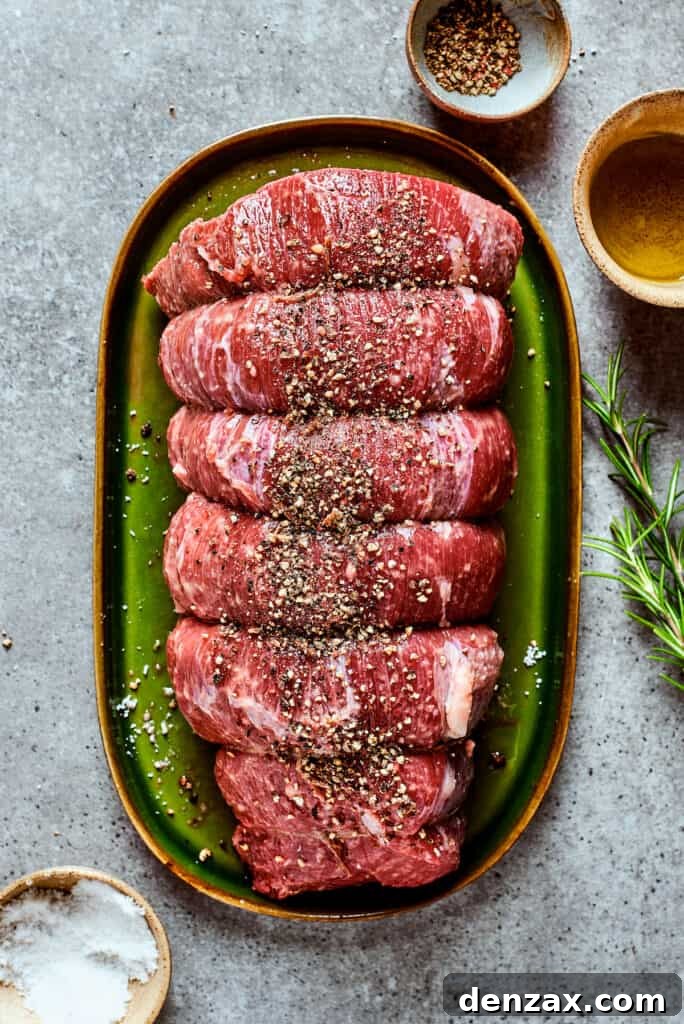
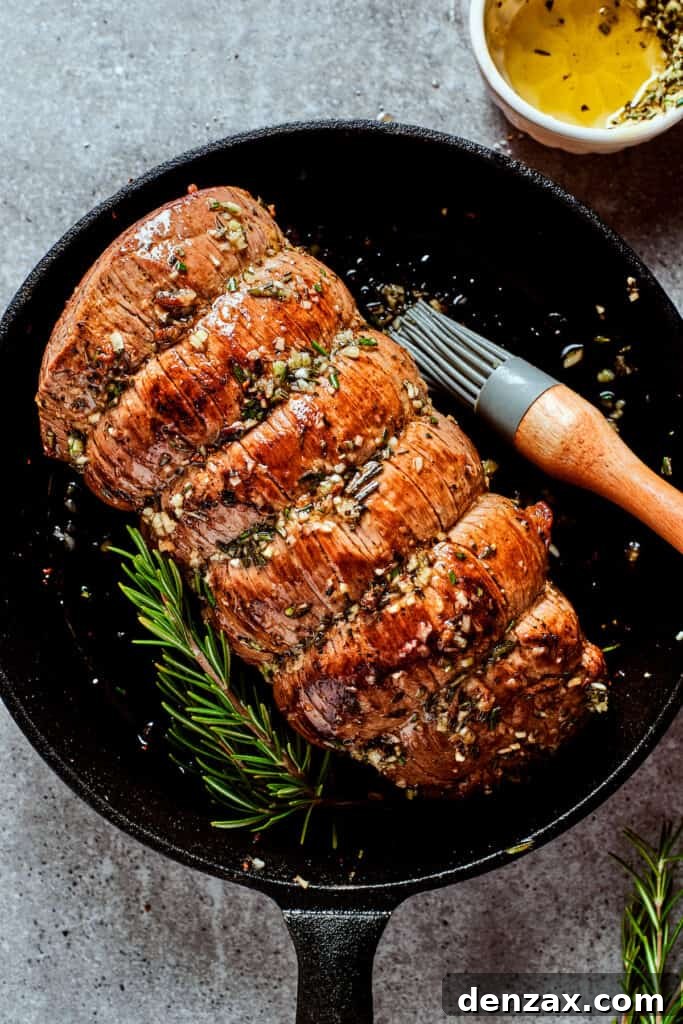
- Bring to Room Temperature: This is a crucial first step. Remove your top round roast from the refrigerator 1 to 2 hours before you plan to cook it. Allowing the meat to come closer to room temperature ensures that it cooks more evenly from edge to center, preventing a cold, undercooked interior or an overcooked exterior.
- Preheat Your Oven: Set your oven to a low temperature of 250°F (120°C). Cooking a lean cut like top round at a lower temperature for a longer period helps break down tough fibers, resulting in a more tender product.
- Prepare the Roast: Pat the entire surface of the beef top round roast thoroughly dry with paper towels. Removing excess moisture is essential for achieving a beautiful, crispy sear. Season the roast generously on all sides with kosher salt and freshly ground black pepper.
- Tie the Roast: Use kitchen twine to tie the roast at regular intervals (every 1-2 inches). This helps the roast maintain its shape during cooking and promotes more even heat distribution, resulting in a uniform texture.
- Create the Herb Mixture: In a small bowl, combine the minced fresh rosemary and garlic. Add 2 tablespoons of olive oil and stir well to form a fragrant paste. This mixture will infuse the roast with incredible flavor.
- Sear for Flavor and Crust: Heat the remaining 2 tablespoons of olive oil in a heavy-bottomed skillet or Dutch oven (cast iron works wonderfully) over medium-high heat until shimmering. Carefully place the seasoned and tied roast in the hot skillet. Sear on all sides until a deep golden-brown crust forms, about 1-2 minutes per side, totaling approximately 6-8 minutes. This searing step, known as the Maillard reaction, is vital for developing rich flavors and creating an appealing exterior.
- Apply the Herb Paste: Once seared, remove the roast from the heat. Generously coat the entire browned surface of the roast with the prepared rosemary and garlic paste. This ensures the aromatic flavors permeate the meat as it roasts.
- Slow Roast to Perfection: Place the skillet with the coated roast into your preheated 250°F (120°C) oven. Roast uncovered for approximately 20 to 25 minutes per pound, or until the internal temperature reaches your desired level of doneness. For a 4-pound roast, this typically takes between 80 to 100 minutes. Always use an instant-read meat thermometer inserted into the thickest part of the roast (avoiding bone or fat) to accurately check the temperature. Refer to our cooking temperature guidelines below for specific doneness levels.
- The Essential Resting Period: Once the roast reaches your desired internal temperature, remove it from the oven and transfer it to a clean cutting board. Tent it loosely with aluminum foil. Let the roast rest undisturbed for at least 15 to 20 minutes. This resting period is crucial; it allows the muscle fibers to relax and the internal juices, which have been pushed to the center during cooking, to redistribute throughout the meat. Skipping this step will result in a dry, less flavorful roast.
Mastering the Rich Caramelized Onion Gravy
No perfect roast beef is complete without a luscious gravy. This caramelized onion gravy is built directly in the same pan, capturing all the glorious pan drippings and browned bits for maximum flavor.
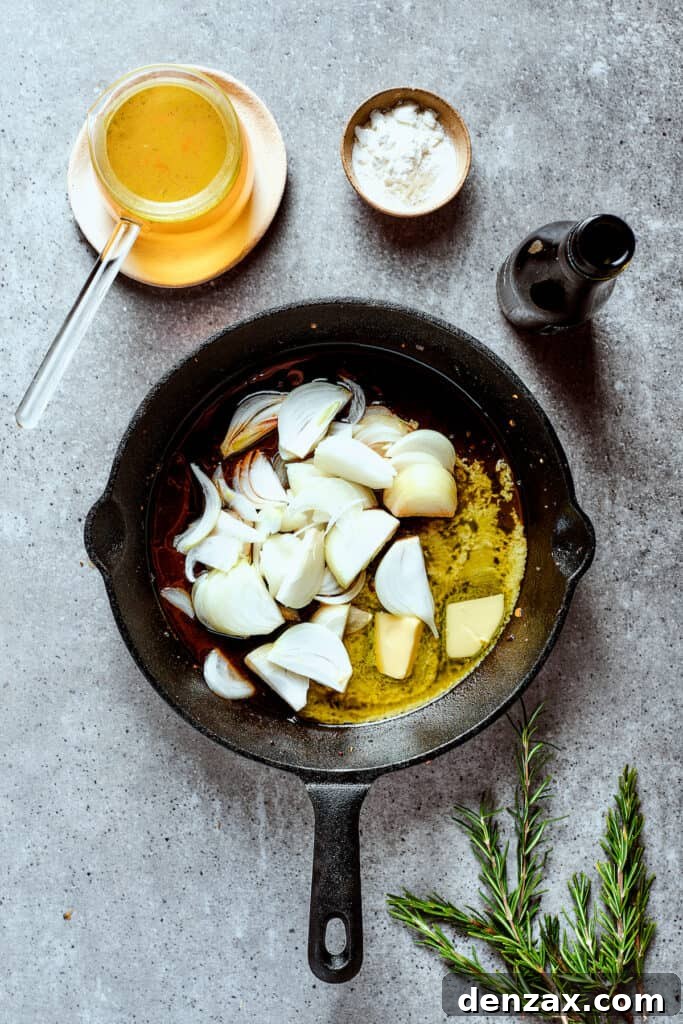
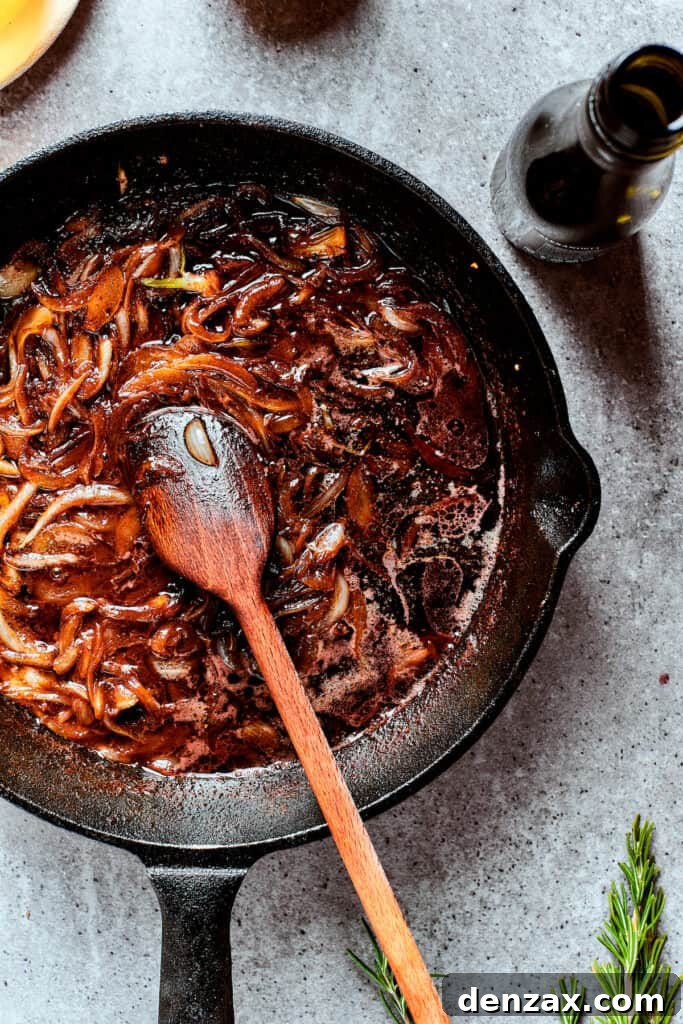
- Caramelize the Onions: While the roast is resting, return the same skillet (with any remaining drippings) to medium heat. Add the 2 tablespoons of unsalted butter and let it melt. Add the thinly sliced yellow onions to the pan. Cook patiently, stirring occasionally, for about 10-15 minutes, or until the onions are deeply golden brown and beautifully caramelized. This process transforms the onions, developing a rich, sweet, and savory flavor.
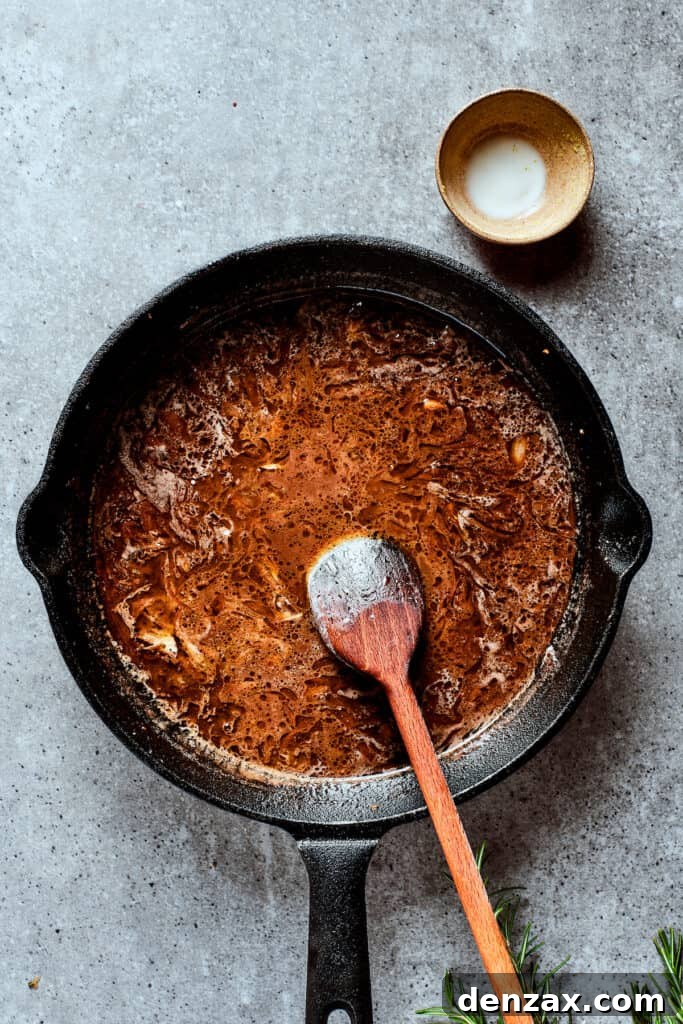
- Deglaze with Liquids: Pour in the beef broth and dry red wine into the skillet. Use a wooden spoon or spatula to scrape up all the flavorful browned bits (fond) from the bottom of the pan. These bits are packed with flavor and will significantly enhance your gravy. Bring the mixture to a simmer.
- Prepare the Cornstarch Slurry: In a small separate bowl, whisk together 1 tablespoon of cornstarch with 1 tablespoon of cold water until a smooth, lump-free slurry forms.
- Thicken the Gravy: Slowly pour the cornstarch slurry into the simmering onion and broth mixture in the skillet, whisking constantly to prevent lumps. Continue to simmer and stir for a few minutes until the gravy thickens to your desired consistency. Taste and adjust seasoning with salt and pepper if needed. Remove the gravy from the heat.
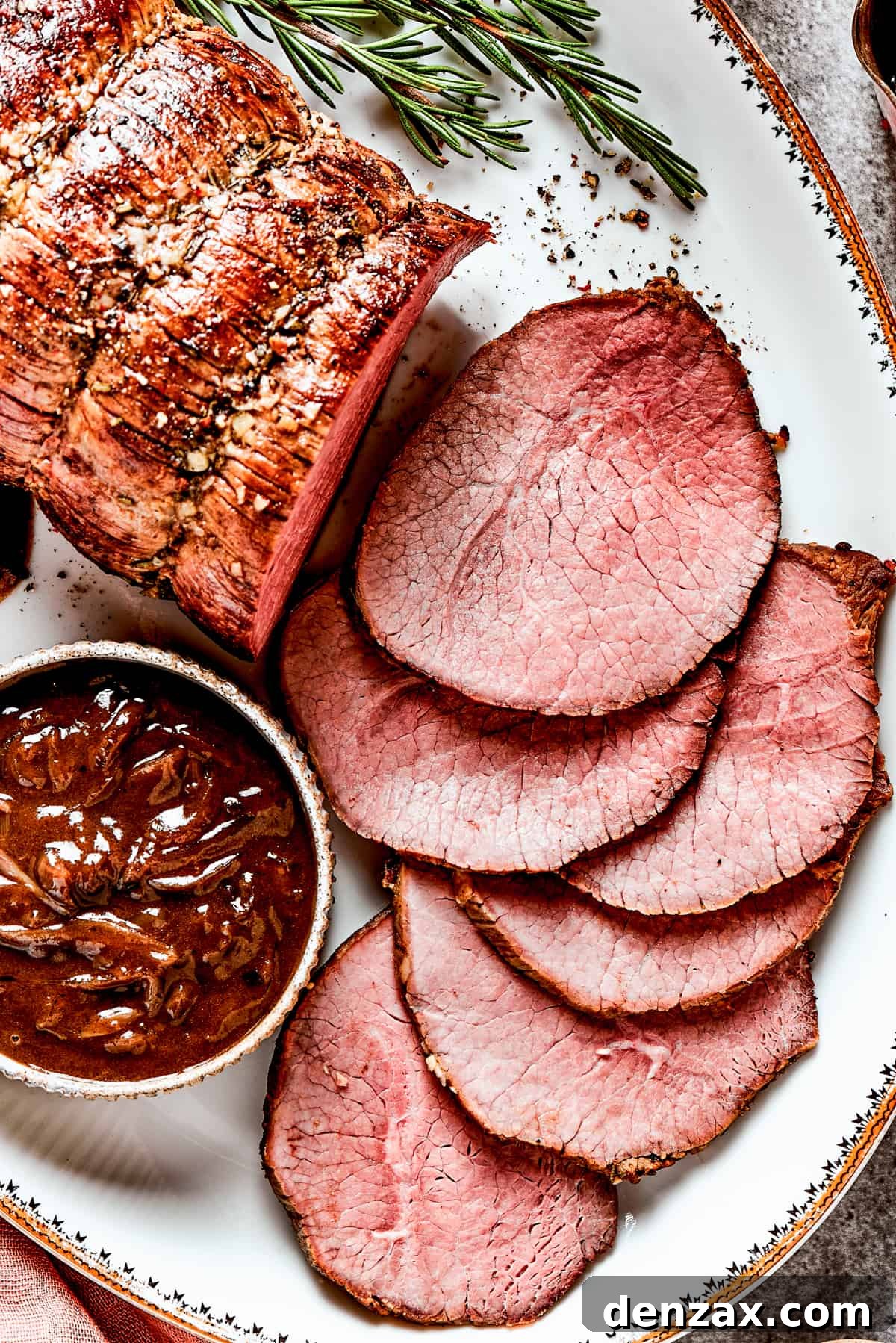
- Slice and Serve: Once the roast has rested, remove the kitchen twine. Using a sharp carving knife, slice the roast beef thinly against the grain. This is paramount for maximum tenderness, as it shortens the muscle fibers, making each bite incredibly succulent. Serve the exquisite slices of top round roast immediately, generously drizzled with the warm, rich caramelized onion gravy.
Achieving Your Desired Doneness for Top Round Roast
The cooking time for your top round roast is primarily dictated by its size and your preferred level of doneness. Because top round is a lean cut, precise temperature control is key to preventing it from drying out. An instant-read thermometer is your best friend here, providing accurate readings to ensure a perfect roast every time. Remember that meat continues to cook for a few minutes after being removed from the oven (known as carry-over cooking), so it’s often best to pull it a few degrees before your target temperature.
- Rare: For a vibrant red center, aim for an internal temperature of 115°F (46°C). The roast will feel very soft to the touch.
- Medium Rare: A popular choice for a warm red center. Remove the roast when it reaches 125°F (52°C). It will be tender with a slight give.
- Medium: If you prefer a pink center, target 135°F (57°C). The meat will be firm but still juicy.
- Medium Well: For a slightly pink center, cook to 145°F (63°C). The roast will be quite firm.
- Well Done: For a thoroughly cooked roast with no pink, reach 155°F (68°C). While this is possible, a lean top round can become dry at this stage, so careful monitoring is crucial.
Expert Tips for a Flawless Roast Every Time
Transforming a lean top round into a tender, succulent roast involves a few key techniques. These expert tips will help ensure your roast beef is nothing short of perfect:
- Top Round Roast vs. Chuck Roast: A Critical Distinction: It’s important to understand that these two cuts are fundamentally different. Top round is a very lean cut from the hind leg, ideal for slicing thinly after roasting. Chuck roast, conversely, comes from the shoulder, contains more fat and connective tissue, and is best suited for slow cooking methods like braising or stewing to become fall-apart tender. Do not substitute chuck roast in this recipe unless you intend to significantly alter the cooking method.
- Bring Meat to Room Temperature: As mentioned, this step is non-negotiable. Allowing your roast to sit out for 1 to 2 hours before cooking helps it cook more evenly, preventing a cold center and ensuring a consistent internal temperature throughout.
- Season Generously: Since top round has less natural marbling (intramuscular fat), it relies heavily on generous seasoning to build flavor. Don’t be shy with salt and pepper; they are essential for enhancing the meat’s taste and contributing to a delicious crust.
- Master the Sear: The initial high-heat sear isn’t just for aesthetics; it locks in moisture and develops complex flavors through the Maillard reaction. Ensure your skillet is hot and sear all sides of the roast until a deep, appetizing brown crust forms. This golden exterior is crucial for flavor and texture.
- The Essential Rest: Patience is a virtue, especially after cooking. Once removed from the oven, cover the roast loosely with aluminum foil and let it rest for at least 15 to 20 minutes. This critical period allows the juices, which have been driven to the center by the heat, to redistribute throughout the meat, ensuring every slice is incredibly juicy and tender.
- Slice Against the Grain: This is arguably the most important carving technique for top round. Identify the direction of the muscle fibers and slice perpendicular to them. Slicing against the grain shortens these tough fibers, making the meat much more tender and easier to chew. Failing to do so can result in a chewy, less enjoyable experience, even if the roast is perfectly cooked.
Serving Suggestions for Your Magnificent Roast
A perfectly cooked top round roast deserves equally delightful accompaniments. The beauty of this dish is its versatility; it pairs beautifully with a wide array of classic and contemporary side dishes. Here are some delectable suggestions to complete your meal:
- Creamy Mashed Potatoes: A timeless pairing, offering a comforting and smooth contrast to the tender beef and rich gravy. Try my recipes for classic creamy mashed potatoes or these baked mashed potatoes for an extra layer of flavor.
- Hearty Roasted Vegetables: A medley of seasonal vegetables, roasted until tender and slightly caramelized, provides vibrant color and essential nutrients. My easy oven-roasted vegetables recipe is a simple yet flavorful choice, featuring an assortment of autumn and winter veggies like carrots, parsnips, and Brussels sprouts.
- Garlic Butter Green Beans: Fresh green beans sautéed with garlic and butter offer a crisp-tender texture and bright flavor that cuts through the richness of the roast. Alternatively, a comforting stovetop green bean casserole can add a creamy, savory element.
- Potatoes Au Gratin or Cauliflower Gratin: For a more indulgent side, consider a cheesy and comforting potato gratin or a lighter, yet equally delicious, cauliflower gratin. These casseroles add a wonderful creamy texture and savory depth to the meal. Explore potatoes au gratin or a cheesy cauliflower gratin for a delightful twist.
- Crispy Yorkshire Puddings: A traditional British accompaniment, these light and airy puddings are perfect for soaking up every drop of that luscious gravy.
- Warm Dinner Rolls or Crusty Bread: Ideal for serving alongside, these allow guests to mop up any remaining gravy or build mini roast beef sandwiches.
How to Store & Reheat Leftovers for Maximum Enjoyment
One of the joys of cooking a larger roast is enjoying the delicious leftovers. Proper storage and reheating are key to maintaining the tenderness and flavor of your top round roast.
- Storage in the Fridge: Allow any leftover roast beef to cool completely before storing. Tightly wrap individual slices or larger portions in plastic wrap, or place them in an airtight container. Stored this way, the roast will remain fresh in the refrigerator for up to 3-4 days. It’s best to store the gravy separately in its own airtight container.
- Freezing for Longer Preservation: For longer storage, slices of cooked top round roast can be frozen. Wrap individual slices tightly in plastic wrap, then place them in a freezer-safe bag or airtight container. This helps prevent freezer burn. The roast can be frozen for up to 2-3 months. Thaw frozen roast in the refrigerator overnight before reheating.
- Reheating for Best Results: Reheating lean cuts like top round can sometimes lead to dryness if not done carefully.
- Microwave Method: For quick reheating of individual slices, place them on a microwave-safe plate. Add a tablespoon or two of gravy or beef broth over the meat to help keep it moist. Cover and heat on medium power in short bursts (30-60 seconds) until warmed through, being careful not to overcook.
- Skillet Method: For a slightly crispier edge, melt a small amount of butter or olive oil in a skillet over medium-low heat. Add the slices of roast beef and a splash of gravy or broth. Gently warm, flipping once, until heated through. This method helps maintain moisture and adds a nice sizzle.
- Oven Method (for larger portions): Preheat your oven to a low temperature, around 250°F (120°C). Place the roast slices in an oven-safe dish with a little gravy or beef broth. Cover the dish tightly with aluminum foil and heat for about 15-20 minutes, or until warmed through. This gentle heating prevents the meat from drying out.
More Delicious Beef Recipes to Explore
If you’ve enjoyed mastering this top round roast, you might be ready to explore other fantastic beef dishes. Here are a few more recipes that offer diverse flavors and cooking experiences:
- Hearty Mulligan Stew
- Tender Instant Pot Short Ribs
- Classic Salisbury Steak with Mushroom Gravy
- Comforting Baked Mostaccioli
- Luxurious Prime Rib