
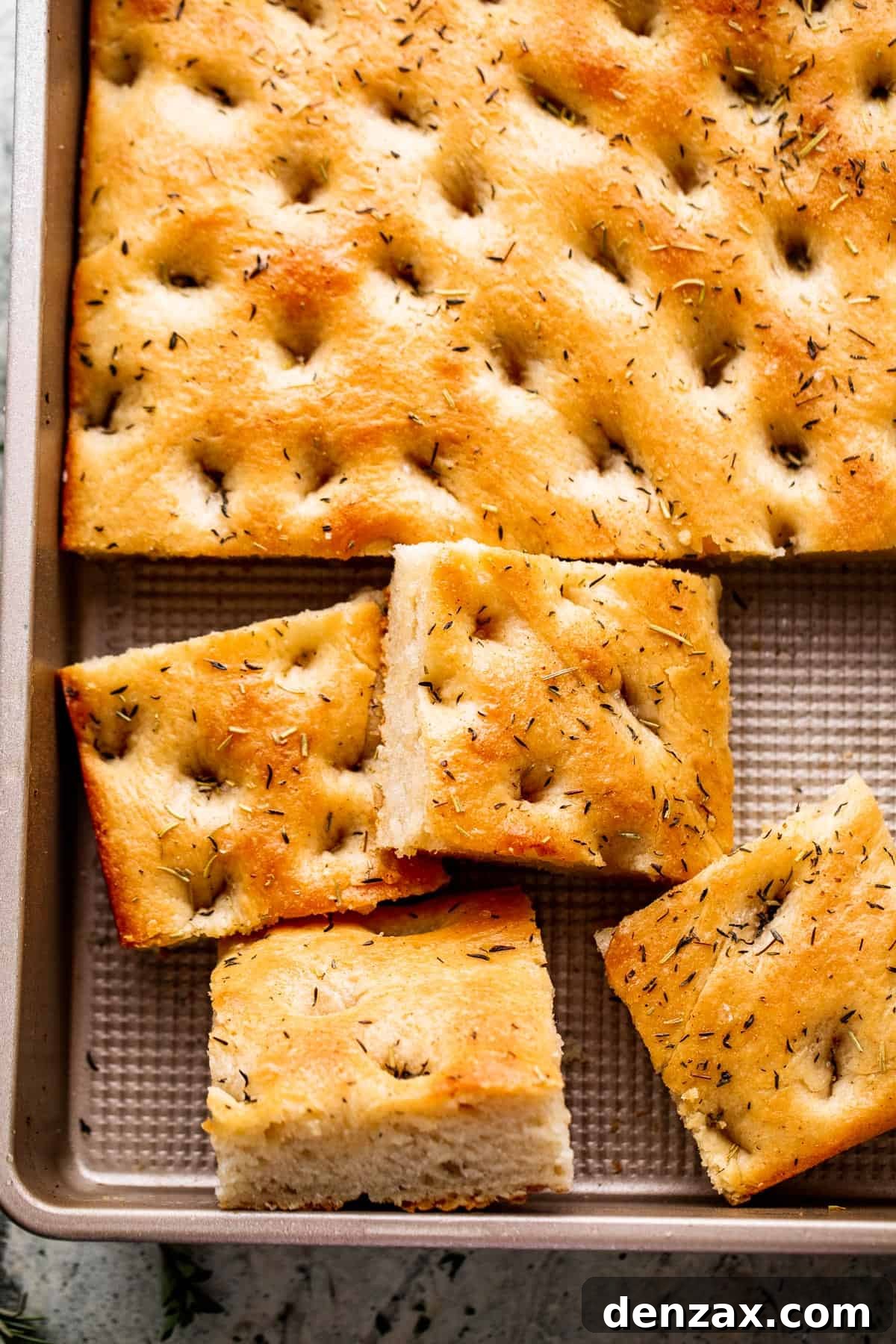
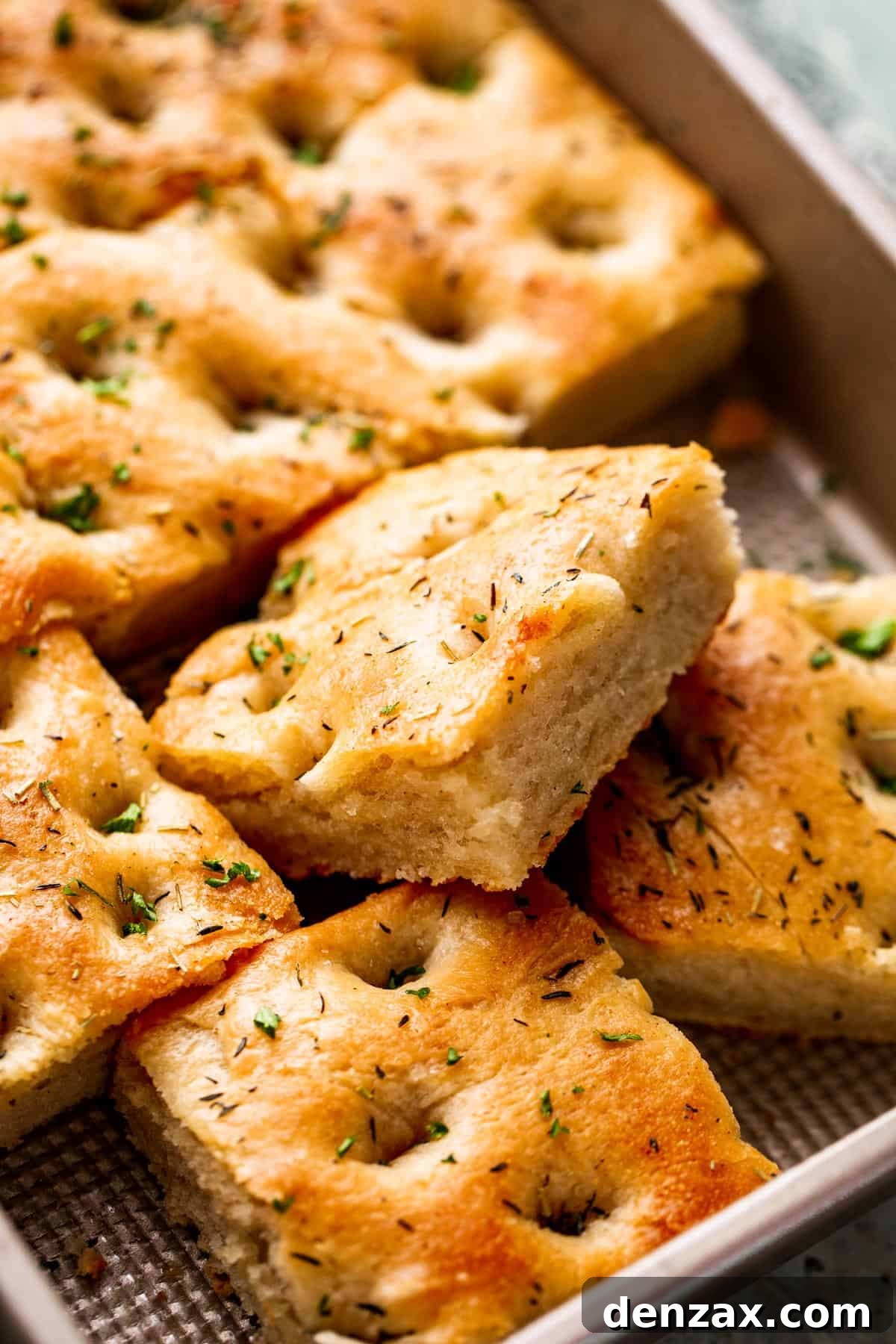
This classic Italian yeast bread bakes to a golden-brown crust and is generously seasoned — meet Garlic and Herb Focaccia. It’s easy to make at home and wonderfully versatile, whether served as a side for pasta, used for sandwiches, or enjoyed with soup and salad.
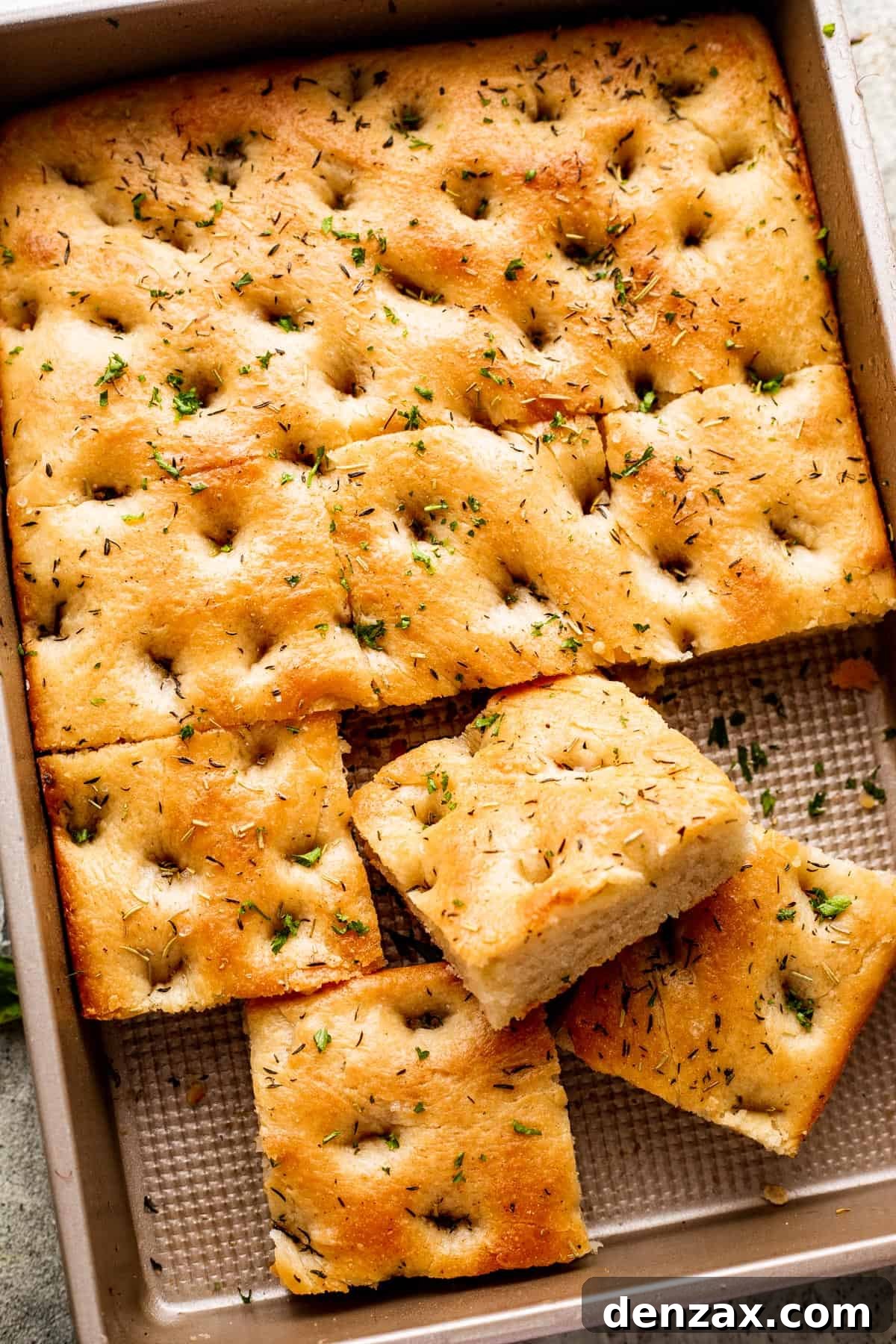
Easy Homemade Focaccia from Scratch
Focaccia is an Italian yeast bread that enjoyed renewed popularity in the 1990s and early 2000s, and for good reason. It’s light yet rich, full of olive oil and herbs, and pairs beautifully with many dishes. One of the best things about focaccia is how simple it is to prepare: there’s almost no shaping required — the dough is pressed into a pan and baked, so no rolling or folding is needed.
Is Focaccia a Healthy Bread?
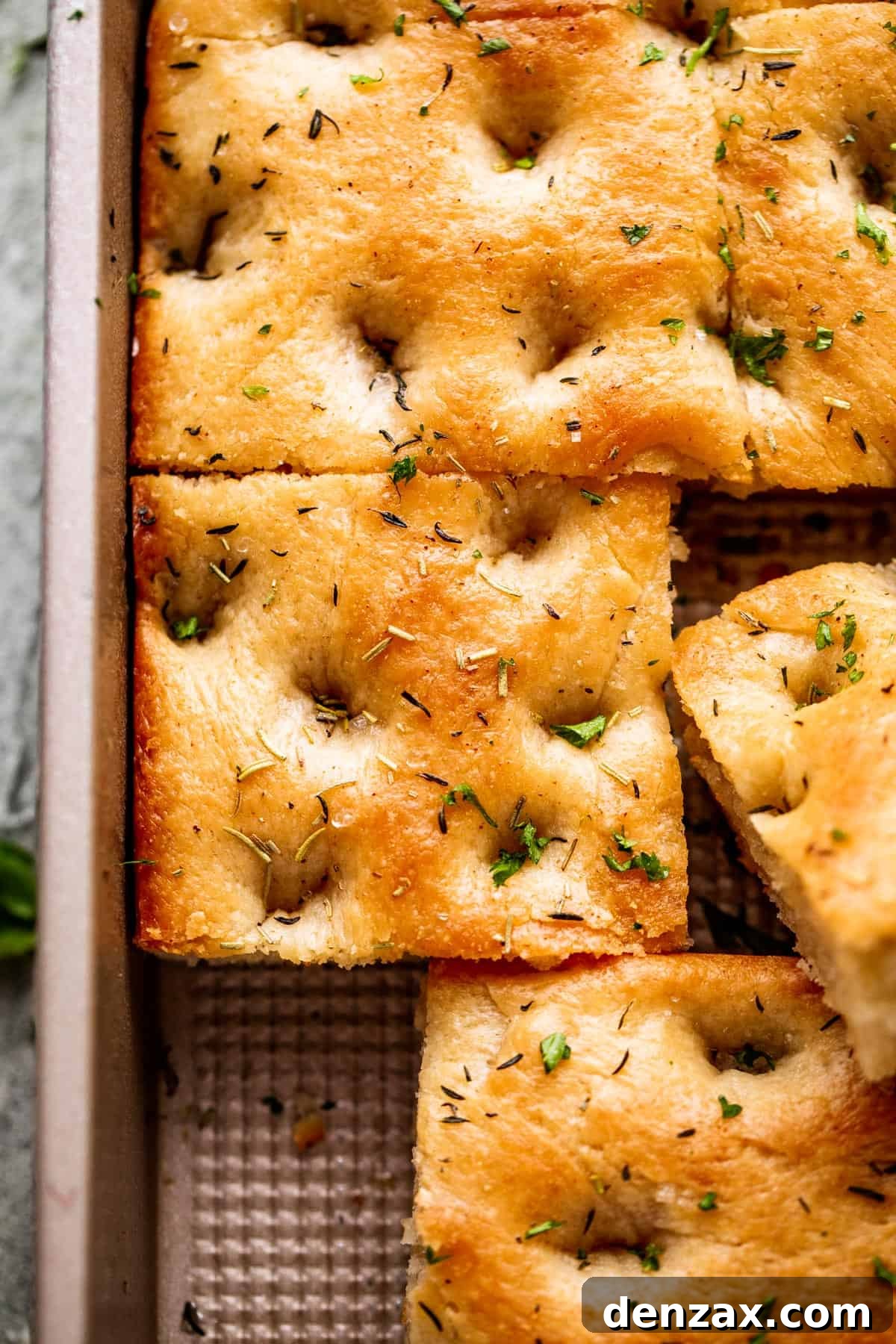
Homemade focaccia can be a wholesome choice compared to many commercial breads. It’s made from simple ingredients, highlights heart-healthy olive oil, and contains no preservatives when you make it yourself. Choosing high-quality flour, ideally organic, improves the final loaf. Keep in mind, however, that focaccia is a carbohydrate-rich bread and not suitable for low-carb or keto diets.
What You’ll Need
This version is flavored with fresh garlic, rosemary, and thyme for bright, savory notes. You can serve it plain with olive oil for dipping or use it as a base for sandwiches.
- Yeast: Active dry yeast (one packet = 2 1/4 teaspoons).
- Water: Warm — around body temperature — to activate the yeast; avoid hot or cold water.
- Sugar: A small amount helps feed the yeast.
- Flour: All-purpose flour works well; bread flour is an optional substitute.
- Salt: For the dough and additional coarse salt for sprinkling.
- Olive Oil: Extra-virgin for the best flavor, plus extra for greasing and drizzling.
- Garlic: Finely minced.
- Fresh Rosemary and Thyme: Leaves removed from stems and chopped.
Let’s Make Focaccia!
The method is straightforward: mix the dough, knead briefly, allow two rises, then top and bake until golden. Follow these steps for a reliably delicious focaccia.
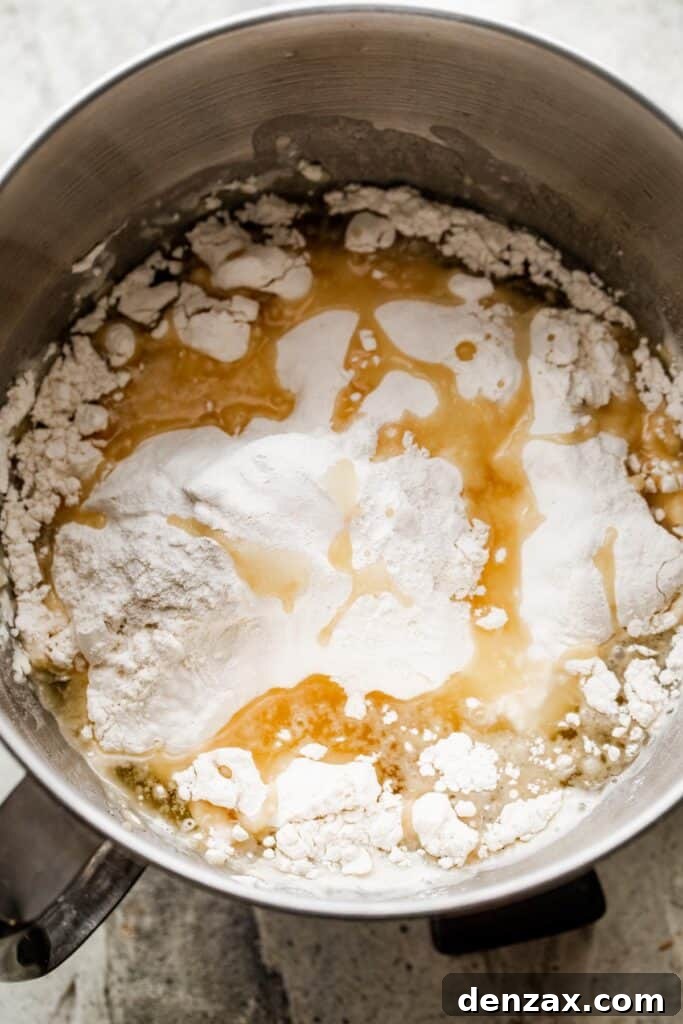
- Bloom the yeast. Whisk the yeast, warm water, and sugar in a bowl and let sit 5 minutes until frothy.
- Mix the dough. Add flour, salt, and olive oil. Mix until the dough pulls away from the bowl; add a tablespoon or two of flour if it’s too sticky.
- Knead the dough. Turn the dough onto a floured surface and knead 4–5 minutes until smooth and slightly springy. Add small amounts of flour if needed.
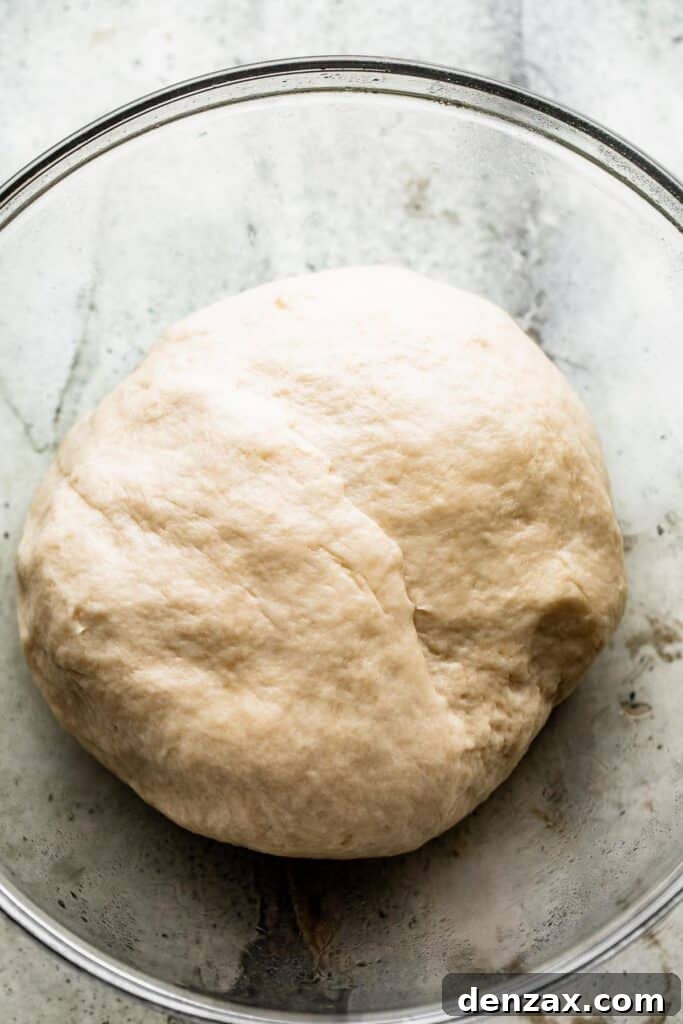
- First rise. Coat a large bowl with olive oil, place the dough inside, turn to coat, cover with a damp towel, and let rise in a warm spot for 1–2 hours or until doubled.
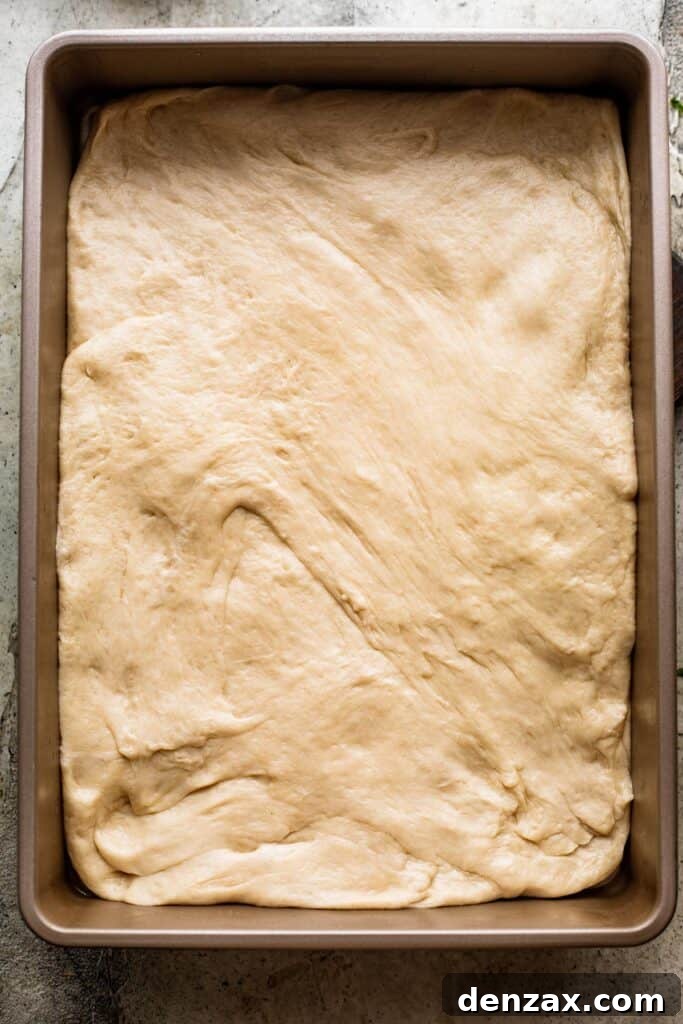
- Shape the dough. Generously grease a 9×13-inch pan with 2-inch sides. Punch down the dough and press it into the pan to fit.
- Second rise. Cover the pan with a damp towel and let the dough rise another 30–45 minutes.
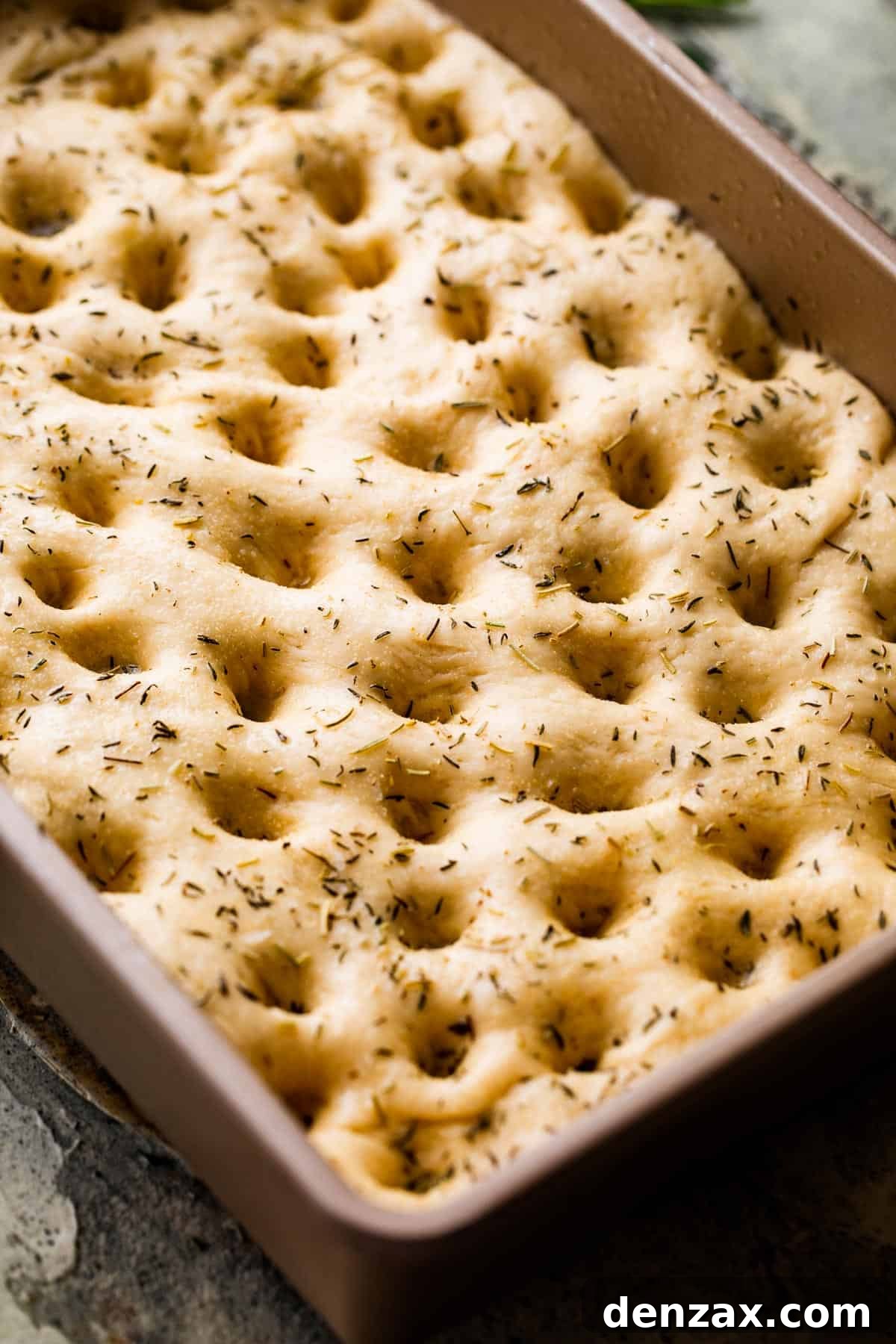
- Top and bake. Preheat the oven to 400°F. Use your fingers to press deep dimples all over the dough down to the pan. Sprinkle with salt, minced garlic, chopped rosemary and thyme, then drizzle 1–2 tablespoons of olive oil over the top. Bake 20–25 minutes until the surface is golden-brown.
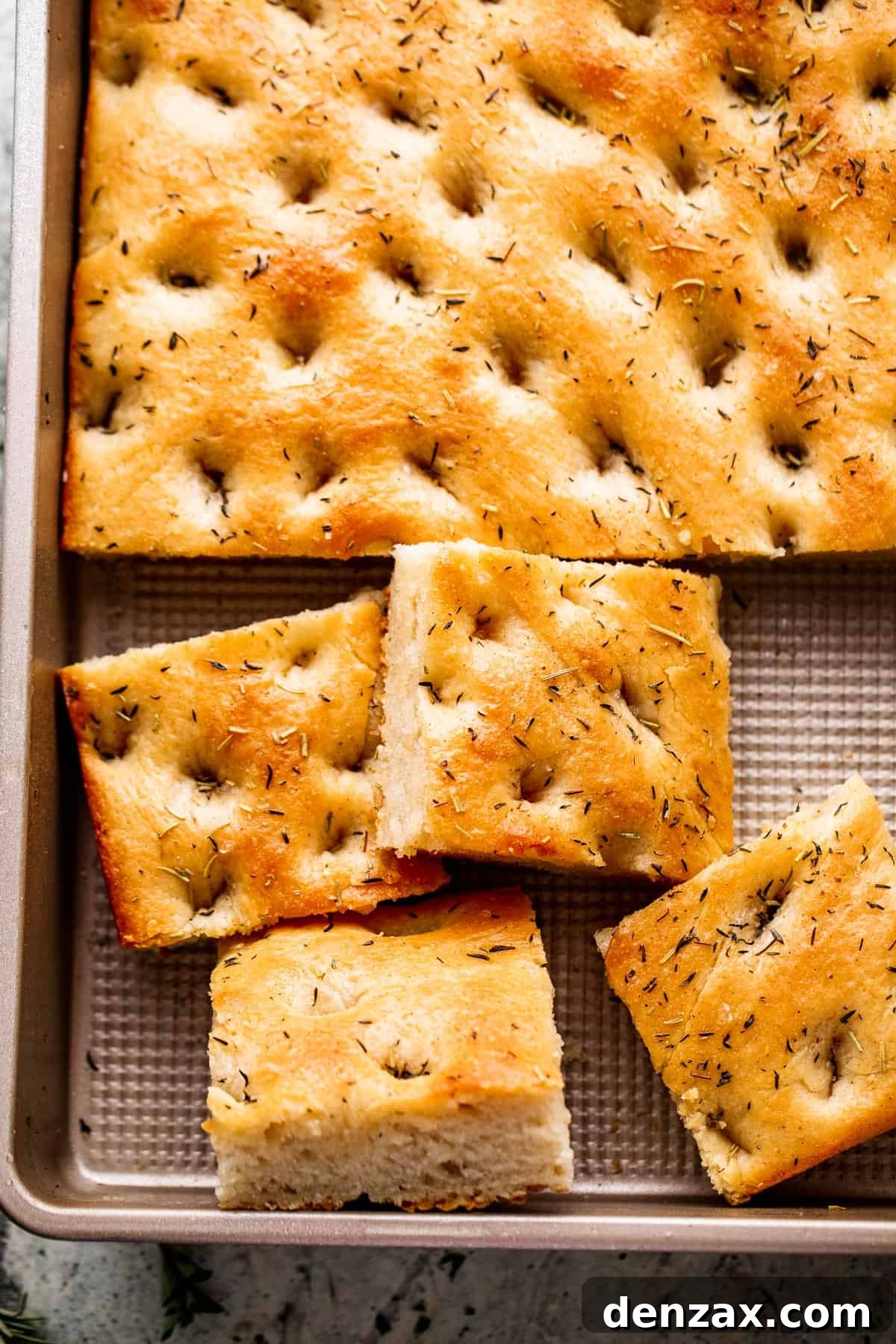
- Finish and serve. Remove from the oven, transfer to a wire rack, and let cool 10–15 minutes before slicing. Serve warm, with extra olive oil for dipping if you like.
Tips and Variations
This is a flexible base recipe. Keep the dough ratios the same and vary the toppings to create different flavors:
- Olive Focaccia: Fold sliced black or green olives into the dough or scatter them on top before baking.
- Onion Focaccia: While the dough rises the second time, slowly caramelize sliced onions in butter and add them as a topping with the herbs.
- Cheese Focaccia: Near the end of baking, remove the focaccia briefly and sprinkle with grated cheese, then finish baking until melted and golden.
What Is Focaccia Traditionally Eaten With?
Focaccia pairs beautifully with Italian dishes, soups, salads, or as an artisan-style sandwich bread. It’s a natural companion to saucy pasta dishes, creamy soups, and robust salads topped with protein.
- Manicotti: A cheesy, saucy baked pasta is an indulgent match for warm focaccia.
- Creamy Soup: Serve with a bowl of rich soup for dipping; creamy vegetable soups or roasted tomato basil are great choices.
- Steak Salad: A hearty salad with sliced steak, tomatoes, and feta stands up well to olive oil–rich bread.
Make-Ahead Instructions
You can prepare the dough ahead of time by refrigerating it overnight after the first rise. Cover the bowl tightly with plastic wrap and chill. The next day, bring the dough to room temperature for about 30 minutes before punching it down, shaping it in the pan, and proceeding with the second rise and bake.
How to Store Leftover Focaccia
- Wrap leftovers tightly in plastic wrap or place in zip-top bags, pressing out extra air.
- Store at room temperature for 1–2 days or refrigerate for 2–3 days.
- Reheat in a preheated 350°F oven or toaster oven until warmed through, or serve at room temperature.
Can I Freeze This Recipe?
- Yes — focaccia freezes well. Wrap tightly or use freezer bags and freeze up to one month.
- Thaw at room temperature before serving or reheating.
Garlic Herb Focaccia
Ingredients
- 2 ¼ teaspoons active dry yeast (1 packet)
- 1 ½ cups warm water
- 1 tablespoon sugar
- 4 cups all-purpose flour
- 1 tablespoon kosher salt, plus more for sprinkling
- ¾ cup olive oil, plus more for greasing and drizzling
- 2 cloves garlic, finely minced
- 1 to 2 sprigs fresh rosemary, stems removed and leaves chopped
- 1 to 2 sprigs fresh thyme, stems removed and leaves chopped
Instructions
- Whisk yeast, warm water, and sugar together and let sit 5 minutes to bloom.
- Switch to a dough hook if using a mixer. Add flour, salt, and olive oil and mix on low until combined, adding 2–3 tablespoons flour if the mixture sticks.
- Knead by hand on a floured surface 4–5 minutes until the dough is smooth and slightly springy, adding small amounts of flour if needed.
- Grease a large bowl with olive oil, place the dough inside, turn to coat, cover with a damp towel, and let rise 1–2 hours until doubled.
- Grease a 9×13-inch pan with tall sides, punch down the dough, and press it into the pan to fit.
- Cover and let rest 30–45 minutes for the second rise.
- Preheat the oven to 400°F.
- Use your fingers to poke deep dimples in the dough down to the pan.
- Sprinkle with salt, garlic, rosemary, and thyme, then drizzle 1–2 tablespoons olive oil over the top.
- Bake 20–25 minutes until lightly golden-brown.
- Remove from the oven and transfer the bread to a wire rack; cool 10–15 minutes before slicing.
- Serve warm with extra olive oil for dipping if desired.
Nutrition
|
Carbohydrates: 34g
|
Protein: 5g
|
Fat: 14g
Nutritional info is an estimate and provided as courtesy. Values may vary based on ingredients and tools used.
More Homemade Bread Recipes
- No-Knead Dutch Oven Bread
- Spinach and Feta No-Yeast Bread
- Easy Homemade Flatbread Recipe