
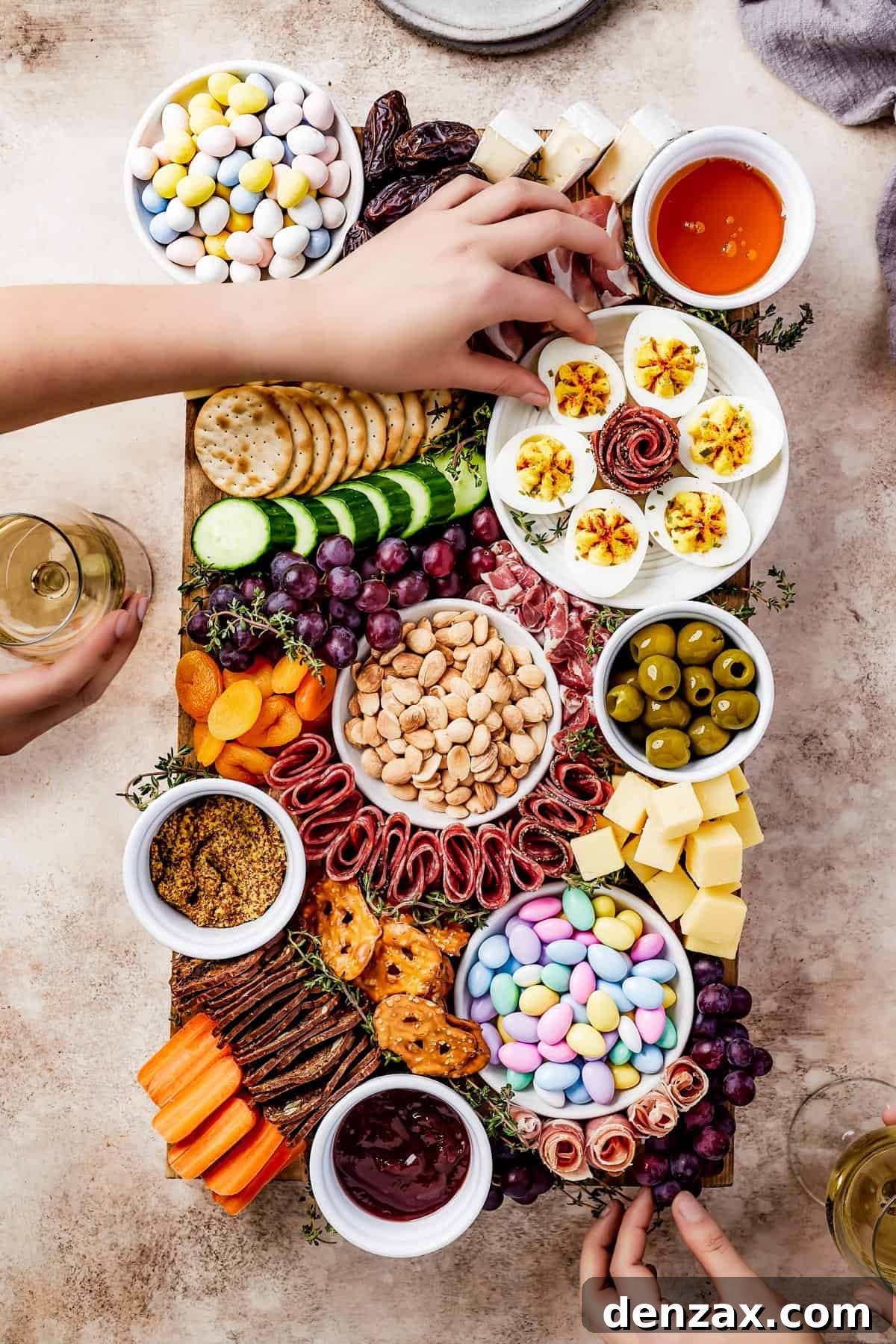
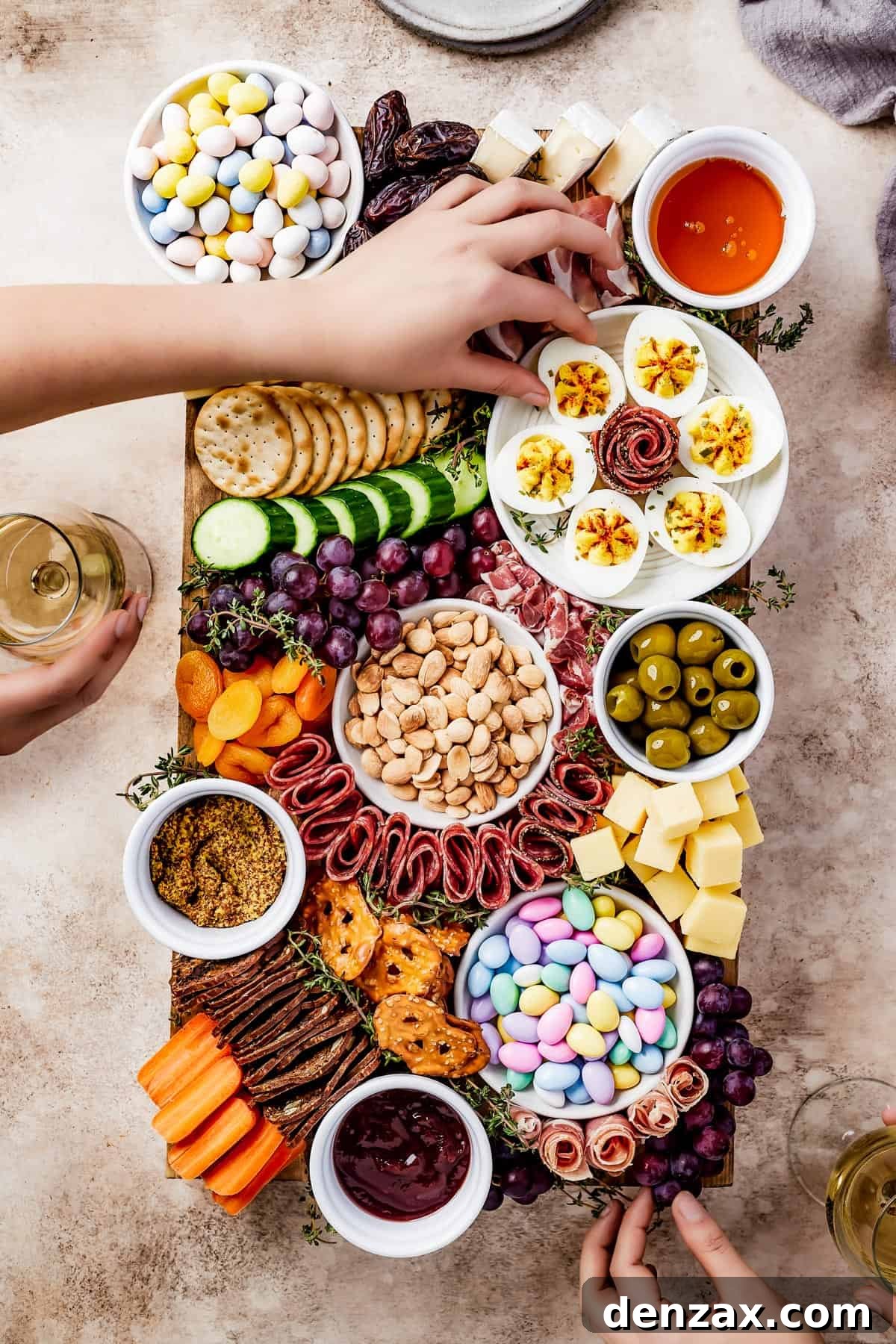
Welcome to the ultimate guide for creating a spectacular Easter Charcuterie Board! This festive and fun appetizer sampler is designed to delight all your guests, offering a beautifully balanced array of snacks that caters to every taste. From creamy cheeses and savory cured meats to fresh fruits, crisp vegetables, and delightful springtime treats like deviled eggs, this board is more than just food – it’s a vibrant centerpiece for your holiday celebration.
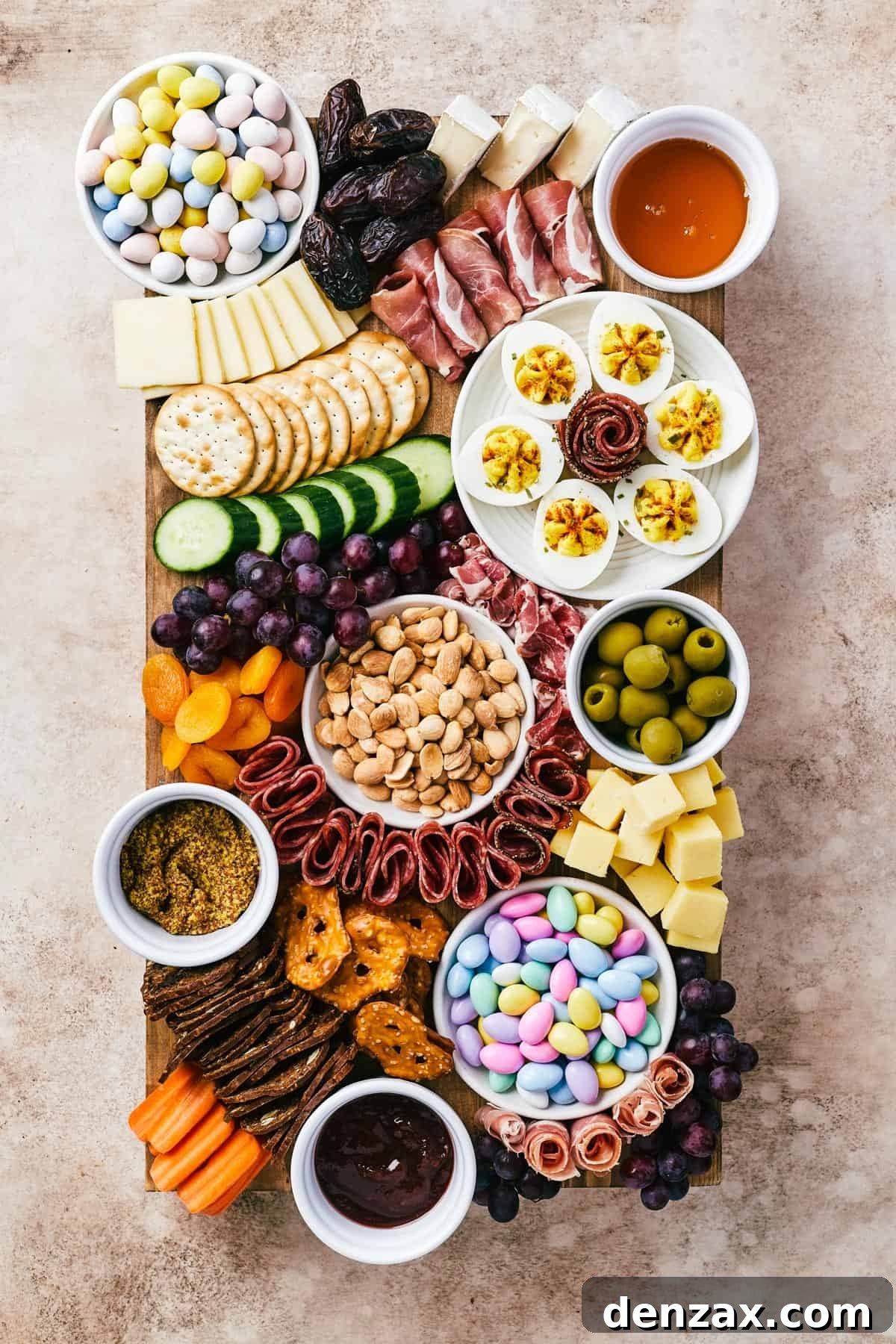
Crafting the Perfect Spring-Inspired Charcuterie Board for Easter
Planning an Easter brunch or dinner can be a joyous occasion, but sometimes finding the perfect appetizer can be a challenge. Look no further than a thoughtfully curated charcuterie board! It’s the ideal solution for anyone seeking to add a unique and personalized touch to their holiday spread. A charcuterie board isn’t just a collection of foods; it’s an edible work of art that invites guests to gather, graze, and discover new favorite flavor combinations.
Beyond its impressive appearance, this appetizer is incredibly easy and enjoyable to assemble. Whether you’re a seasoned host or new to entertaining, you’ll appreciate the simplicity and versatility of an Easter charcuterie board. It allows for a fantastic array of diverse tastes, textures, and colors, all artfully arranged on a single serving piece. Imagine soft cheeses alongside crunchy crackers, salty meats complementing sweet fruits, and bright, seasonal vegetables adding a fresh pop. This beautiful arrangement can be prepared well in advance, taking the stress out of last-minute party preparations, or quickly pulled together if time is short. It truly offers something appealing for every palate, making it an undeniable hit at any spring gathering.
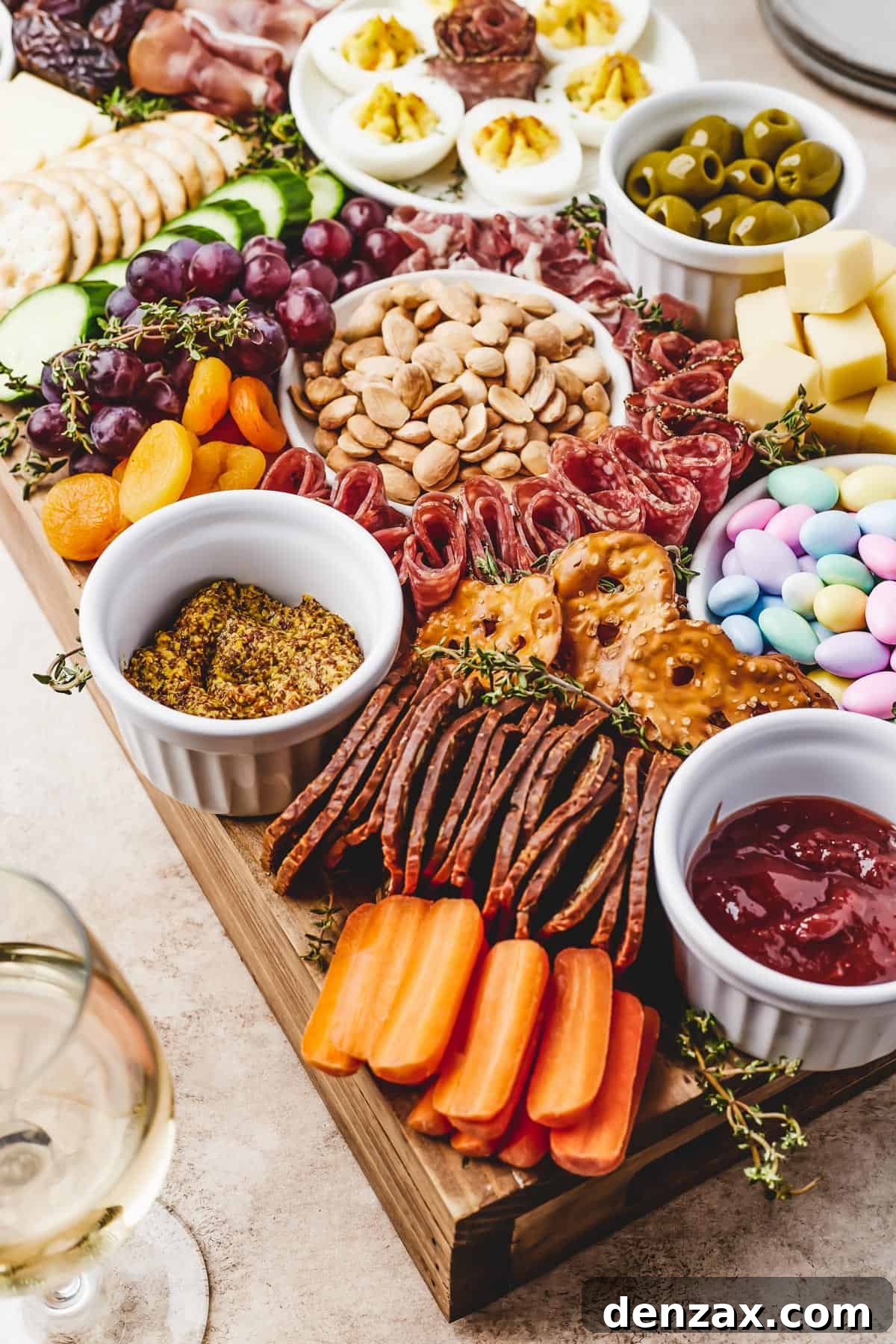
Understanding the Elements of a Classic Charcuterie Board
At its core, a charcuterie board is a meticulously arranged platter showcasing an assortment of finger foods. Traditionally, charcuterie refers to a branch of cooking focused on prepared meat products, primarily from pork. However, in modern culinary practice, the term “charcuterie board” has evolved to encompass a much broader selection, often including a delightful mix of meats, cheeses, nuts, fruits, vegetables, olives, and various accompaniments. The key is to create a symphony of flavors and textures that complement each other and offer a diverse tasting experience.
For this special spring-themed Easter charcuterie board, we’re taking the classic concept and infusing it with seasonal charm. This means incorporating elements that evoke the freshness and joy of springtime. Alongside traditional cured meats and artisanal cheeses, you’ll find vibrant, homemade deviled eggs – a quintessential Easter delicacy – and sweet, chewy dried apricots that add a touch of color and sweetness. We’re also including playful chocolate eggs, which are perfect for celebrating the holiday. This thoughtful combination of savory and sweet, classic and festive, transforms a simple appetizer into a memorable focal point for your Easter celebration, or indeed, any special gathering you wish to elevate.
A well-composed charcuterie board offers more than just sustenance; it’s an interactive culinary experience. Guests can mix and match components, discovering new flavor profiles with every bite. The visual appeal is paramount, with different shapes, sizes, and colors contributing to an inviting spread. Think about balancing creamy textures with crunchy ones, sweet notes with savory, and tangy elements with rich ones. This thoughtful curation ensures that every item on your board plays a role in creating a harmonious and utterly delicious spread.
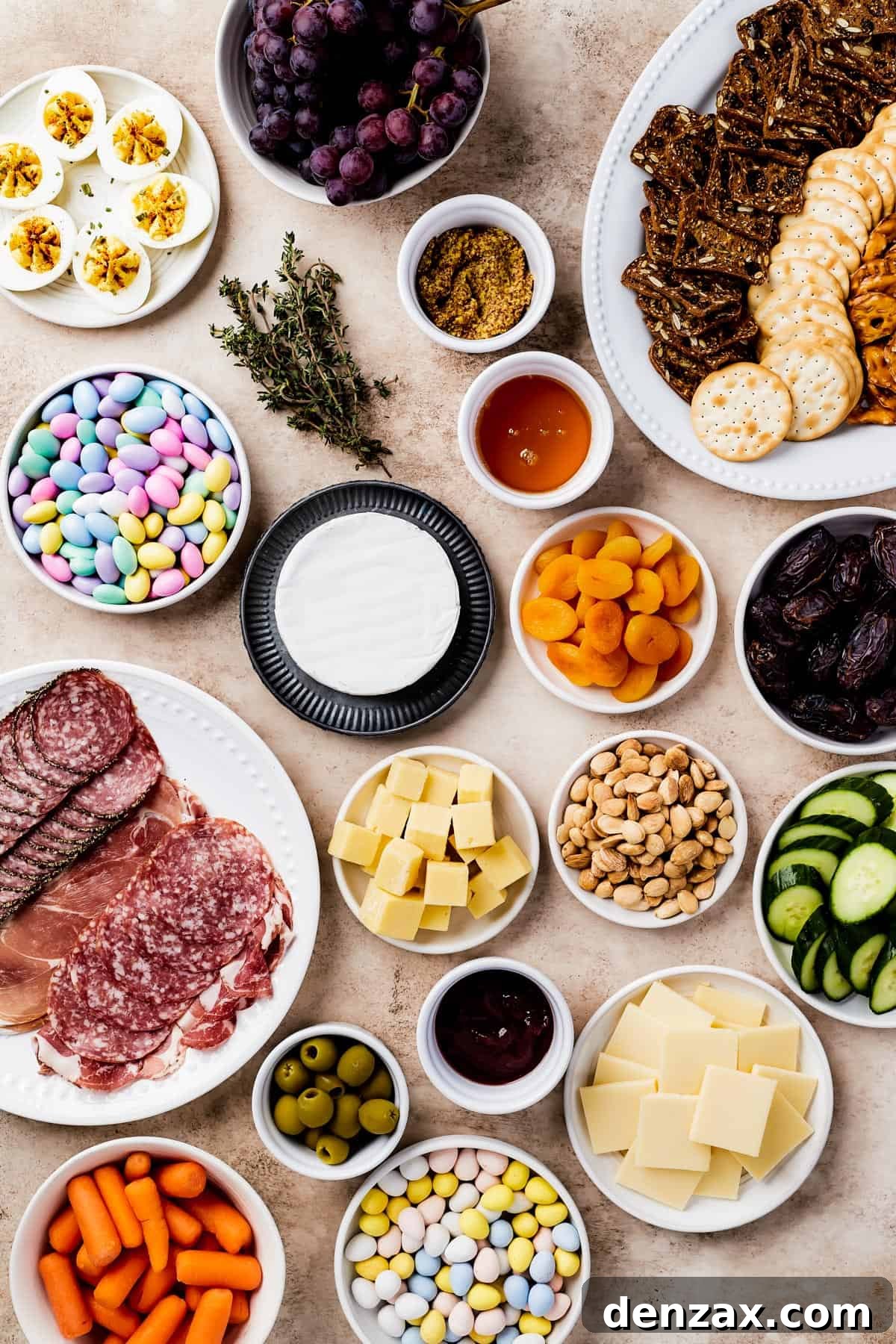
Essential Ingredients for Your Easter Charcuterie Masterpiece
Building an impressive Easter charcuterie board starts with selecting a diverse range of high-quality ingredients. While the following list outlines my personal favorites and recommendations for a spring-themed board, remember that charcuterie is all about customization. Feel free to adapt these suggestions based on your preferences, dietary needs, and what’s seasonally available at your local market. The goal is to create a delightful assortment of flavors and textures that appeal to all your guests.
Here’s a detailed breakdown of the ingredients I love to use, offering a balance of savory, sweet, creamy, and crunchy elements:
- Prepared Delights:
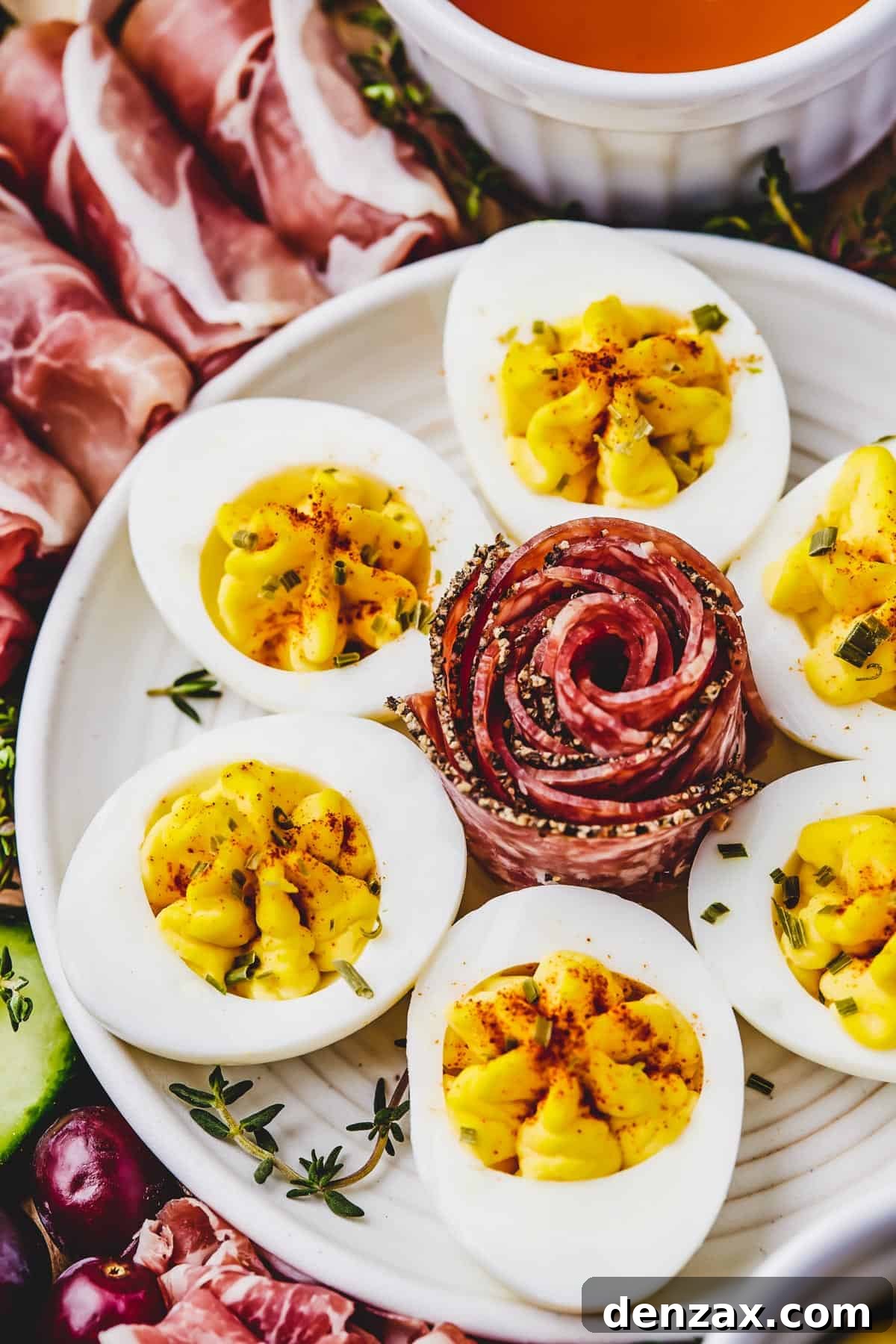
- Deviled Eggs: These classic, creamy Easter favorites are a must-have. Prepare them with your favorite recipe (a classic recipe ensures a smooth, tangy filling).
- Gourmet Condiments:
- Honey: A drizzle of golden honey adds a touch of sweetness and pairs beautifully with cheeses and nuts.
- Whole Grain Mustard: Offers a pleasant tang and textural contrast, perfect with cured meats.
- Strawberry Preserves: A vibrant, fruity jam provides sweetness and a lovely color, complementing cheeses and crackers.
- Nuts, Olives & Candies:
- Castelvetrano Olives: These bright green, mild, buttery olives add a sophisticated briny note.
- Marcona Almonds: Known for their delicate texture and sweet flavor, these Spanish almonds are a gourmet touch.
- Jordan Almonds: Candy-coated almonds bring a festive crunch and a pop of color, fitting for Easter.
- Chocolate Egg Candies: Small, colorful chocolate eggs are a playful and seasonal addition that guests of all ages will adore.
- Artisanal Meats:
- Salami: Choose a high-quality, thinly sliced salami for its rich, savory flavor and beautiful texture when folded.
- Prosciutto: Delicate, salty, and melt-in-your-mouth, prosciutto adds an elegant touch.
- Coppa: A beautifully marbled and intensely flavored cured pork shoulder, offering a slightly spicy kick.
- Exquisite Cheeses:
- Brie: A creamy, decadent cheese with an edible rind that’s always a crowd-pleaser. Serve it at room temperature for optimal flavor and texture.
- White Cheddar: A firm, sharp cheese that provides a delicious counterpoint to milder flavors. Cube it for easy snacking.
- Gouda: Known for its mild, nutty, and slightly sweet flavor, gouda is a versatile cheese that appeals to many.
- Crunchy Crackers & Crisps:
- Water Crackers: Neutral and crisp, these are perfect for letting the flavors of the cheese and toppings shine.
- Pretzel Crisps: Offer a satisfying crunch and salty bite, great for dipping or topping.
- Fig Crackers: Their subtle sweetness and earthy notes pair wonderfully with cheeses and fruit preserves.
- Fresh Fruits & Vegetables:
- Seedless Red Grapes: Sweet, juicy, and refreshing, grapes add a burst of natural sweetness and vibrant color.
- Medjool Dates: Soft, chewy, and naturally sweet, dates are excellent paired with nuts or cheese.
- Dried Apricots: Their beautiful orange hue and concentrated sweetness make them a visual and culinary delight.
- Baby Carrots: Crisp and sweet, these offer a healthy crunch and a touch of garden freshness.
- Large Sliced English Cucumber: Cool, refreshing slices of cucumber are perfect for palate cleansing and adding a light, crisp element.
- Optional Garnish:
- Fresh Thyme Sprigs: Not only do they add a beautiful aromatic accent, but they also enhance the board’s aesthetic appeal with their delicate green leaves. Rosemary sprigs can also be used for a similar effect.
When selecting your items, aim for diversity in color, shape, and flavor. This thoughtful approach ensures that your Easter charcuterie board is not only delicious but also visually stunning, inviting guests to explore and enjoy every carefully chosen bite.
Assembling Your Stunning Easter Charcuterie Board: Step-by-Step
The art of creating a beautiful charcuterie board might seem intimidating at first, but with a few simple steps, you can achieve a professional and inviting presentation every time. The key is to build your board strategically, starting with the larger, fixed elements and then filling in the gaps with smaller, more flexible items. This approach ensures a balanced and abundant look. Here’s how to bring your Easter charcuterie masterpiece to life:
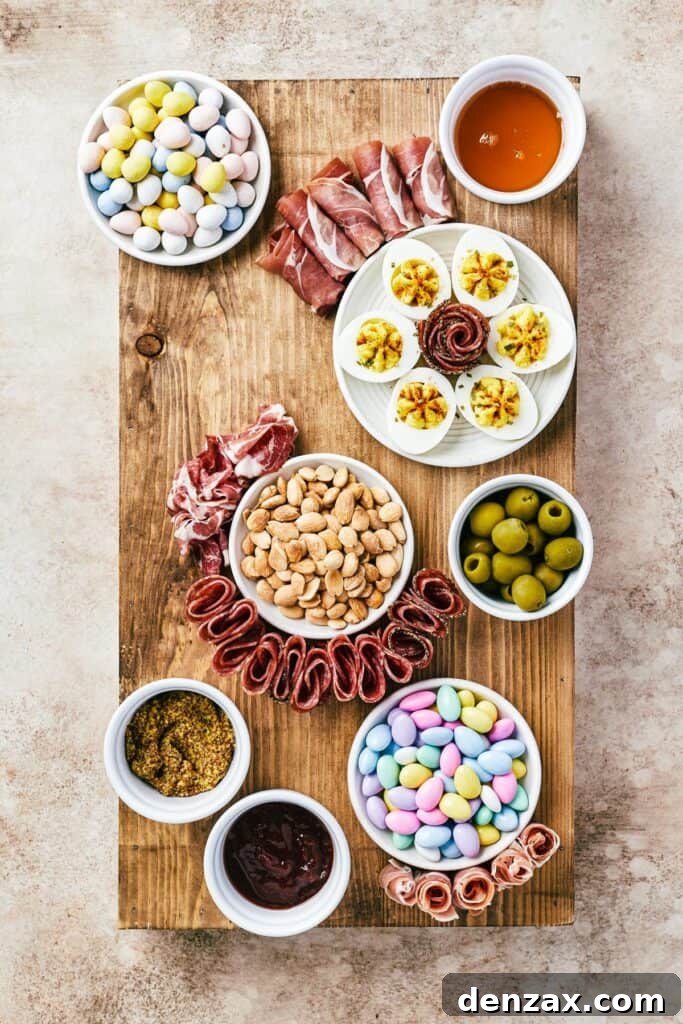
- Establish Your Anchor Points with Bowls and Plates: Begin by placing any items that need to be contained in small bowls or plates directly onto your serving board. This typically includes the deviled eggs on a dedicated plate, and your chosen condiments (honey, mustard, preserves), nuts (Marcona, Jordan almonds), olives (Castelvetrano), and festive candies (chocolate eggs) in small, decorative bowls. Positioning these first creates a structural foundation around which you can arrange the other ingredients. Think about spreading these anchor points across the board to ensure even distribution and visual interest.
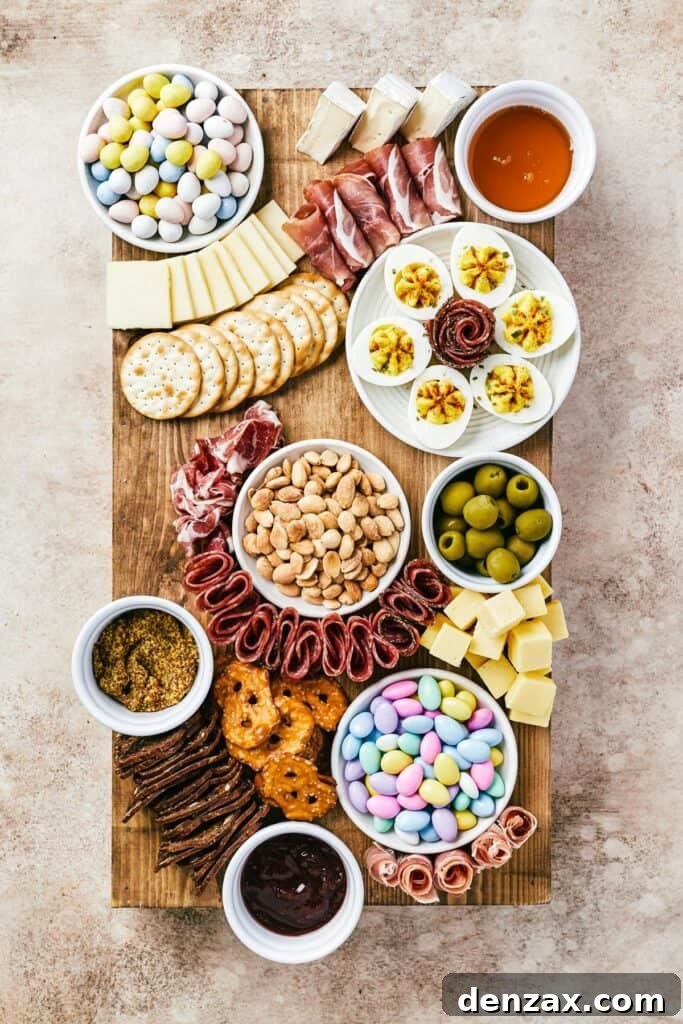
- Arrange the Meats, Cheeses, and Primary Crackers: Once your bowls are in place, it’s time to add the stars of the show: meats and cheeses. For the meats, get creative with your presentation. Fold slices of salami into quarters or halves, roll prosciutto into delicate spirals, or fan out coppa for an appealing texture. Arrange these around your bowls, creating inviting clusters. Next, cut your cheeses into various shapes – wedges of brie, cubes of white cheddar, and slices of gouda – and intersperse them among the meats and bowls. Finally, place your primary crackers and crisps. Don’t just lay them flat; lean them against bowls or other ingredients to add height and make them easier for guests to grab. You can also create small piles or fanned arrangements for visual appeal.
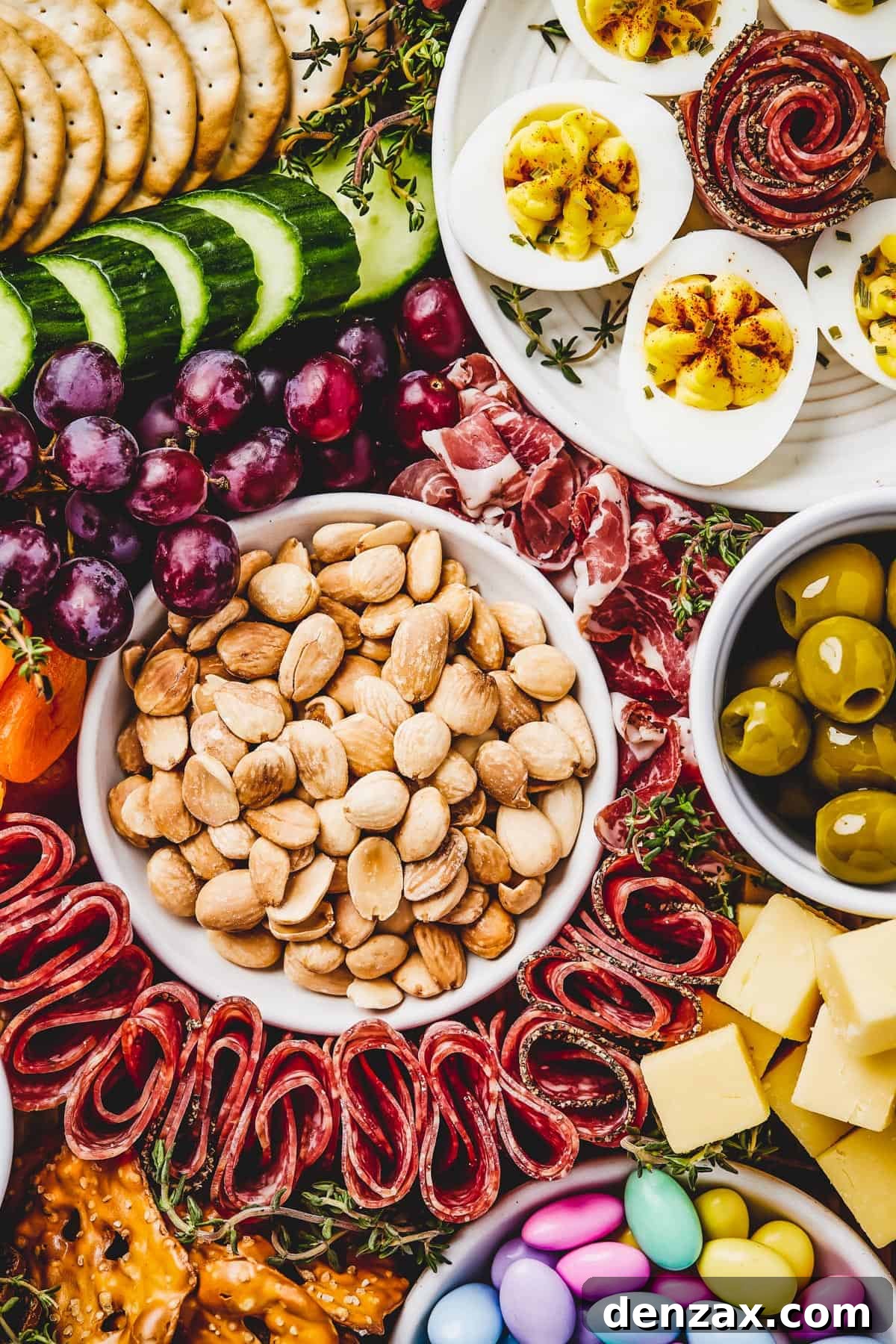
- Fill the Remaining Spaces with Fruits and Vegetables: This is where your board truly comes alive with color and freshness. Take your seedless red grapes, Medjool dates, dried apricots, baby carrots, and sliced English cucumber, and strategically fill in all the remaining gaps on the board. Don’t be afraid to let items touch and overlap slightly – this creates a lush, abundant look. Distribute the colors evenly across the board to ensure a vibrant and appealing display. Arrange grape clusters for natural elegance, nestle dried apricots between cheeses, and scatter baby carrots for a healthy crunch.
- Add Optional Garnish for a Finishing Touch: For an extra layer of sophistication and a beautiful aromatic element, tuck small sprigs of fresh thyme or rosemary throughout the board. These delicate herbs add a touch of natural beauty and an appealing fragrance that truly elevates the overall presentation, giving your Easter charcuterie board a refined and professional finish.
Once all the elements are artfully arranged, step back and admire your creation. A well-assembled charcuterie board is a feast for the eyes as much as it is for the palate, promising a delightful culinary journey for your guests.
Does a Charcuterie Board Have to Be Made of Wood?
Absolutely not! While traditional wooden cutting boards are a popular and charming choice for displaying charcuterie, you are by no means limited to them. The beauty of a charcuterie board lies in its versatility, and that extends to your choice of serving surface. Any large platter or tray can serve as an excellent base for your spread. Consider options like elegant slate boards, sleek marble slabs, rustic ceramic platters, or even decorative glass cutting boards. Each material offers a different aesthetic that can complement your table setting. The most important factor is to ensure that your chosen surface is food-safe and clean. Always avoid using a cutting board that has previously been used for preparing raw meats without proper, thorough sanitization, to prevent cross-contamination.
Expert Tips for Building an Unforgettable Charcuterie Board
Remember, a charcuterie board is a reflection of your personal style and taste. While my suggestions provide a fantastic starting point, feel free to experiment and make it uniquely yours. Here are some additional tips to help you build a truly outstanding and safe board:
- Strategic Arrangement is Key: No matter the specific ingredients you choose, the fundamental steps for a visually appealing board remain consistent. Always begin by placing any messy or easily rollable items into smaller containers or bowls. This creates structure and prevents ingredients from mingling unattractively. Then, artfully arrange the meats, cheeses, and other larger food items around these containers, building out from your anchor points. Aim for clusters of similar items balanced by contrasting colors and textures.
- Utilize Toothpicks and Small Utensils: Toothpicks are incredibly versatile tools for a charcuterie board. They are invaluable for securing rolled-up or fanned slices of meat, ensuring they maintain their shape throughout the serving time. Beyond presentation, toothpicks can also serve as convenient “handles” for guests to pick up items like cheese cubes, olives, or even certain fruits, promoting hygiene and ease of access. Small tongs, honey dippers, and cheese knives are also great additions.
- Prioritize Food Safety: This is perhaps the most crucial tip for any food platter. Perishable items such as eggs, cured meats, and most cheeses should not be left at room temperature for more than two hours. If you are preparing your board significantly ahead of time, keep these items refrigerated and add them just before guests arrive. For longer events, consider serving smaller portions and replenishing them, or using chilled serving dishes where possible to maintain safe temperatures.
- Balance Flavors and Textures: A truly great charcuterie board offers a delightful journey for the palate. Strive for a balance of sweet, salty, savory, tangy, and spicy elements. Incorporate a variety of textures: creamy cheeses, crunchy nuts and crackers, chewy dried fruits, and firm vegetables. This ensures every bite is interesting and satisfying.
- Consider Your Guests: If you know your guests have specific preferences or dietary restrictions (e.g., vegetarian, gluten-free), try to include options for them. You can easily designate a section of the board or add labels to help guests navigate.
- Don’t Be Afraid to Overlap: A common mistake is leaving too much empty space. A bountiful, overflowing board looks more inviting and impressive. Don’t be afraid to let ingredients touch and overlap slightly. This creates a sense of abundance and visual richness.
Expand Your Horizons: More Charcuterie Options and Ideas
The beauty of charcuterie boards lies in their limitless potential for customization. Once you’ve mastered the basics, you’ll find endless ways to adapt your board to any occasion, season, or personal preference. Here are even more ingredient ideas to inspire your next delicious creation:
- Creative Condiments & Dips: Elevate your board with a wider selection of sauces and dips. Consider creamy hummus, rich spinach artichoke dip, zesty honey mustard, cool ranch dressing, or a classic French onion dip. Each adds a unique flavor dimension and dipping opportunity. Beyond traditional preserves, think about fig jam, spicy pepper jelly, or a tangy balsamic glaze.
- Diverse Meats: If pork isn’t a favorite, or you simply want more variety, explore other delicious options. Substitute salami, prosciutto, and coppa with thinly sliced roast beef, lean turkey breast, or tender chicken. Other fantastic cured meat choices include spicy pepperoni, robust soppressata, or delicate mortadella. For a touch of game, duck prosciutto or venison sausage can be intriguing additions.
- A World of Cheeses: Broaden your cheese selection to include a variety of milk types and textures. Try a sharp aged cheddar for a bold bite, creamy chèvre (goat cheese) for a tangy spread, crumbly feta for a salty Mediterranean touch, fresh mozzarella balls for a mild, milky option, or even a spicy pepper jack for a kick. Consider soft, spreadable cheeses like herbed Boursin or a luxurious triple-cream.
- Assorted Nuts & Crunchy Bites: Go beyond almonds! Offer a medley of walnuts, pecans, macadamia nuts, shelled pistachios, or even flavored peanuts (like honey roasted or spicy chili). For an unexpected crunch, include savory wasabi peas or roasted chickpeas. Pretzels of various shapes and sizes also add textural interest.
- Vibrant Fruits & Garden Fresh Vegetables: The possibilities for fresh produce are vast. Introduce refreshing watermelon chunks, crisp apple slices (toss them lightly with lemon juice to prevent browning), a colorful assortment of fresh berries (strawberries, blueberries, raspberries), or exotic kumquats. For vegetables, bell pepper strips, cherry tomatoes, snap peas, radishes, or even blanched asparagus spears can add freshness and crunch. Don’t forget pickles and cornichons for a briny, tangy element.
Properly Storing Leftover Charcuterie for Freshness
While charcuterie boards are often devoured, you might find yourself with some delicious leftovers. Proper storage is essential to maintain freshness and food safety. Keep in mind that different ingredients have different storage requirements:
- Crackers and Nuts: These items are best stored at room temperature to preserve their crispness. Transfer any leftover crackers and nuts into separate zip-top bags or airtight containers. They will typically stay fresh for up to 3 days. Moisture is their enemy, so ensure containers are sealed tightly.
- Perishable Items (Meats, Cheeses, Deviled Eggs, Fresh Fruits & Vegetables, Condiments): These items require refrigeration. Carefully transfer each type of food into separate zip-top bags or airtight containers. Store them in the refrigerator, where they should remain fresh for up to 24 hours. For maximum freshness and safety, it’s best to consume these within a day. If any items have been left at room temperature for longer than two hours, it’s advisable to discard them to avoid foodborne illness.
Easter Charcuterie Board
This Easter Charcuterie Board is a gorgeous, fun appetizer sampler! From cheese to fruit, prosciutto to deviled eggs, it’s a beautifully balanced array of snacks with something for everyone.
Prep Time: 30 minutes
Total Time: 30 minutes
Servings: 20
Ingredients
- 6 to 8 deviled eggs
- ¼ cup honey
- ¼ cup whole grain mustard
- ¼ cup strawberry preserves
- 1 cup castelvetrano olives
- 1 cup marcona almonds
- 1 cup jordan almonds
- 1 cup chocolate egg candy
- 8 ounces salami
- 6 ounces prosciutto
- 4 ounces coppa
- 8 ounces brie
- 8 ounces white cheddar
- 6 ounces gouda
- 4 to 6 ounces water crackers
- 4 to 6 ounces pretzel crisps
- 4 to 6 ounces fig crackers
- 1 pound seedless red grapes
- 8 ounces medjool dates
- 6 ounces dried apricots
- 8 ounces baby carrots
- 1 large english cucumber, sliced
- Fresh thyme sprigs (optional garnish)
Instructions
- First, arrange the deviled eggs on a plate. Then place the dips, nuts, olives, and candies into their own separate bowls; arrange the bowls on a charcuterie-safe serving board.
- Fold or roll the meats and arrange them around the bowls.
- Cut the cheeses into wedges, slices, or cubes and arrange them among the meats and bowls.
- Spread the crackers and crisps among the meats and cheeses. If possible, you can use a couple different bowls to bolster crackers into place.
- Fill the remaining gaps on the board with the fruits and vegetables.
- Optionally, you can place sprigs of thyme throughout the board as garnish.
- Serve.
Notes
Nutrition facts are approximate, provided for convenience. For precise nutrition facts, calculate each item individually according to the package labels and amounts used.
Nutrition
Calories: 580kcal | Carbohydrates: 56g | Protein: 20g | Fat: 33g | Saturated Fat: 13g | Polyunsaturated Fat: 4g | Monounsaturated Fat: 12g | Trans Fat: 1g | Cholesterol: 109mg | Sodium: 998mg | Potassium: 506mg | Fiber: 4g | Sugar: 38g | Vitamin A: 2287IU | Vitamin C: 2mg | Calcium: 271mg | Iron: 3mg
Nutritional info is an estimate and provided as courtesy. Values may vary according to the ingredients and tools used. Please use your preferred nutritional calculator for more detailed info.
More Delightful Easter Recipes for Your Holiday Table
Looking to complete your Easter feast with more delicious dishes? Pair your stunning charcuterie board with these festive recipes:
- Slow Cooker Ham with Brown Sugar Glaze
- Garlic Herb Lamb Chops
- Creamy Scalloped Potatoes