
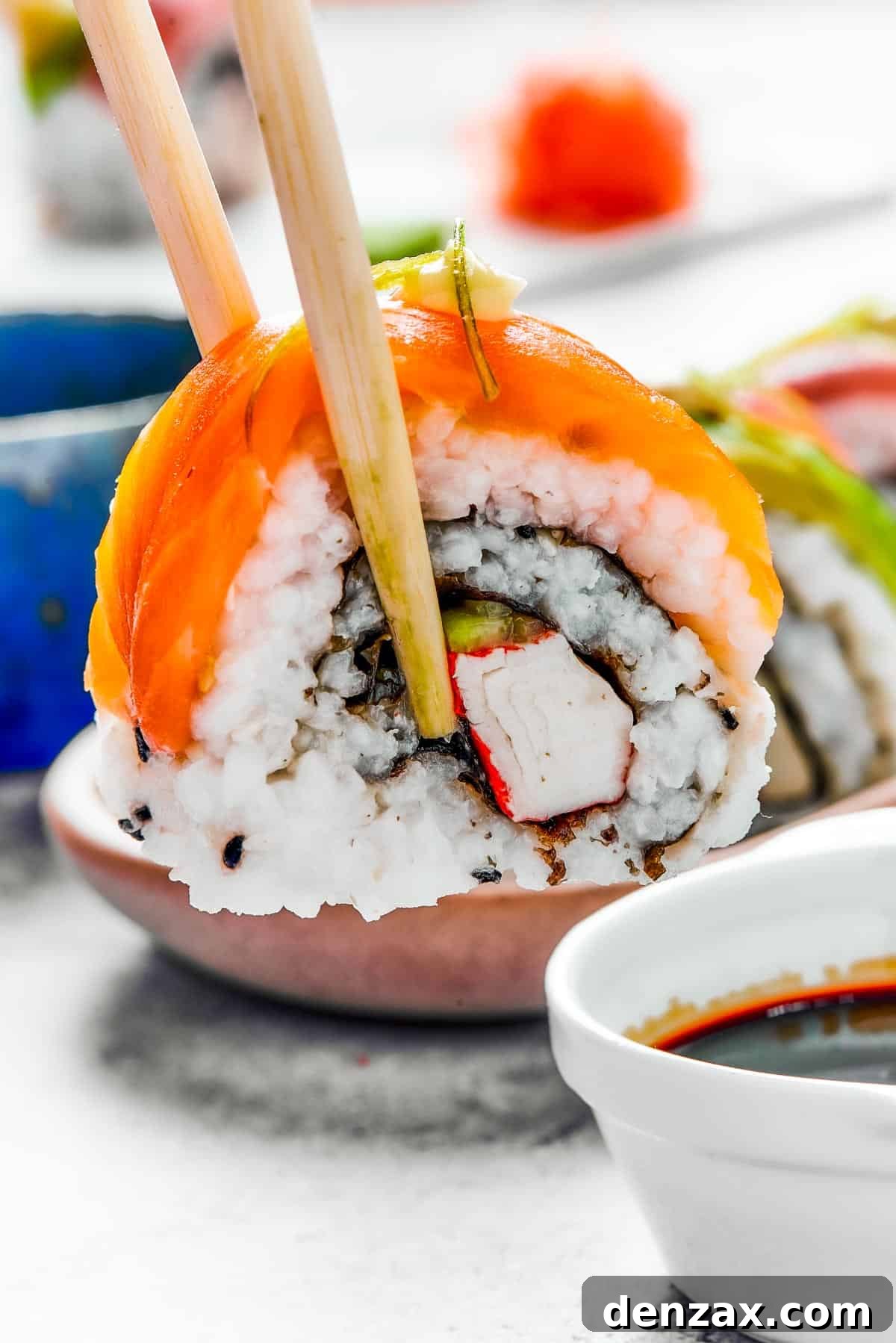
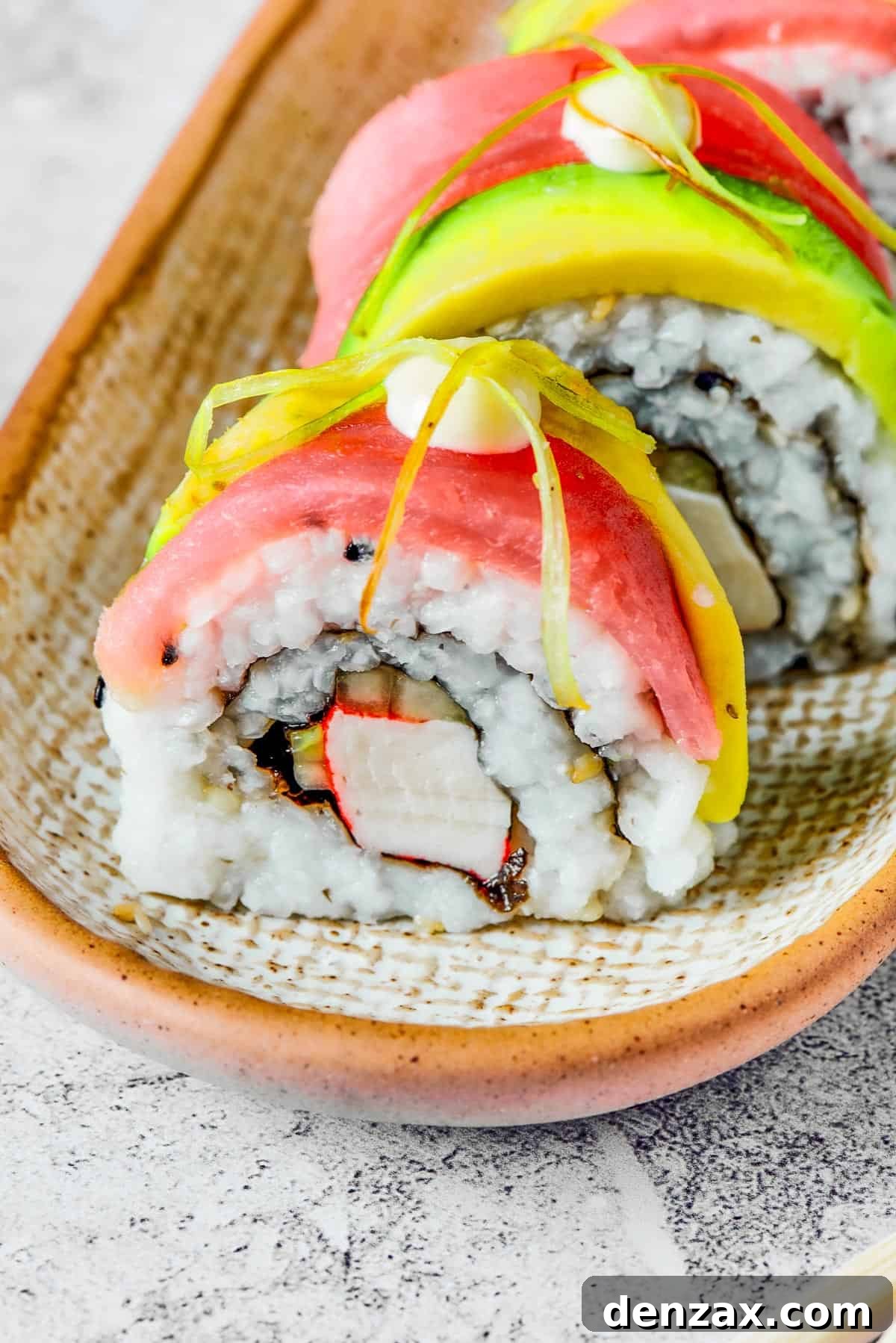
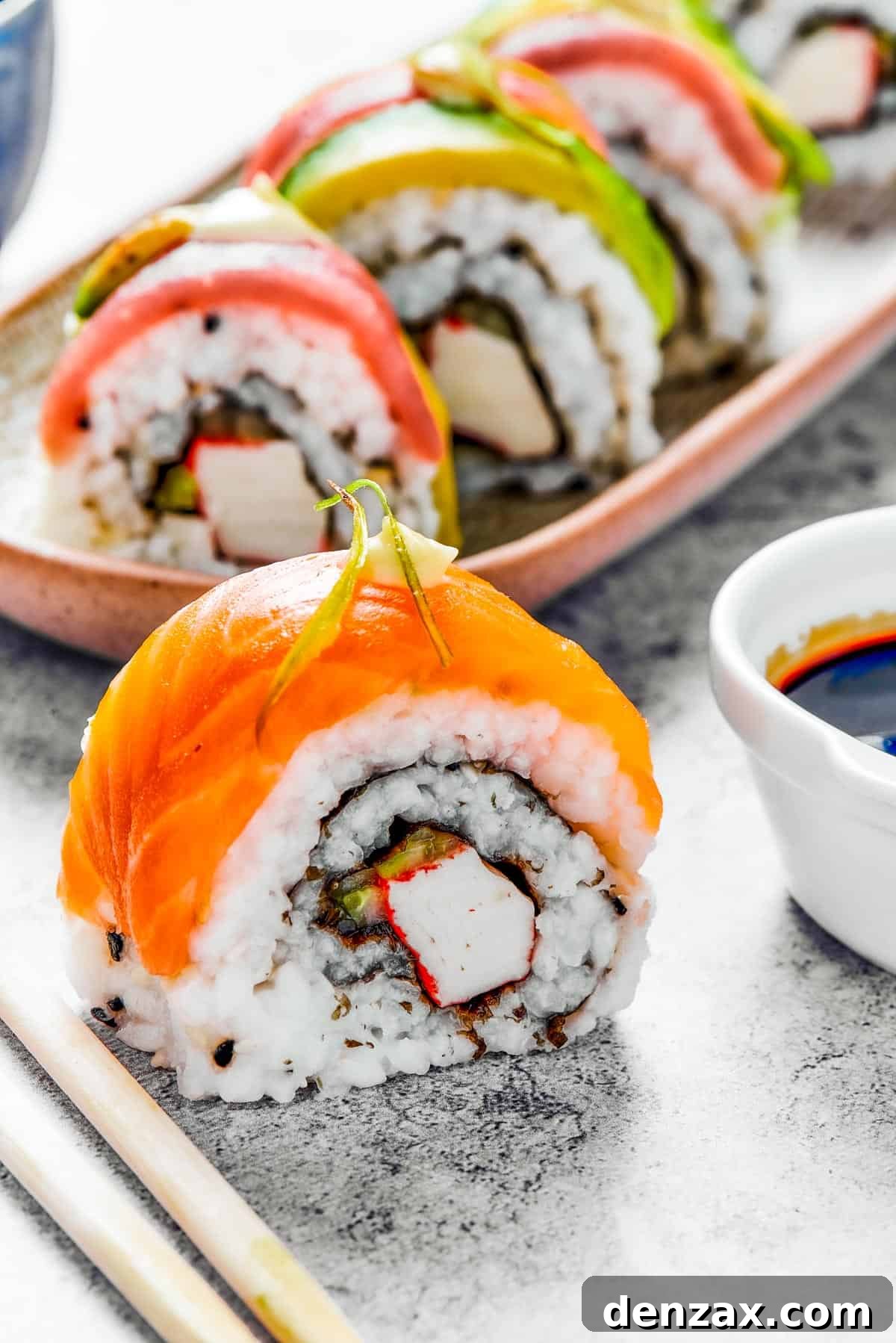
Craving the vibrant colors and fresh flavors of your favorite sushi roll? Look no further than the delightful Rainbow Roll! This iconic creation, bursting with succulent salmon, tender tuna, creamy avocado, and crisp cucumber, is not only a feast for the eyes but also surprisingly simple and incredibly satisfying to craft right in your own kitchen. Forget expensive takeout; you can master this mouthwatering Japanese classic with just a little time and a few key ingredients.
For those who love to experiment, consider a playful twist by incorporating teriyaki salmon into your roll for an irresistible sweet and savory kick. To elevate your homemade sushi experience into a complete Japanese-inspired meal, pair your stunning Rainbow Roll with crispy shrimp tempura. Get ready to impress your taste buds and your guests!
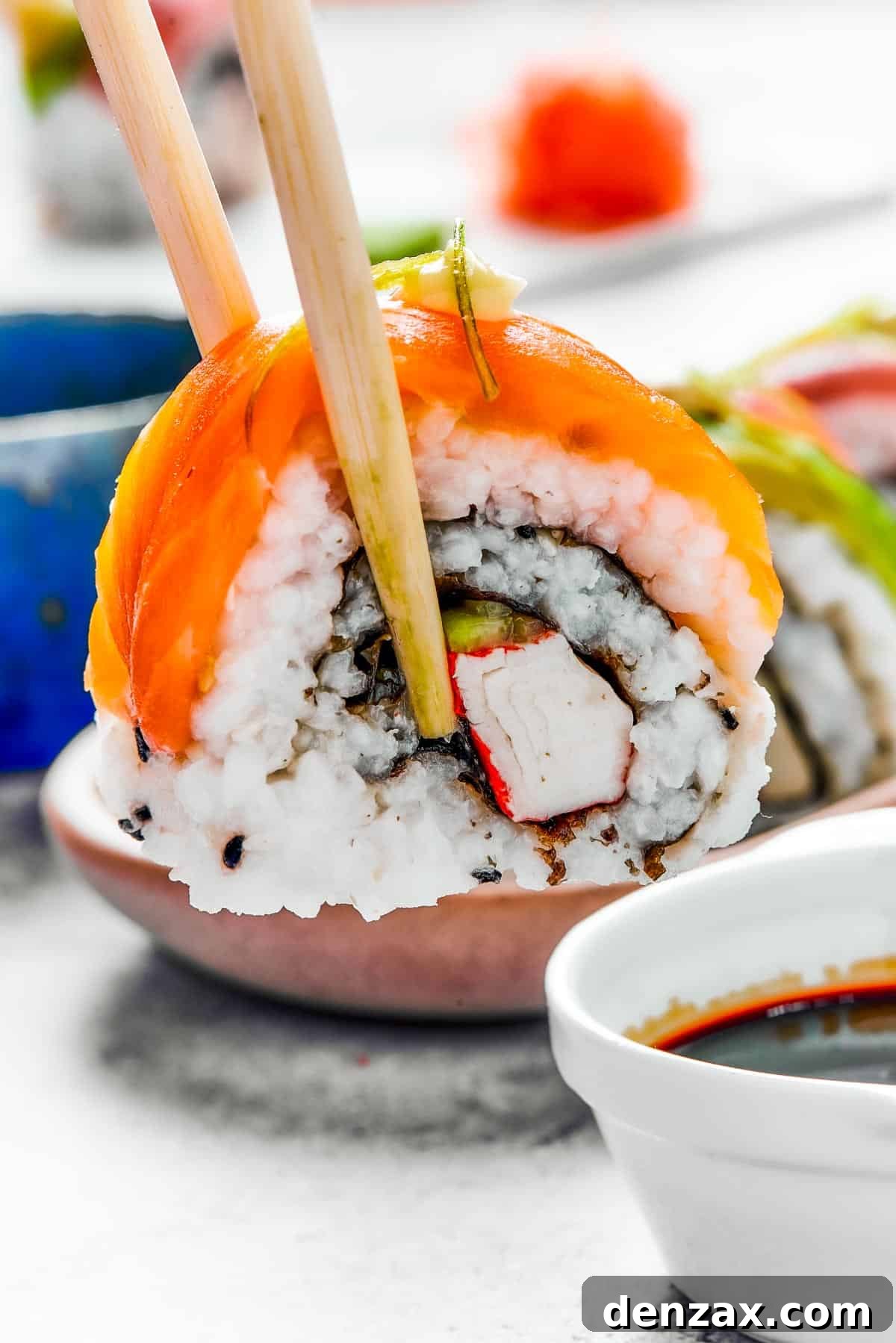
Experience Restaurant-Quality Sushi, Effortlessly at Home!
Sushi has long been a culinary delight enjoyed by many, often associated with elegant restaurants and expert chefs. There’s an undeniable allure to its fresh ingredients, delicate textures, and artistic presentation. While dining out for sushi is always a treat, imagine the satisfaction and savings of recreating your favorite rolls right in your own kitchen! Many people believe sushi-making is an intricate art form reserved for professionals, but that couldn’t be further from the truth, especially when it comes to beloved classics like the Rainbow Roll.
You don’t need years of training or a specialized kitchen to produce delicious and visually stunning sushi. This guide is designed to demystify the process, proving that making high-quality sushi at home is not only achievable but also incredibly fun. While some gourmet rolls might indeed require advanced skills and extensive preparation, the Rainbow Roll stands out as a beginner-friendly option. It’s a fantastic entry point into the world of homemade sushi, offering a rewarding experience without the intimidation. Get ready to embark on a culinary adventure that brings the flavors of Japan directly to your dining table, crafted with your own hands.
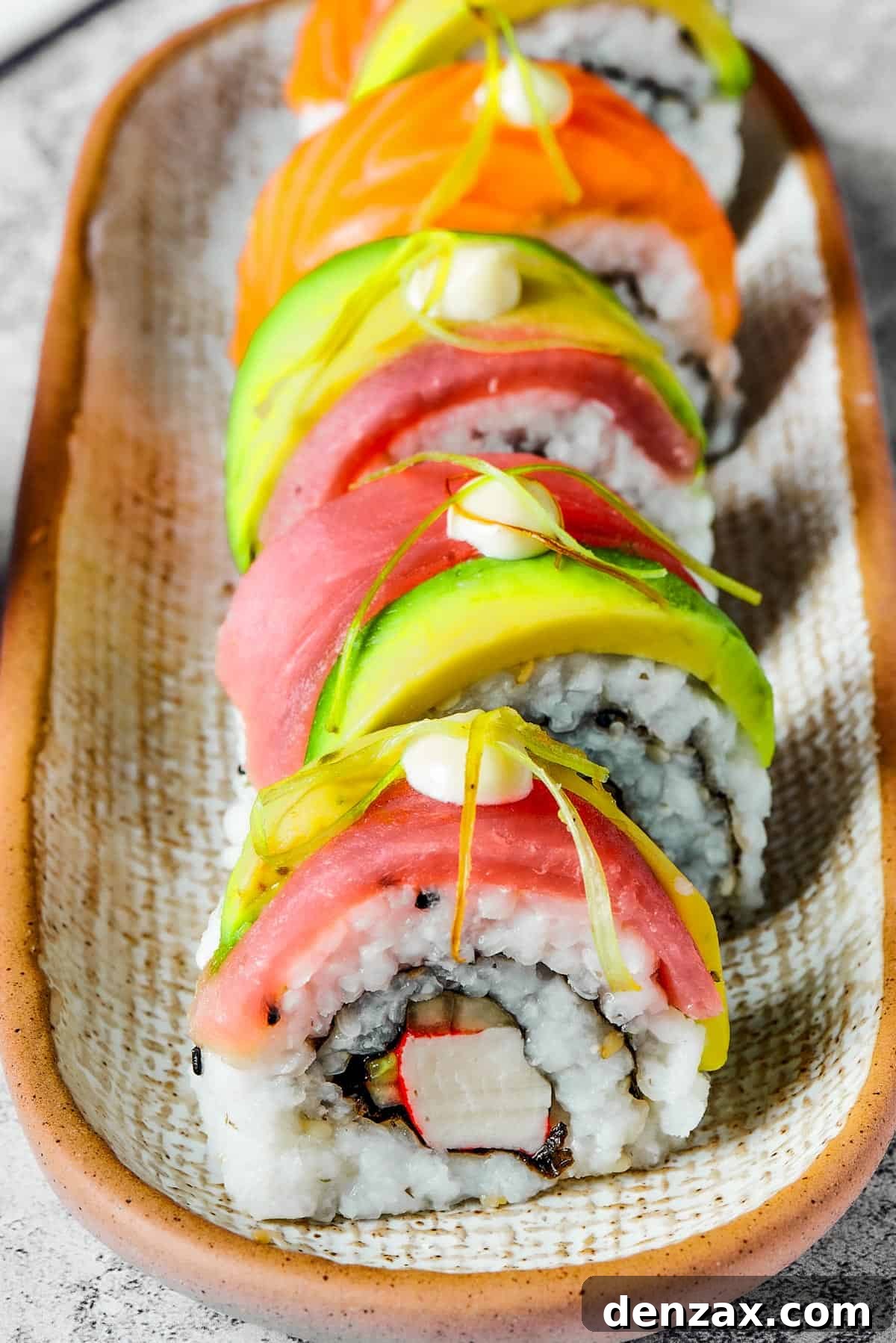
Understanding the Freshness: Is Rainbow Roll Sushi Raw?
Traditionally, yes, the classic Rainbow Roll features raw tuna and salmon as its primary components. These fresh, vibrant slices of fish are what give the roll its distinctive taste and beautiful “rainbow” appearance. While there are adapted versions that utilize cooked fish or entirely vegetarian fillings, our recipe adheres to the authentic method, celebrating the fresh, uncooked ingredients that define this popular sushi type. Don’t let the idea of raw fish intimidate you; with proper sourcing and preparation, it’s a safe and incredibly delicious experience, even for home cooks!
The key to enjoying raw fish in sushi is ensuring you use “sushi-grade” or “sashimi-grade” fish. This term isn’t a legal regulation but rather an industry standard indicating that the fish has been handled and processed in a way that makes it safe for raw consumption. This typically involves specific freezing processes designed to kill parasites. We’ll delve deeper into how to source the safest fish for your homemade sushi, making sure your culinary adventure is both enjoyable and safe.
Gathering Your Essentials: The Ingredients for a Perfect Rainbow Roll
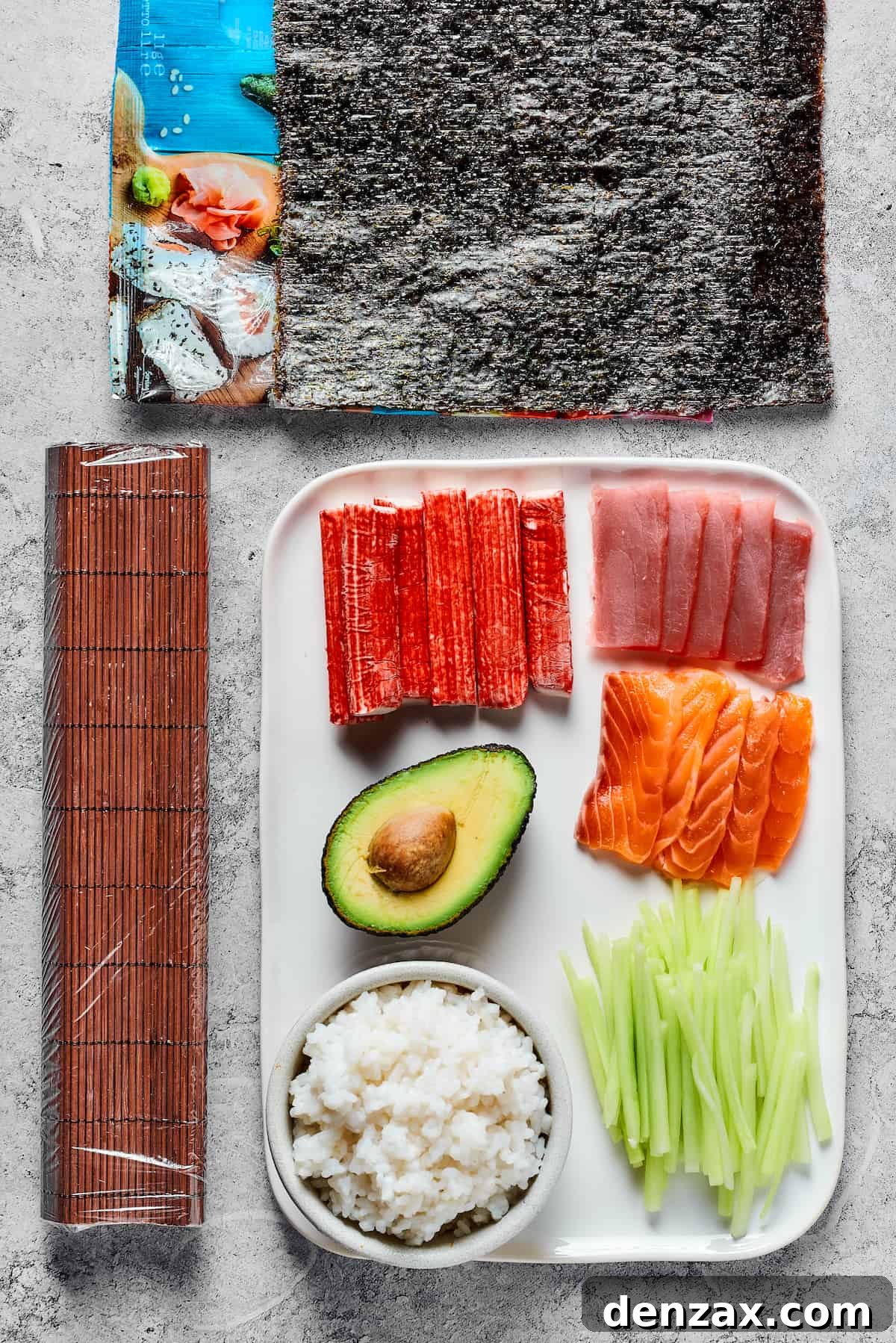
Despite its elegant presentation, the Rainbow Roll relies on a manageable list of fresh, high-quality ingredients. Each component plays a crucial role in delivering the balanced flavors and textures that make this sushi roll so appealing. Let’s explore the essential ingredients you’ll need to create this culinary masterpiece at home.
- Sushi Rice: This is the foundation of your sushi roll, so its preparation is paramount. You’ll need a few ounces of perfectly prepared sushi rice, which means short-grain Japanese rice seasoned with a mixture of rice vinegar, sugar, and salt. You can prepare it from scratch, ensuring the ideal sticky texture and tangy flavor, or opt for convenient pre-packaged sushi rice from your local Asian market.
- Sushi-Grade Salmon and Tuna: These are the stars of your “rainbow.” It’s absolutely crucial to use high-quality, sushi-grade salmon and tuna. These should be raw, exceptionally fresh, and sourced from a reputable fishmonger to ensure safety and superior flavor. Look for fish with a bright, clean color and no strong odor.
- Avocado: Adding a creamy texture and rich, buttery flavor, avocado is essential. Select avocados that yield slightly to gentle pressure but aren’t overly soft or mushy. Avoid those that are very hard, as they won’t have the desired creamy consistency.
- Nori: The edible seaweed wrapper that holds your roll together. You’ll need one standard nori sheet. Opt for dark, crisp sheets that have a slightly shiny appearance for the best results.
- Imitation Crab Meat (Surimi): Often referred to as surimi, imitation crabmeat provides a delicate, slightly sweet flavor and tender texture that pairs beautifully with the other ingredients. It’s a common and delicious filling in many sushi rolls.
- Cucumber: For a refreshing crunch and vibrant freshness, cucumber is indispensable. Peel and slice it lengthwise into thin strips to fit perfectly within your roll, adding a cool contrast to the richness of the fish and avocado.
- Toasted Sesame Seeds: These tiny seeds are sprinkled over the rice, offering a delightful nutty flavor and a subtle crunch that enhances the overall texture of the roll. Toasting them beforehand truly brings out their aromatic qualities.
Essential Equipment for Homemade Sushi
Beyond the ingredients, having the right tools can make your sushi-making process significantly smoother and more enjoyable. While you don’t need a professional setup, a couple of key items are highly recommended:
- Bamboo Sushi Mat (Makisu): This flexible mat is indispensable for rolling sushi tightly and evenly. It helps you shape your roll perfectly, ensuring all ingredients are securely tucked inside.
- Very Sharp Knife: A sharp, clean knife is crucial for cleanly slicing your finished roll into pieces without squashing or tearing it. A slightly dampened blade can help prevent rice from sticking.
Sourcing Safely: Can You Eat Raw Fish from the Grocery Store for Sushi?
This is a critical question for anyone making sushi at home. In general, it is NOT considered a safe food practice to consume any fish raw unless it has been explicitly labeled or marketed as “sushi-grade,” “sashimi-grade,” or “for raw consumption.” The reason for this strict guideline is paramount: to eliminate potential parasites and reduce the risk of foodborne illnesses.
True sashimi and sushi-grade fish undergo a specific freezing process. This involves freezing the fish to an ultra-low temperature for a predetermined length of time, a method proven to kill most parasites. Fish sold for general cooking purposes in a typical grocery store seafood counter has usually not undergone this specialized treatment and may harbor parasites that cooking would normally destroy. Therefore, it is unsafe to consume it raw.
Very important: Always purchase your raw fish from highly reputable fishmongers or specialty seafood stores that specifically market their fish as safe for raw consumption. Don’t be afraid to ask your fishmonger about their sourcing and handling practices. Look for fish that is properly marked, often with labels indicating it’s “previously frozen for raw consumption” or “sushi/sashimi quality.” Your health and safety are paramount when enjoying the delicious world of homemade sushi.
Crafting Your Masterpiece: Step-by-Step Rainbow Roll Instructions
Assembling a sushi roll might seem daunting at first, but with a clear guide and a little practice, you’ll be rolling like a pro in no time. Remember, perfection isn’t the goal; deliciousness and a beautiful presentation are. Here’s a detailed, step-by-step guide to creating your mouthwatering Rainbow Roll:
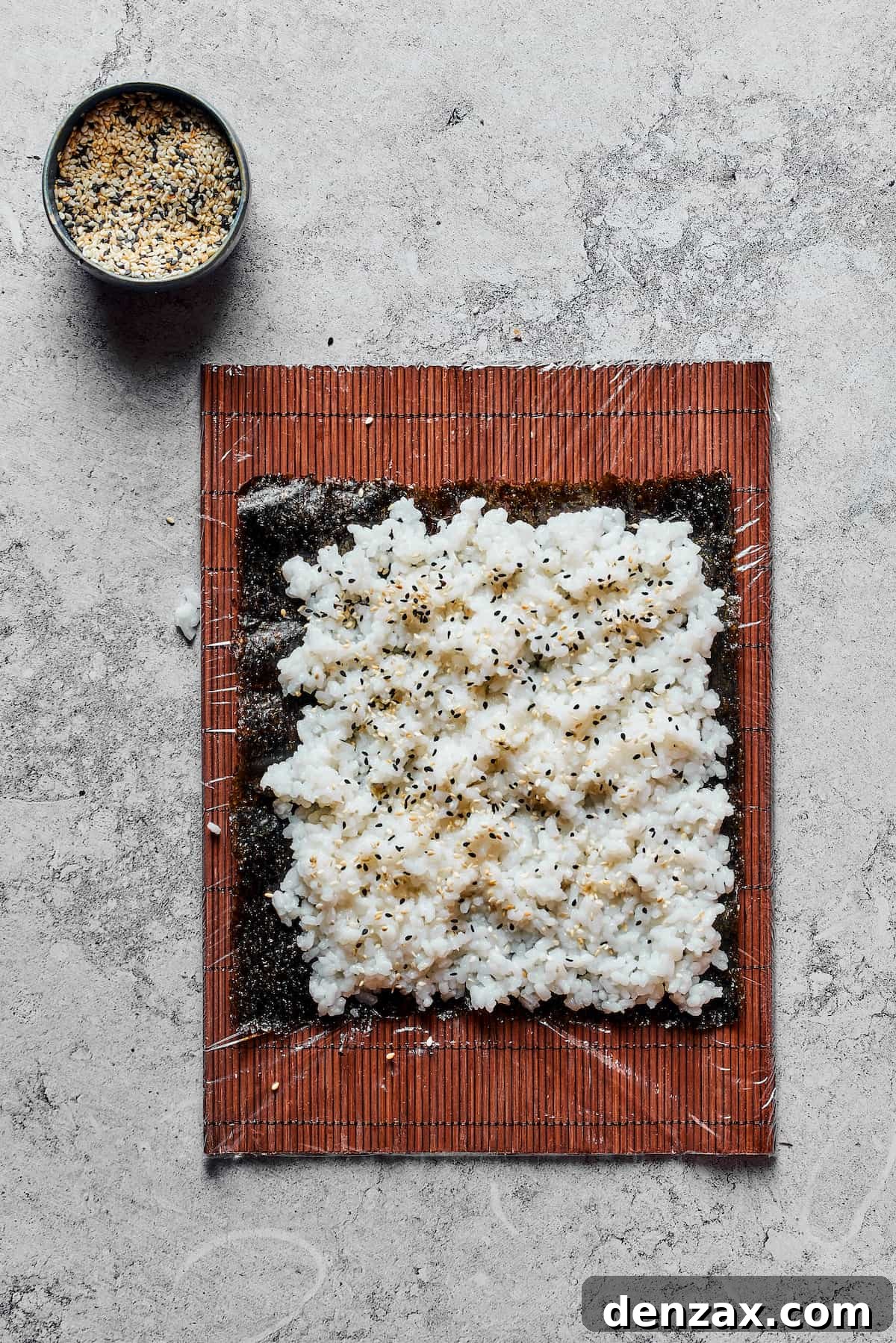
- Prepare the Base: Begin by setting up your rolling station. Lay a bamboo sushi mat on a clean, dry food preparation surface. If you like, you can cover your mat with plastic wrap to prevent rice from sticking and make cleanup easier. Next, place one sheet of nori seaweed, smooth side facing up, on your sushi mat. Evenly spread about 4 ½ ounces of prepared sushi rice over the entire surface of the nori, leaving about a half-inch border at the far end. Gently press the rice to form an even layer, then sprinkle it generously with toasted sesame seeds for added flavor and visual appeal. Carefully flip the nori sheet over so the rice layer is now facing down on the bamboo mat.
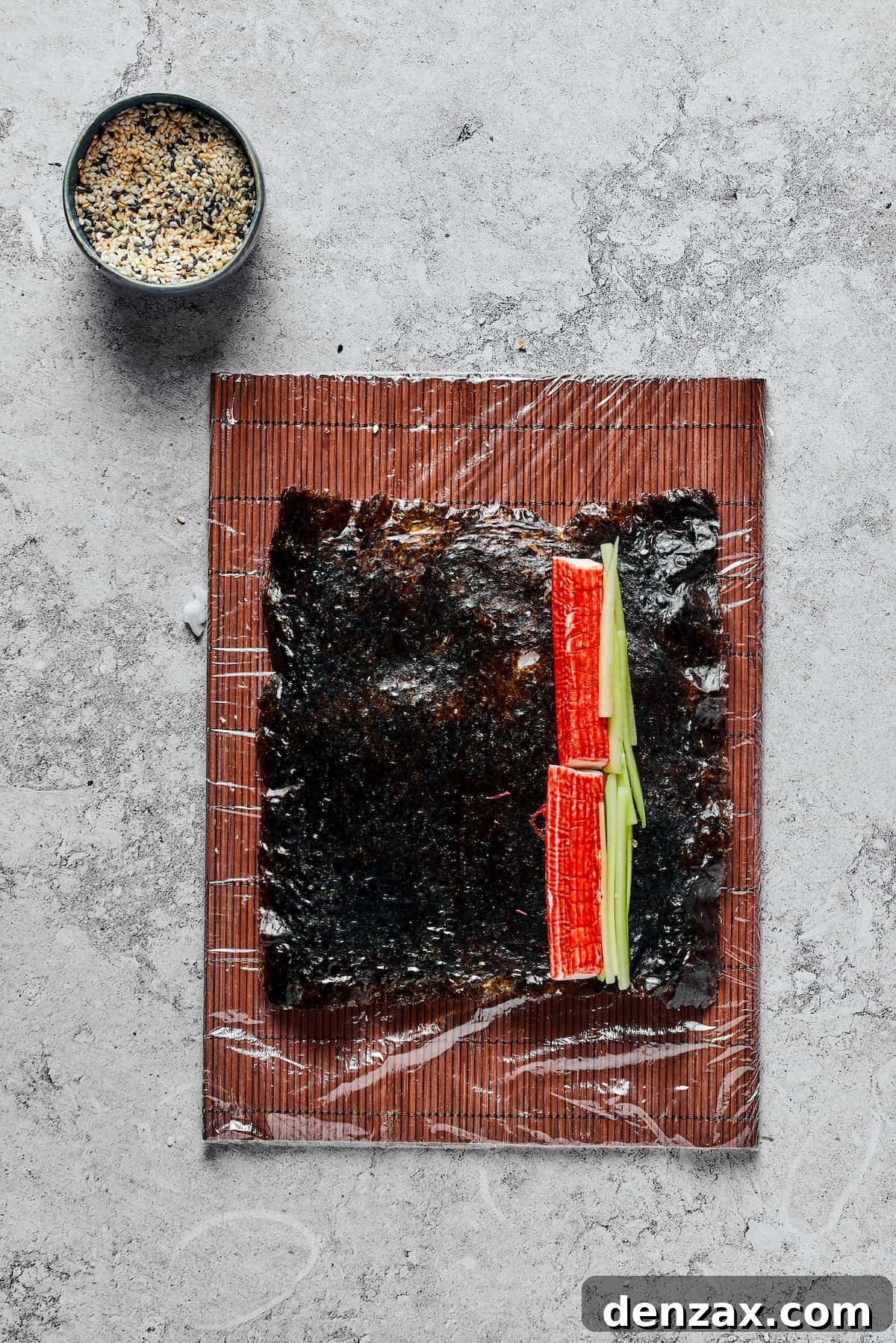
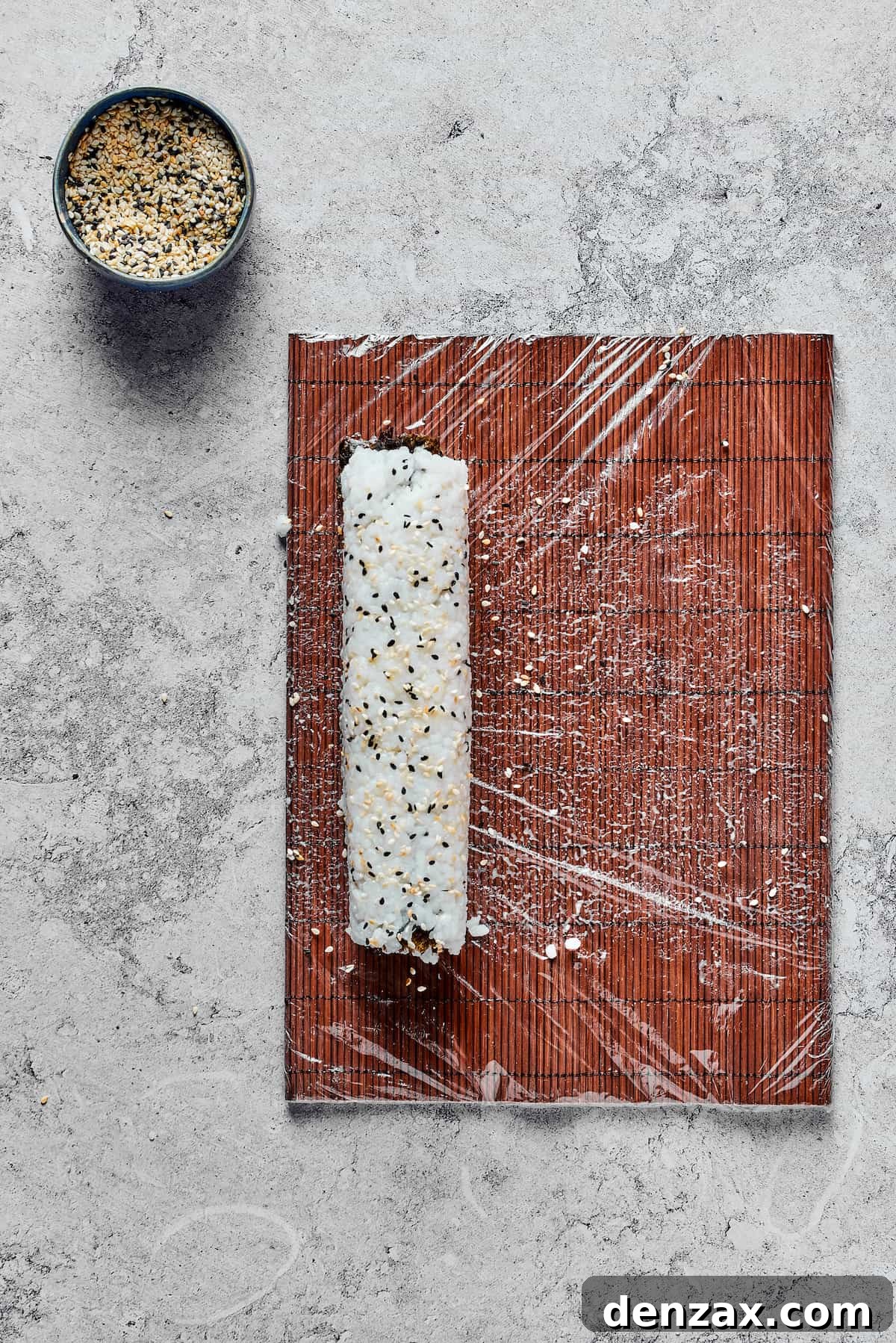
- Fill the Rainbow Roll: Now it’s time for the delicious interior. Arrange the imitation crabmeat and the cucumber slices lengthwise across the bottom third of the rice-covered nori. Make sure the fillings are snug but not overflowing. To begin rolling, place your thumbs on the sides of the bamboo mat closest to you, while simultaneously using your fingers to hold the toppings firmly in place. Begin to roll the mat forward, tucking the edge of the nori and fillings tightly over themselves. Apply gentle, even pressure as you roll to create a compact cylinder, lifting the mat slightly as you go to prevent it from getting rolled into the sushi itself. Continue rolling until you have a firm, cylindrical sushi roll.
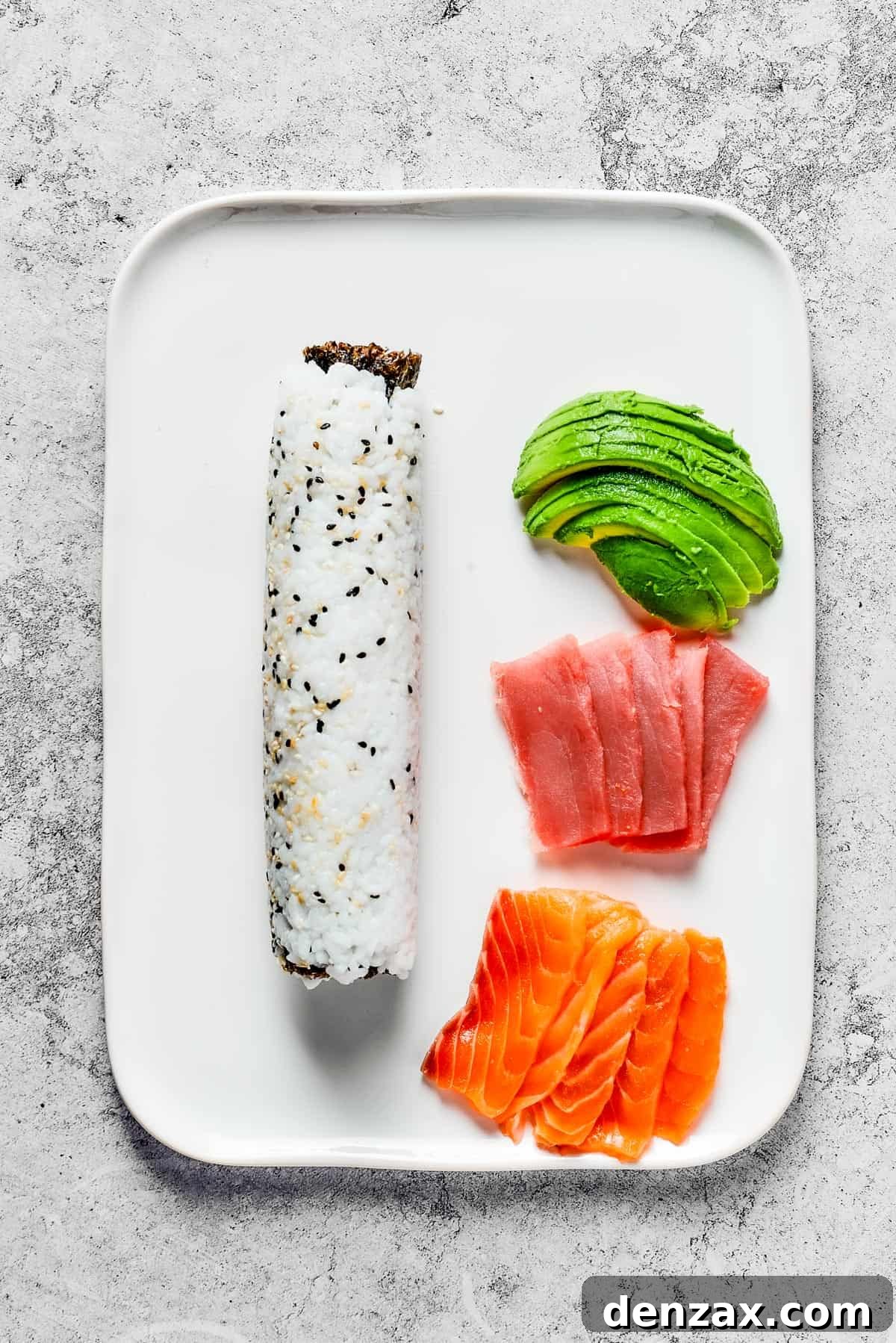
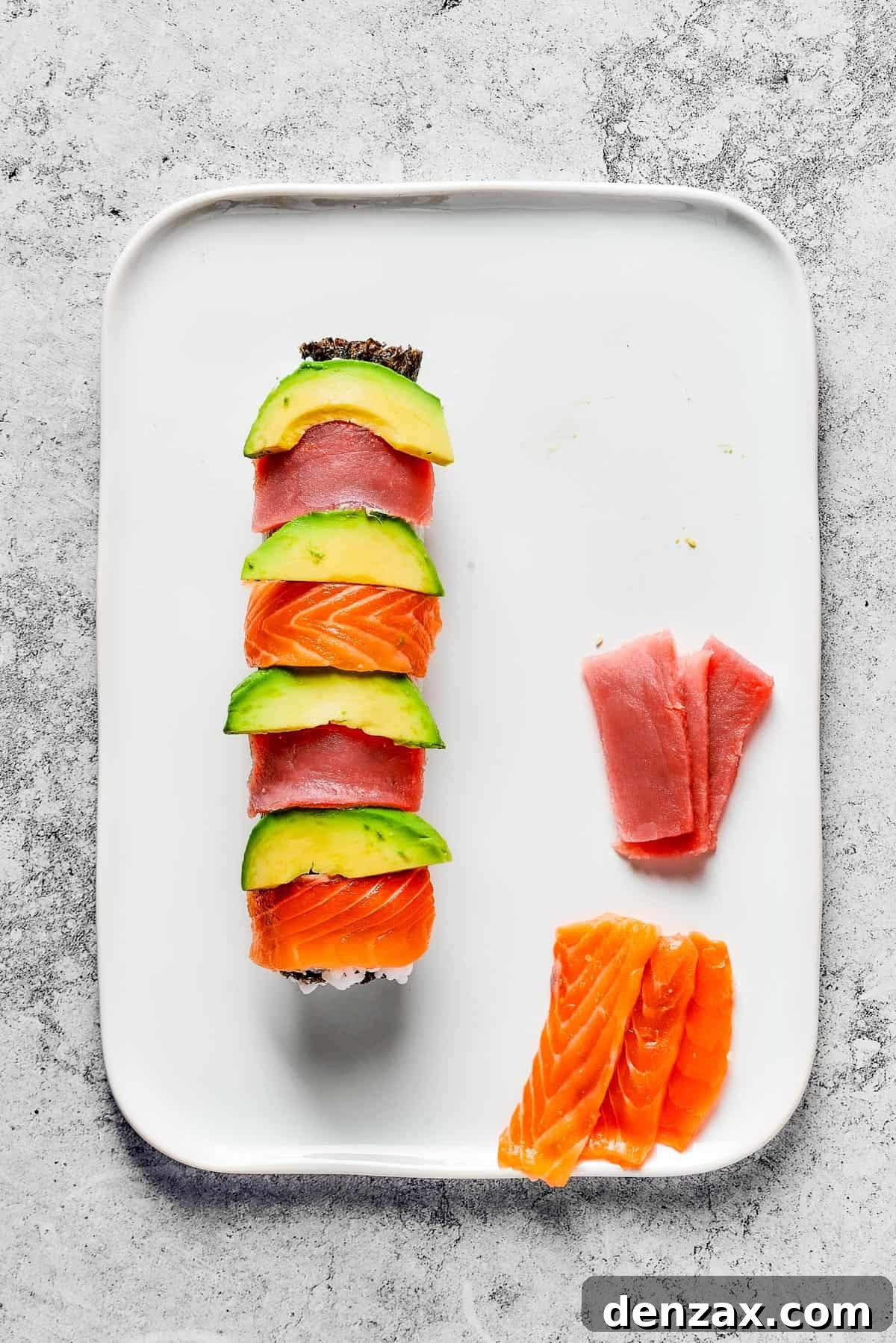
- Top the Rainbow Roll: This is where the “rainbow” comes to life! Carefully slice your sushi-grade tuna, salmon, and avocado into very thin, uniform pieces (approximately 0.1 inches thick). Precision here helps with even cooking and a beautiful display. Artfully arrange these vibrant slices in alternating colors across the entire top surface of your rolled sushi.
- Finish the Dish: Once your toppings are arranged, use the bamboo mat again to gently press and shape the fish and avocado slices onto the sushi roll. This light squeeze helps secure them in place and gives the roll a uniform appearance. Next, using a very sharp, slightly dampened knife, slice the sushi roll into 6 equally sized pieces. A clean, decisive cut is essential to prevent squashing or tearing the roll. Wipe your knife between cuts if rice starts to stick.
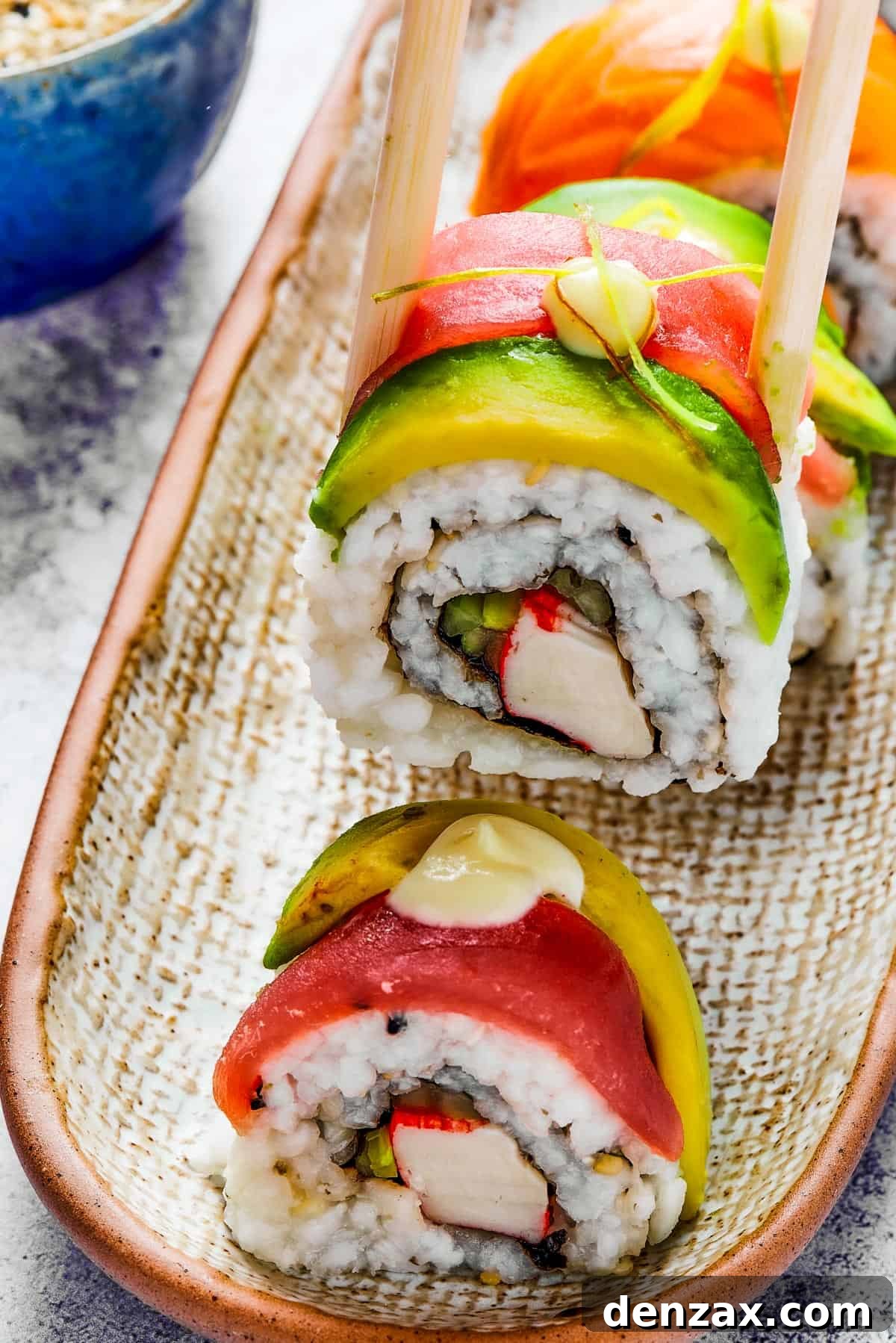
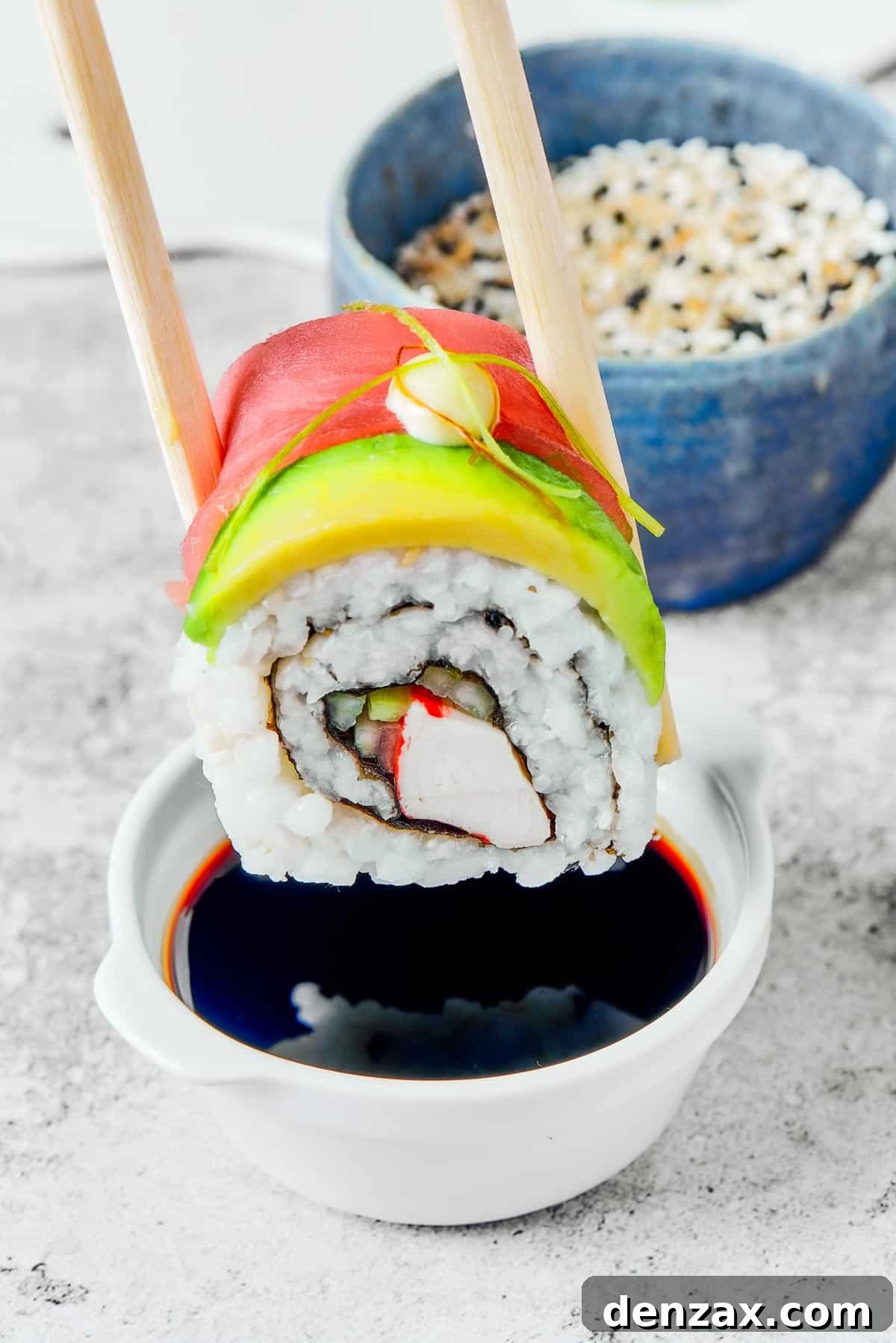
- Enjoy!: Arrange your freshly cut Rainbow Roll pieces on a beautiful serving platter. Serve immediately with traditional Japanese accompaniments: a small dollop of Japanese mayonnaise for creamy richness, a side of savory soy sauce for dipping, a dash of fiery wasabi for an invigorating kick, and delicate slices of pickled ginger to cleanse the palate between bites.
Mastering Your Roll: Expert Tips for Sushi Success
Making sushi at home is an incredibly rewarding experience, and with a few insider tips, you can elevate your results from good to truly exceptional. Don’t let any initial hesitations intimidate you; these simple steps are designed to help you make the most of this delicious recipe. Happy sushi-rolling!
- Keep Your Hands Damp: Sushi rice is famously sticky, which can make handling it a bit challenging. A pro tip is to lightly wet your hands with water (or a mixture of water and a tiny bit of rice vinegar) before spreading the rice and handling the roll. This prevents the rice from clinging to your fingers, allowing for a smoother, cleaner, and more efficient rolling process.
- Add a Splash of Sweetness with Mango: For an extra burst of tropical flavor and a vibrant pop of color within your roll, consider layering in some thin slices of fresh, ripe mango. Its natural sweetness and soft texture complement the savory fish and creamy avocado beautifully, creating an exciting new dimension to your Rainbow Roll. 🥭
- Embrace the Spice with Sriracha Mayo: If you’re a fan of a little heat, a scrumptious spicy drizzle can take your sushi to the next level. Simply mix sriracha sauce with Japanese mayonnaise (or regular mayonnaise) to your desired level of spice. Drizzle this creamy, tangy, and spicy sauce over your finished rolls just before serving for an irresistible kick.
- Don’t Overfill Your Roll: It’s tempting to pack your sushi with as many delicious ingredients as possible, but overfilling can make rolling difficult and lead to a messy, uneven result. Stick to the recommended ingredient quantities for a perfectly formed and easy-to-handle roll.
- Gently Press, Don’t Crush: When rolling, apply gentle, even pressure. The goal is a compact, firm roll that holds together, not a squashed one. Too much pressure can squeeze out fillings and damage the delicate texture of the rice.
- Clean Your Knife Regularly: As mentioned, a sharp knife is essential. For the cleanest cuts, keep a damp cloth nearby and wipe your knife blade clean between each slice. This prevents sticky rice from accumulating on the blade, ensuring neat, attractive pieces.
Complement Your Meal: Delightful Serving Suggestions
Sushi is a meal best enjoyed with a variety of complementary sides that enhance its flavors and offer a diverse culinary experience. These easy-to-make recipes are perfect for rounding out your Japanese-inspired feast, bringing authentic pan-Asian flavors right to your home.
- Crispy Shrimp Tempura: A beloved Japanese restaurant staple, lightly battered and fried shrimp tempura offers a delightful crunch and savory flavor that perfectly contrasts the fresh sushi. It’s surprisingly easy to make your own Shrimp Tempura at home – but be warned, they are notoriously addictive!
- Golden Veggie Spring Rolls: For a light, crispy, and nutritious accompaniment, these Golden Veggie Spring Rolls are a family-pleasing side. Packed with fresh vegetables and fried to golden perfection, they offer a wonderful textural contrast to your sushi.
- Comforting Egg Drop Soup: Perfect as a warm starter or a light side dish, Egg Drop Soup is both wholesome and incredibly simple to prepare. This comforting, savory soup is a wonderful way to begin your meal or add a soothing element.
- Steamed Edamame: A classic Japanese appetizer, simply steamed edamame pods sprinkled with sea salt are a healthy, tasty, and interactive snack that’s perfect before or alongside your sushi.
- Savory Gyoza (Potstickers): These delectable Japanese dumplings, filled with meat or vegetables and pan-fried to crispy perfection, make an excellent savory side that pairs wonderfully with any sushi meal.
- Miso Soup: A light, flavorful, and incredibly comforting bowl of miso soup is a traditional pairing with sushi. Its savory umami notes and delicate ingredients cleanse the palate and prepare it for the fresh flavors of the rolls.
Preserving Freshness: How to Store Leftover Sushi
While sushi is undeniably best enjoyed fresh, if you happen to have any leftover Rainbow Roll, proper storage is crucial for both taste and food safety. Due to the raw fish and delicate rice, sushi has a limited shelf life.
- If you don’t consume all of your rainbow roll immediately, you can store it in the refrigerator for a maximum of 24 hours. To maintain freshness and prevent drying out, ensure you wrap the sushi pieces tightly in plastic wrap, then place them in an airtight container. It’s vital to get them into the fridge no more than an hour after making them to ensure optimal food safety and prevent bacterial growth, especially with raw fish. While still edible, the rice may stiffen slightly, and the textures might not be as vibrant as when freshly made.
Freezing Sushi: Is It a Good Idea?
- While it is technically possible to wrap sushi tightly and freeze it for a very short period, I strongly advise against it for the best culinary experience. Freezing and thawing sushi can significantly compromise its quality. The delicate sushi rice tends to become dry, hard, and lose its ideal texture, becoming crumbly rather than perfectly sticky. Furthermore, the fresh fish and avocado can suffer textural changes, becoming watery or mushy upon thawing. The structural integrity of the rolls also weakens, making them prone to falling apart. This dish truly shines when enjoyed freshly made, allowing you to savor every vibrant flavor and delicate texture as intended.

Print Recipe
Rainbow Roll Sushi
Katerina | Easy Weeknight Recipes
Prepared with salmon, tuna, avocado, and cucumber, this delicious Rainbow Roll is simple, scrumptious, and easy to create in your own kitchen!
25 minutes
25 minutes
2
Ingredients
For the Rainbow Rolls:
- 4 ½ ounces prepared sushi rice
- 2 to 4 thin slices sushi grade salmon, raw and fresh
- 2 to 4 thin slices sushi grade tuna, raw and fresh
- 1 avocado, sliced thinly (the same thickness as the fish)
- 1 piece nori seaweed sheet
- 2 pieces imitation crabmeat
- 1 cucumber, peeled and sliced lengthwise
- 1 tablespoon sesame seeds, toasted
For Serving:
- Soy sauce
- Wasabi
- Pickled ginger
- Japanese mayonnaise
Instructions
-
On your work surface, lay a sheet of nori seaweed smooth side up, on a bamboo sushi mat.
-
Spread the rice evenly over the nori, sprinkle with sesame seeds, and then turn over the nori sheet so that the rice is now on the bottom.
-
Place the imitation crab meat lengthwise, along with the cucumber slices, toward the bottom third of the roll.
-
Place your thumbs on the sides of the bamboo mat closest to you, and your fingers on the toppings to hold them in place. Roll it up.
-
Prep your tuna, salmon, and avocado by slicing them thinly (0.1 inches). Arrange them on top of the sushi roll.
-
Using the bamboo mat, gently roll the toppings onto the sushi roll.
-
Using a very sharp knife, cut the sushi roll into 6 pieces.
-
Arrange the sushi pieces on a serving plate with a very small amount of Japanese mayonnaise.
-
Serve with soy sauce, wasabi, and pickled ginger.
Nutrition
Nutritional info is an estimate and provided as courtesy. Values may vary according to the ingredients and tools used. Please use your preferred nutritional calculator for more detailed info.
Explore More Fabulous Seafood Recipes
If you loved making and enjoying this Rainbow Roll, you’re in for a treat! Discover more of our delightful seafood recipes that are perfect for any weeknight meal or special occasion. Expand your culinary repertoire with these fresh and flavorful dishes.
- Blackened Balsamic Tuna Steaks: A quick and flavorful way to enjoy tuna, offering a perfect balance of spice and tang.
- Salmon Florentine: Indulge in a sophisticated yet simple dish featuring tender salmon atop a bed of creamy spinach.
- Crab Cake Sliders: Perfect for appetizers or a light meal, these mini crab cakes are bursting with succulent crab meat.