
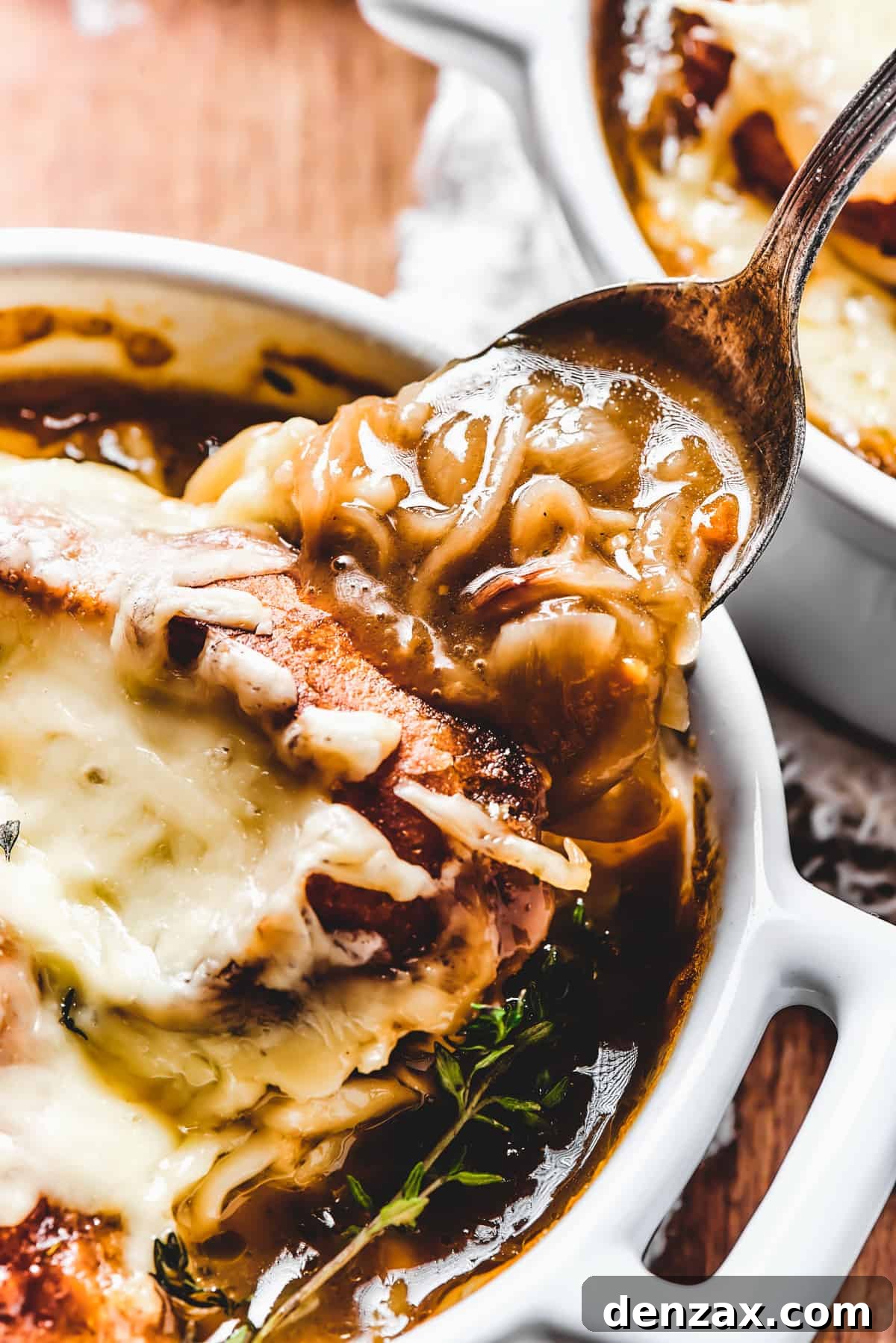
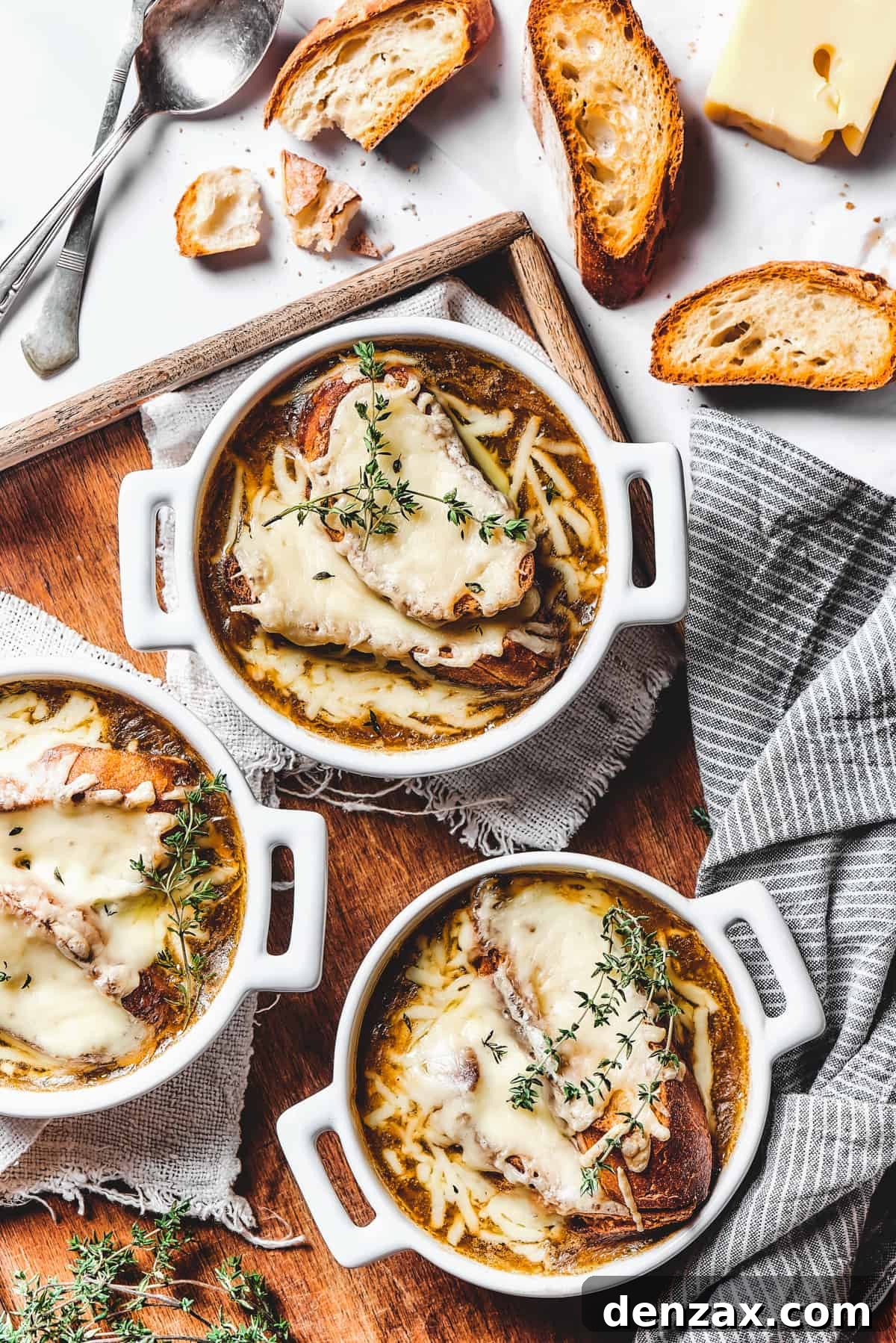
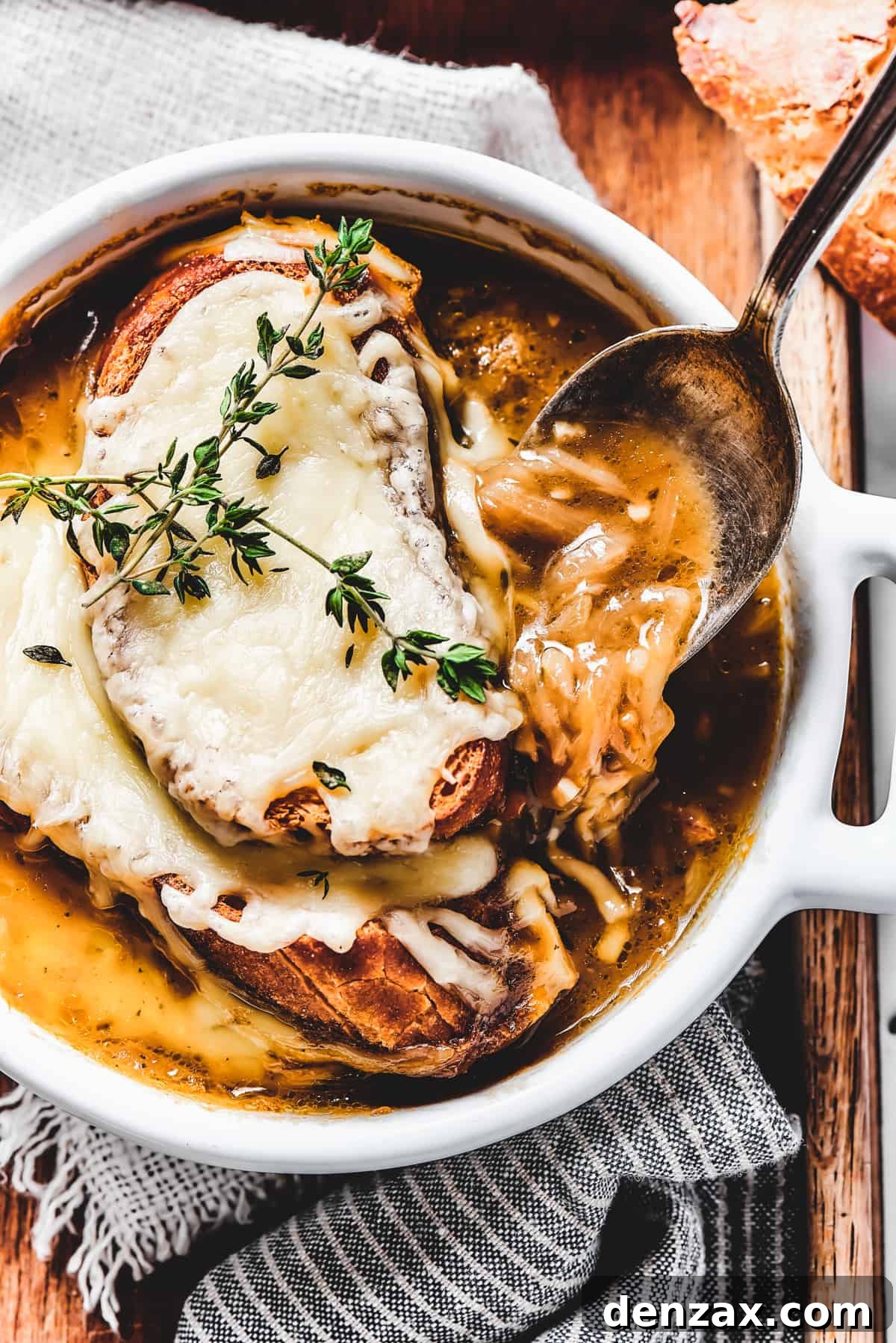
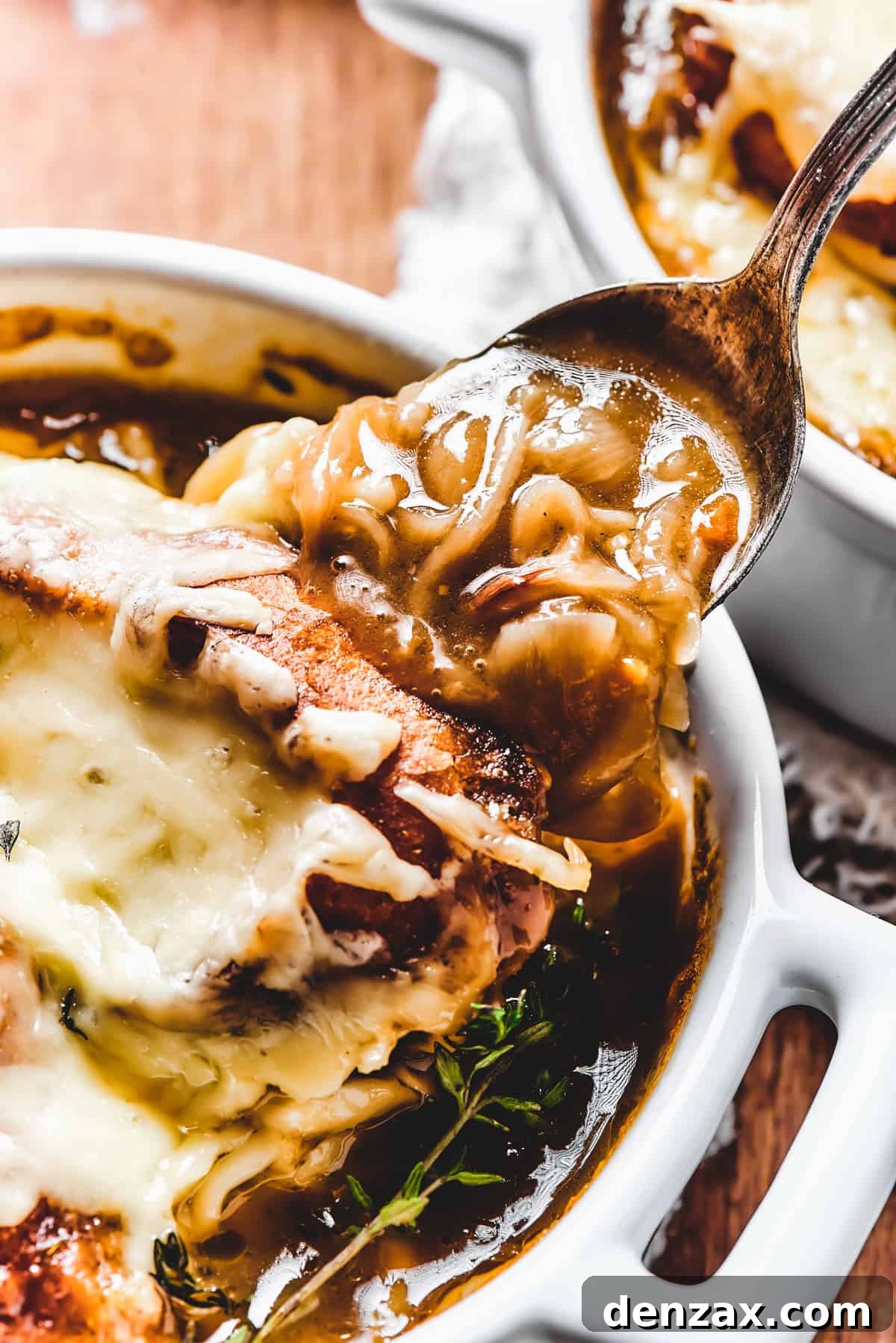
French Onion Soup is more than just a dish; it’s a culinary embrace, a timeless classic renowned for its deep, comforting flavors. Imagine rich, golden caramelized onions swimming in a savory, aromatic broth, generously topped with a perfectly crusty slice of baguette and a blanket of bubbly, melted Gruyère and Swiss cheese. This isn’t just soup; it’s a restaurant-quality experience you can recreate in your own kitchen.
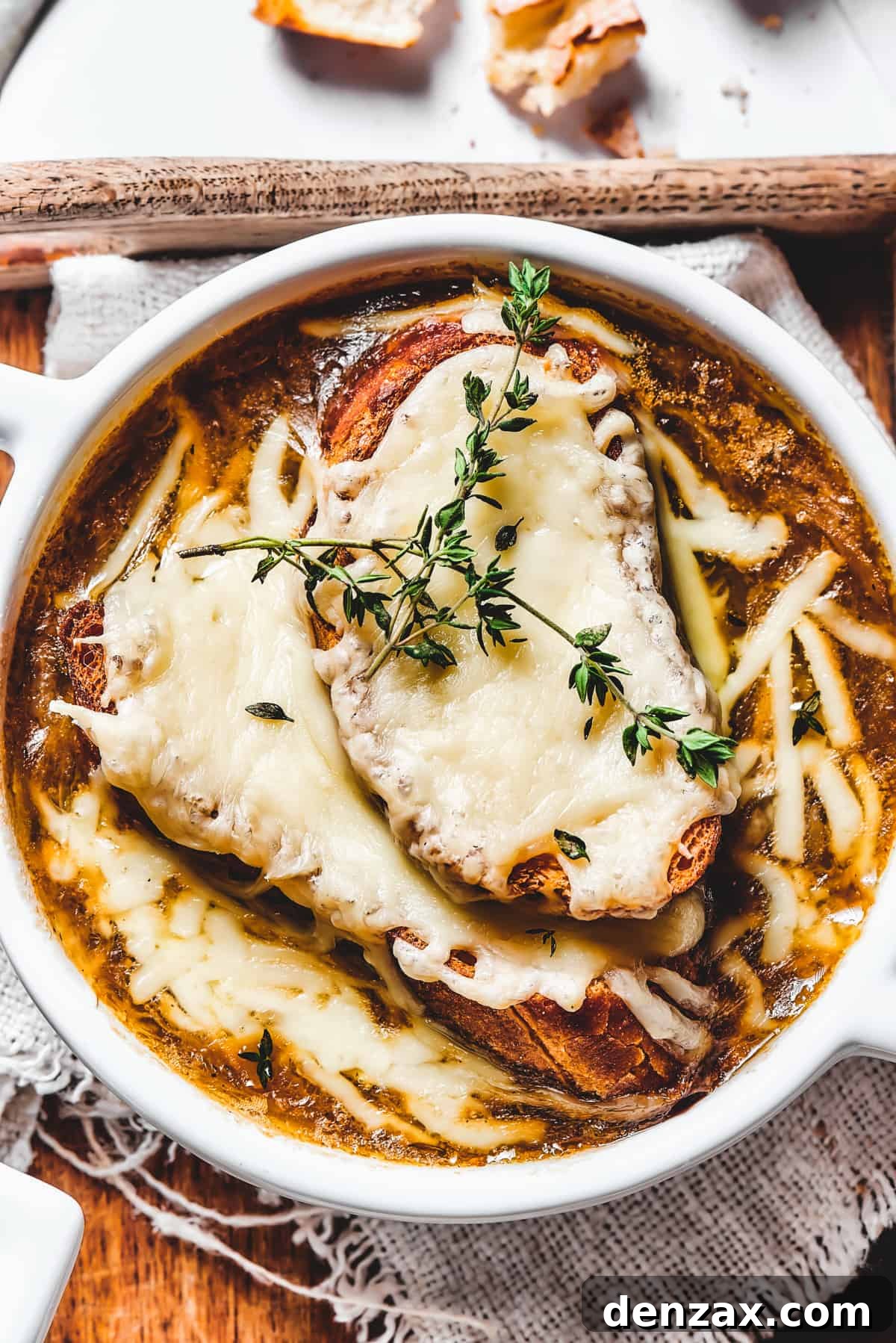
Classic French Onion Soup: A Timeless Culinary Comfort from Scratch
There are few dishes that evoke such profound warmth and coziness as a steaming bowl of French Onion Soup. This perennial favorite truly shines on a chilly evening, transforming a crisp, frigid night into a moment of pure comfort. The irresistible aroma of slowly caramelized onions, deepened by a good quality beef broth, brightened with a splash of wine, and infused with fresh herbs, fills your home with an inviting scent that promises a hearty meal. While often associated with gourmet dining, at its heart, French Onion Soup is humble peasant food – incredibly nourishing, deeply satisfying, and remarkably simple to prepare, despite its sophisticated appearance.
Traditionally, the simplest version of onion soup might call for just onions, water, and wine. While undoubtedly amazing, achieving that profound depth of flavor through onions alone requires an extended cooking time. Our recipe offers a more accessible path to restaurant-worthy results by incorporating a few strategic shortcuts without compromising on taste. We utilize rich beef stock, fresh herbs like thyme and bay leaves, and a touch of acid from Worcestershire sauce and white wine vinegar. These additions not only shave down cooking time but also elevate the soup’s complexity, creating a mouthwatering experience that perfectly balances sweetness, savoriness, and a subtle tang. Every spoonful delivers a harmonious blend of flavors, making this a truly unforgettable homemade rendition.
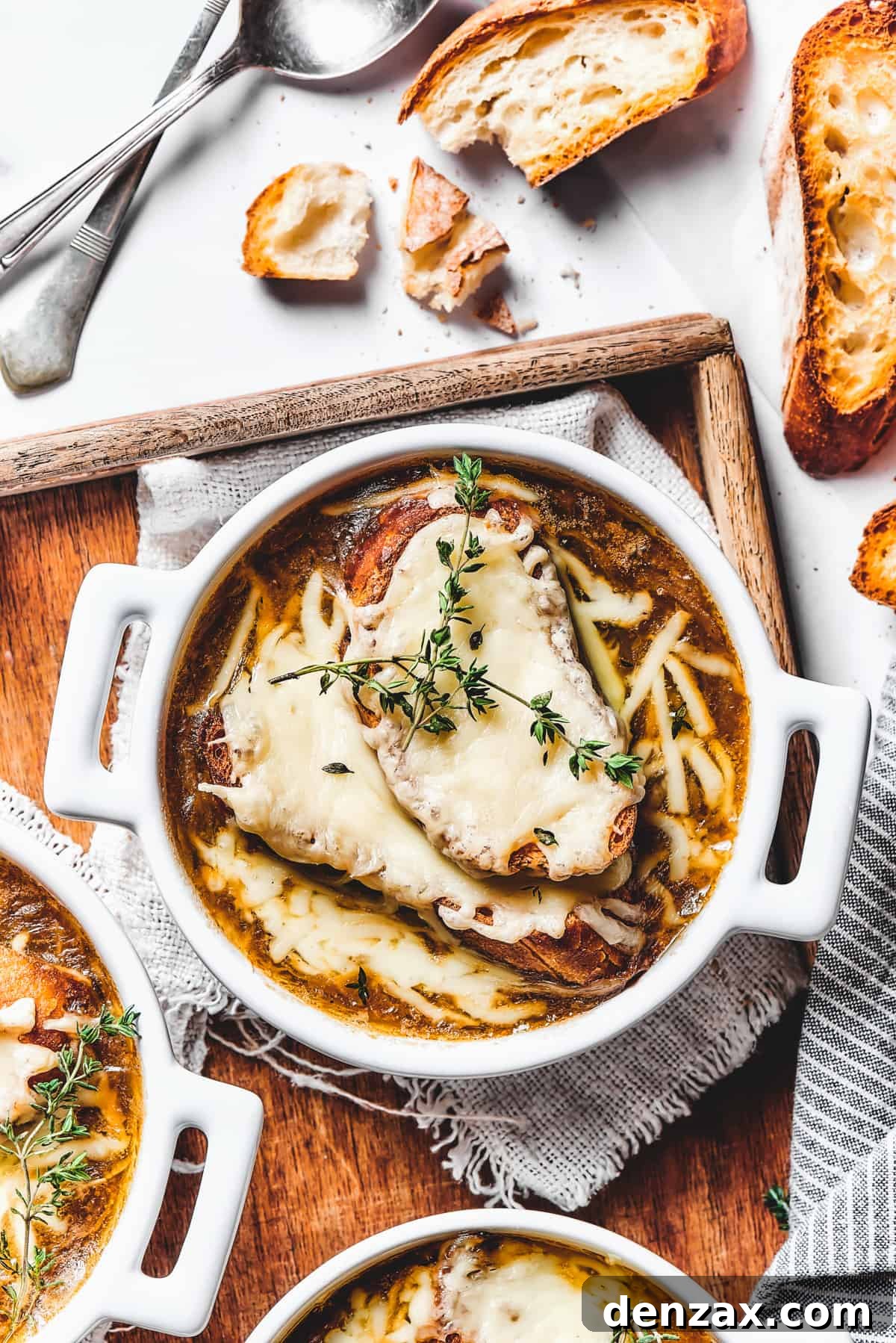
The Heart of the Dish: Essential Ingredients for Flavorful French Onion Soup
Creating an exceptional French Onion Soup begins with selecting the right ingredients. Each component plays a vital role in building the soup’s signature rich and complex flavor profile. Here’s a detailed look at what you’ll need to gather:
- Olive Oil: A good quality extra virgin olive oil provides the initial fat for softening the onions, contributing a subtle fruity note. Lighter olive oil can also be used.
- Onions: The undisputed star! You’ll need 5-6 medium yellow onions, thinly sliced into uniform half-moons. The type and cut of the onion significantly impact the final texture and sweetness.
- Unsalted Butter: Added after the initial softening, butter helps achieve that deep, mahogany caramelization, adding a creamy richness to the onions. Unsalted allows you to control the seasoning precisely.
- Garlic: Minced or pressed, fresh garlic introduces an aromatic depth that complements the sweetness of the caramelized onions beautifully.
- All-Purpose Flour: Just a tablespoon is used as a roux to slightly thicken the soup, giving it a silkier, more substantial body. This helps create a more satisfying mouthfeel, though it can be omitted for a thinner, brothier soup.
- Dry White Wine: Crucial for deglazing the pan and adding a layer of sophisticated acidity and fruitiness. Choose a dry variety like Sauvignon Blanc, Pinot Grigio, or even a dry Sherry. It doesn’t need to be expensive, but it should be a wine you enjoy drinking.
- Beef Stock: The foundation of the soup’s savory depth. Using the highest quality beef stock you can find is paramount. A good stock will have a rich, umami flavor that elevates the entire dish. Homemade is best, but a premium store-bought option works wonders.
- Fresh Herbs: Sprigs of fresh thyme and a couple of bay leaves infuse the broth with earthy, herbaceous notes as it simmers, adding complexity and a classic aroma.
- Worcestershire Sauce and White Wine Vinegar: These are your secret weapons for balancing the flavors. A splash of Worcestershire adds a savory, umami punch, while white wine vinegar cuts through the richness and sweetness of the onions, brightening the soup and preventing it from tasting overly sweet or flat.
- Kosher Salt and Freshly Ground Black Pepper: Essential for seasoning throughout the cooking process, allowing you to build layers of flavor.
For the Iconic Cheese Croutons
No French Onion Soup is complete without its signature cheesy topping. These elements transform the soup into a truly indulgent experience:
- French Baguette: A sturdy, crusty baguette is ideal. Cut it into slices, about 1/2-inch to 3/4-inch thick, providing the perfect canvas for the melted cheese. Its robust texture prevents it from becoming soggy too quickly.
- Shredded Cheese: A blend of Gruyère and Swiss cheese is the gold standard. Gruyère offers a nutty, earthy flavor with excellent melting properties, while Swiss cheese adds a milder, slightly sweet creaminess. This combination creates a rich, bubbly, golden crust that is utterly irresistible.
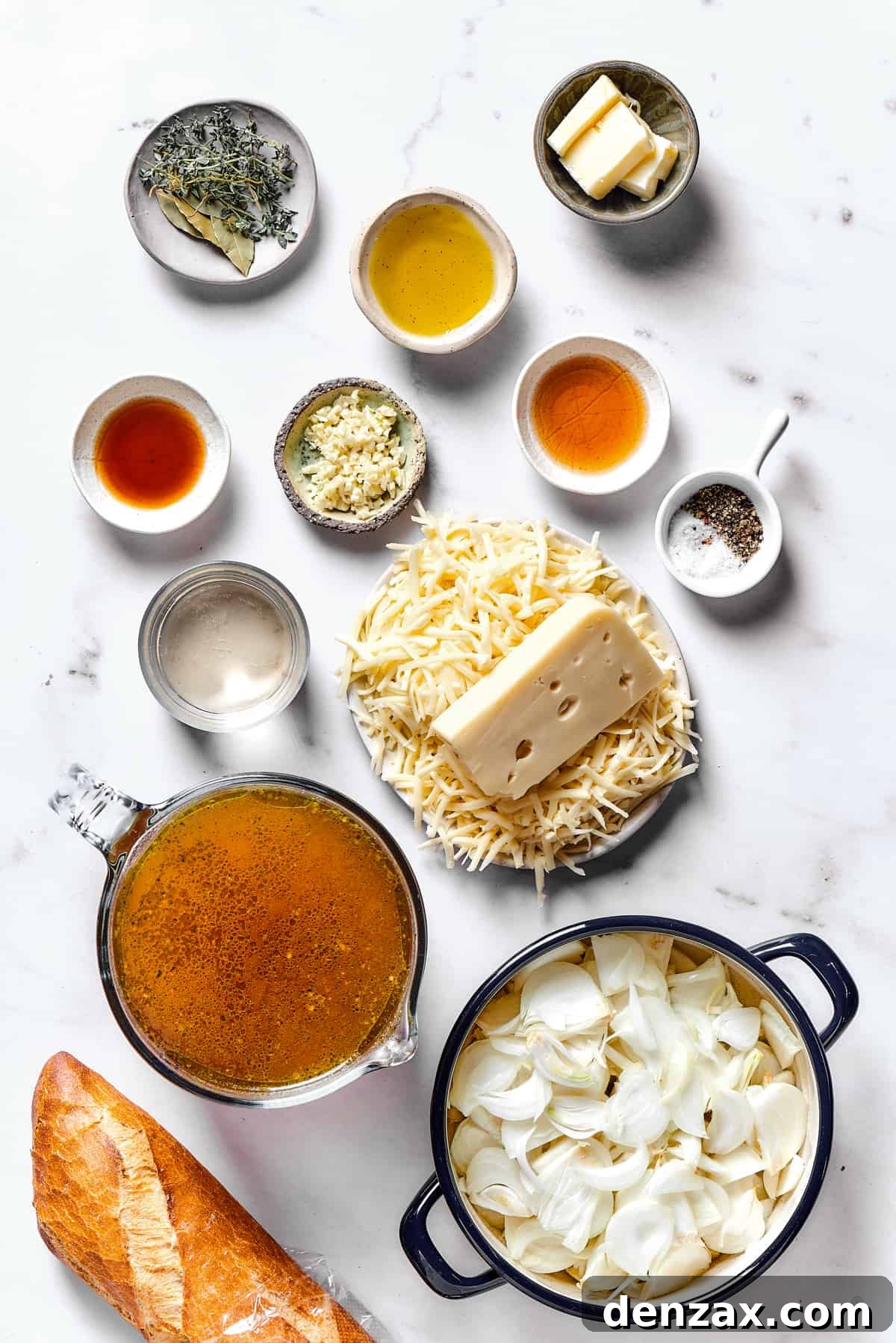
Choosing the Right Onions for French Onion Soup
The type of onion you choose is more important than you might think, as it directly influences the soup’s sweetness and depth. For French Onion Soup, yellow onions are widely considered the “gold standard.” Their balanced sweetness and mild pungency caramelize beautifully, developing rich, complex flavors without becoming overpowering. When cooked down slowly, they transform into a wonderfully jammy texture that forms the backbone of the soup.
If you’re seeking an extra layer of sweetness, sweet Vidalia onions are an excellent choice, though they can be harder to find depending on the season and region. Their naturally higher sugar content means they caramelize even more readily, yielding a sweeter, milder soup. In a pinch, white onions can also work. While slightly sharper and less sweet than yellow or Vidalia onions, they will still caramelize and contribute to a delicious soup, especially when balanced with the other ingredients. Avoid red onions, as their strong flavor and color can alter the traditional profile of this classic dish.
How to Make French Onion Soup: A Step-by-Step Guide to Perfection
Crafting French Onion Soup is a labor of love that primarily takes place on the stovetop, where the magic of caramelization unfolds and the broth simmers to perfection. However, your oven plays an equally important role – first, for crisping the baguette slices, and then, for melting that glorious cheese into a bubbly, golden crust. Follow these steps for an exquisite homemade French Onion Soup:
- Preparing the Onions (Initial Cook): Begin by heating two tablespoons of olive oil in a large Dutch oven or heavy-bottomed pot over medium heat. Add your thinly sliced onions and cook for approximately 10 minutes, stirring frequently. The goal here is to soften the onions until they become translucent. Crucially, do not let them burn; patience is key in this initial stage.
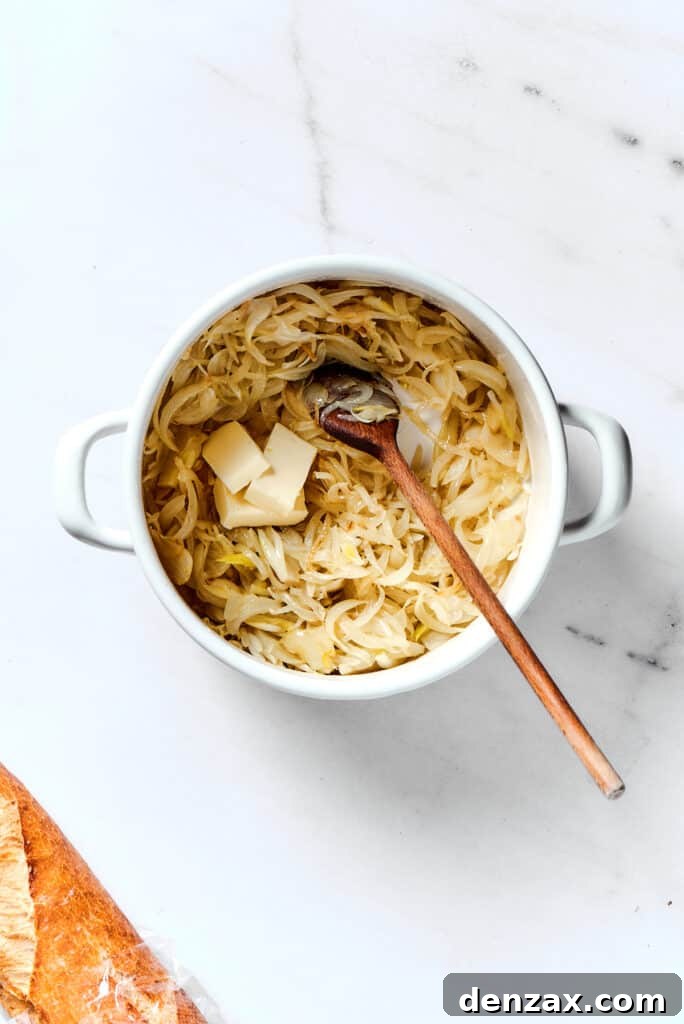
- Achieving Deep Caramelization: Reduce the heat to medium-low. Add the three tablespoons of softened unsalted butter, along with kosher salt and freshly ground black pepper to taste. Stir thoroughly to ensure all the onion slices are evenly coated. Continue to cook for another 35 to 40 minutes. This is where the true transformation occurs: the onions will slowly caramelize to a rich, golden-brown hue, becoming incredibly sweet and tender, and significantly reducing in volume. Remember to stir occasionally to prevent sticking and encourage even browning. If they start to stick, add a small splash of water to deglaze the bottom of the pot.
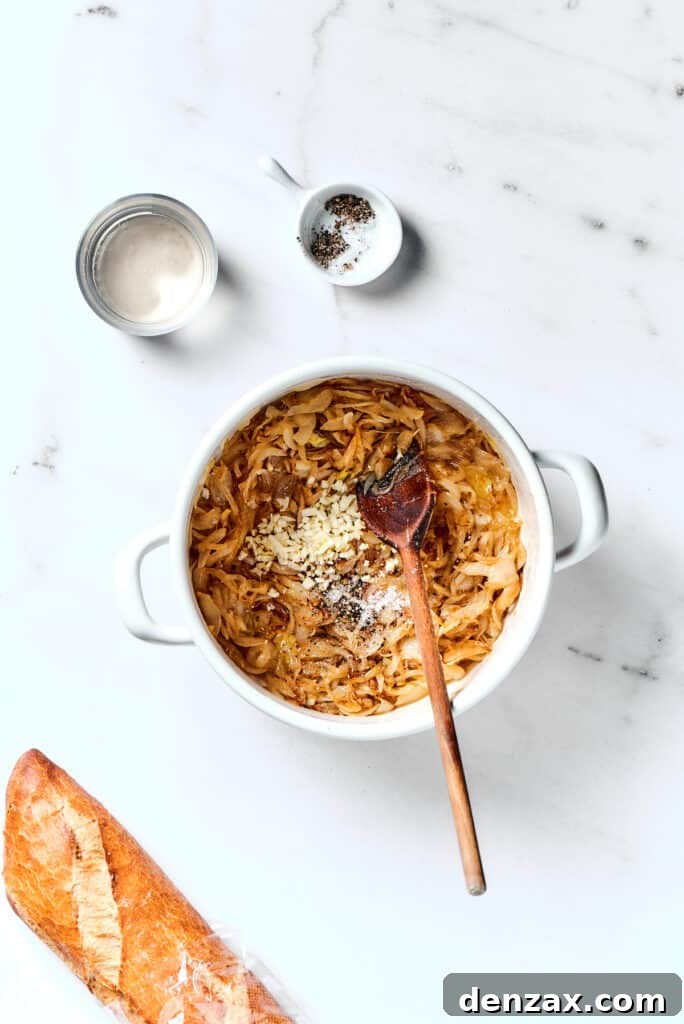
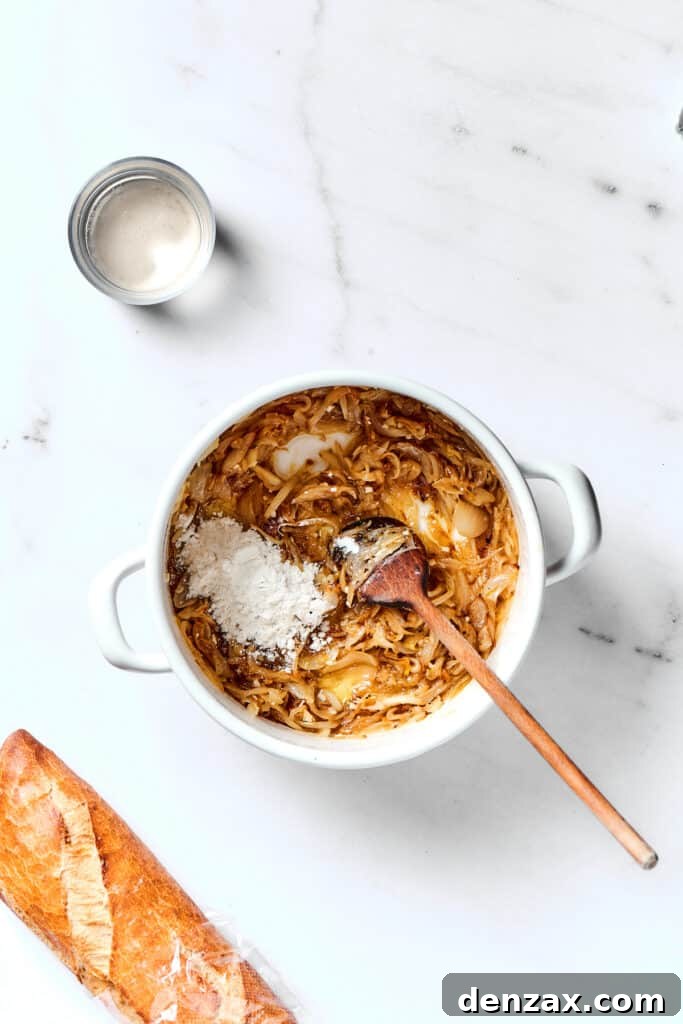
- Building the Flavor Base (Garlic, Flour, and Wine): Once the onions are beautifully caramelized, stir in the minced garlic. Cook for about 1 minute, or until you can distinctly smell its fragrant aroma. Next, add the tablespoon of all-purpose flour and cook for an additional minute, stirring continuously to create a light roux. Finally, pour in the dry white wine. This step is essential for deglazing the pan – use a wooden spoon to scrape up any browned bits that have accumulated on the bottom of the pot. These bits, known as “fond,” are packed with flavor and will dissolve into the soup. Allow the wine to simmer and reduce for 2 minutes.
- Simmering the Broth to Perfection: Now, stir in the 6 cups of high-quality beef stock, along with the fresh thyme sprigs and bay leaves. Bring the mixture to a boil, then immediately reduce the heat to a gentle simmer. Continue to cook, stirring occasionally, for about 15 to 20 minutes, or until the soup has slightly reduced and the flavors have melded together beautifully. This slow simmer allows the herbs to fully infuse the broth.
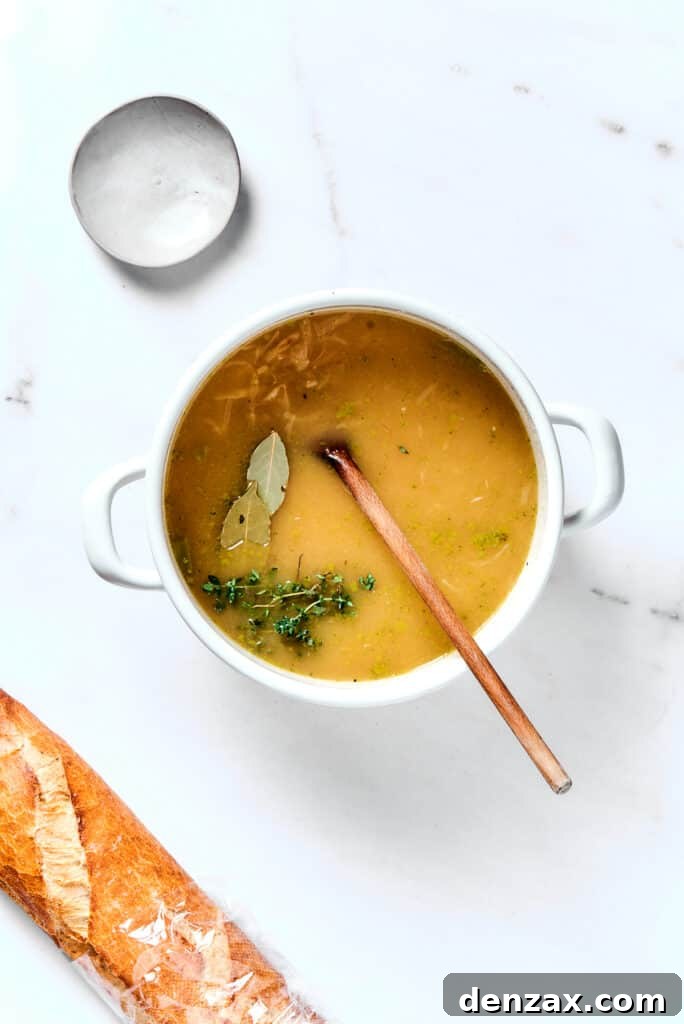
- Finishing Touches: Carefully remove and discard the thyme sprigs and bay leaves from the soup. Stir in the 2 teaspoons of white wine vinegar and 1 teaspoon of Worcestershire sauce. Taste the soup and adjust the seasoning with additional salt and pepper as needed. The vinegar and Worcestershire are crucial for balancing the sweetness and adding a final layer of complexity.
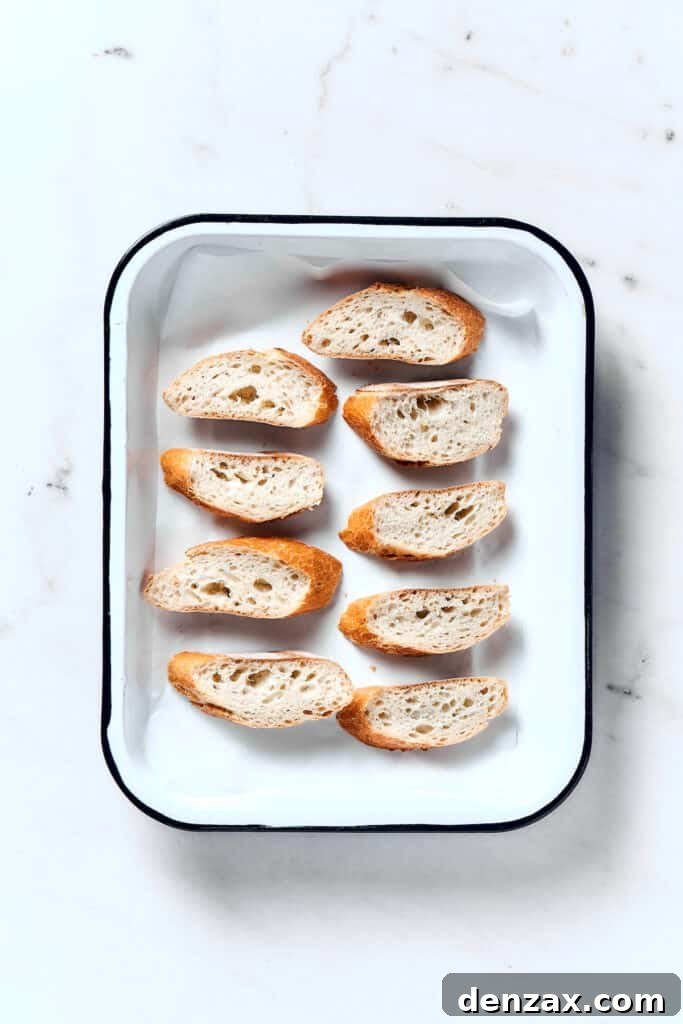
- Preparing the Baguette Croutons: While your soup simmers, preheat your oven to 400°F (200°C). Arrange the baguette slices in a single layer on a baking sheet. Bake for about 5 to 7 minutes, or until the bread is perfectly dry, crisp, and slightly golden at the edges. This pre-toasting prevents the croutons from becoming soggy when placed in the soup. Set them aside.

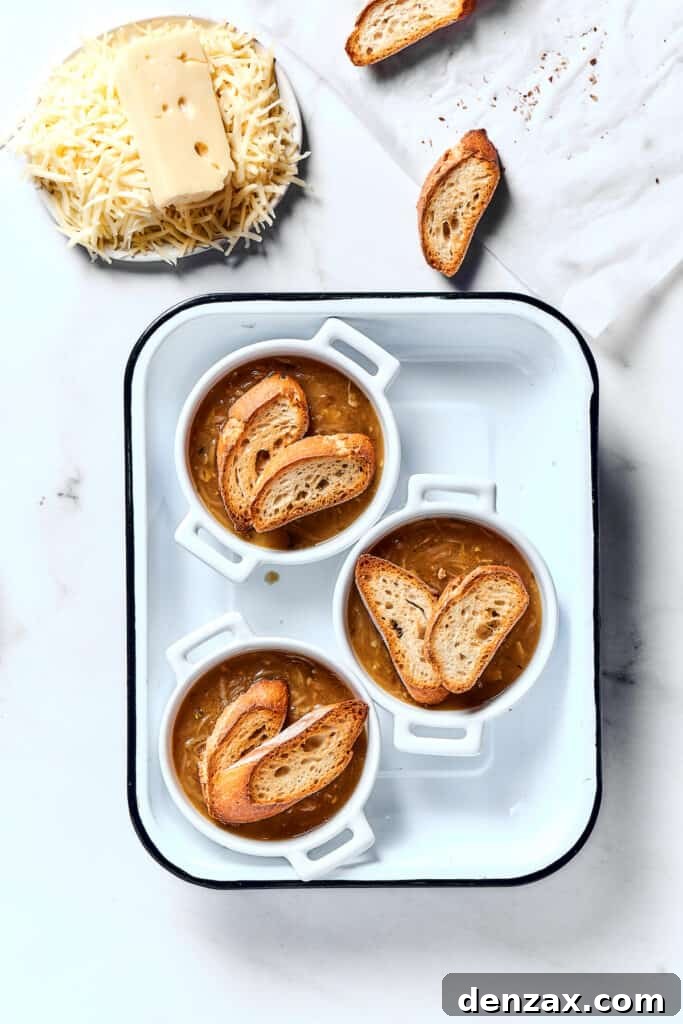
- Assembling and Broiling: Carefully set individual broiler-safe crocks or bowls on a sturdy baking pan. Ladle approximately 1½ cups of the hot French Onion Soup into each bowl. Top each serving with 1 or 2 of the toasted baguette slices, ensuring they are partially submerged in the soup. Generously sprinkle an even layer of shredded Gruyère and Swiss cheese over the baguette and the edges of the bowl.
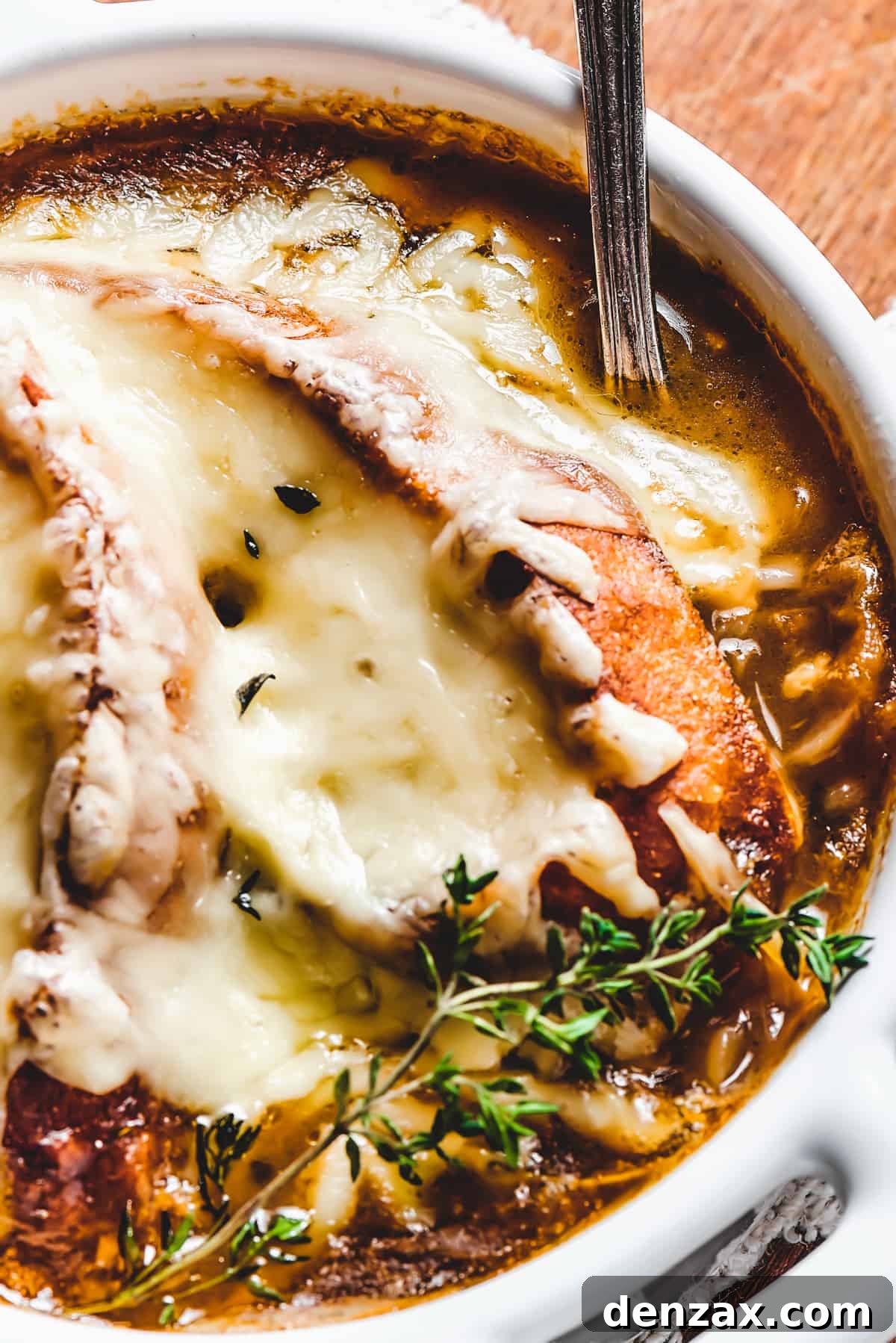
- The Grand Finale (Broiler): Transfer the baking pan with the soup bowls to the oven, positioning it under the broiler. Broil for 3 to 5 minutes, keeping a close eye on the cheese. You want it to melt into a bubbly, golden-brown crust around the edges, with some delicious crispy spots. Be careful not to let it burn!
- Serve with Caution and Enjoy! Once removed from the broiler, allow the soup bowls to cool for at least five minutes before serving. The crocks will be extremely hot, and this cooling time allows the molten cheese to set slightly and prevents burns. Serve immediately and savor every rich, cheesy bite!

Should French Onion Soup Be Thick or Thin? Understanding Texture
The ideal consistency of French Onion Soup is a topic of gentle debate among enthusiasts, but generally, it’s considered a robust, broth-based soup. Its natural thickness comes primarily from the long, slow caramelization process, during which the onions break down and release their natural sugars and pectin, giving the broth a rich body. This method results in a soup that is substantial yet still distinctly a broth, rather than a creamy or puréed soup.
However, for those who prefer a slightly heartier, silkier texture, incorporating a small amount of flour (as we do in this recipe) can achieve this with ease. The flour creates a subtle roux that gently thickens the soup, contributing to a more luxurious mouthfeel without making it heavy or gloopy. This can also help to speed up the process if you’re looking to achieve body more quickly. Ultimately, the choice is yours. If you prefer a thinner, more traditional broth where the caramelized onions are the sole thickening agent, you can certainly omit the flour. Experiment to find the consistency that best pleases your palate!
Expert Tips for French Onion Soup Success
Making a truly exceptional French Onion Soup is a rewarding experience, and like any beloved classic, there are a few tried-and-true techniques that can elevate your results from good to unforgettable. These are my top tips for ensuring your homemade French Onion Soup is nothing short of perfection:
- The Art of Cutting Onions: Believe it or not, how you slice your onions profoundly impacts both the flavor and texture of the final soup. For the best results, aim for thin, uniform slices, cut as if you were making onion rings. Then, cut these rings in half to create consistent half-moons. This specific cut allows the onions to caramelize evenly, retain some structural integrity even after prolonged cooking, and ensures they’re tender but not mushy in the soup. Consistency is key for optimal caramelization.
- Patience is a Virtue (Especially with Caramelization): This is perhaps the most crucial tip. Resist the urge to rush the caramelization process by cranking up the heat. High heat leads to burnt, bitter onions, which will entirely spoil your soup. Caramelization requires low to medium-low heat and consistent stirring over a sustained period (35-40 minutes, sometimes even longer). Budget ample time for this step; it’s where all the deep, sweet, complex flavors develop. Good things truly come to those who wait!
- Deglazing for Maximum Flavor: Don’t overlook the importance of deglazing the pan with white wine. Those browned bits stuck to the bottom of the pot (the “fond”) are concentrated packets of flavor. Scraping them up with a wooden spoon and incorporating them into the broth adds incredible depth and richness.
- Consider a Touch of Sherry or Brandy: For an added layer of sophisticated depth, consider stirring in a teaspoon or two of dry sherry or good quality brandy into the soup just before the final seasoning. This subtle addition enhances the savory notes and gives the soup a more complex, nuanced character often found in restaurant versions.
- Explore Bread Options: While a French baguette is classic, don’t hesitate to experiment with other crusty breads. A sturdy sourdough bread, for example, can offer a delightful tangy contrast to the sweetness of the onions and richness of the cheese. Ensure whatever bread you choose is day-old or slightly stale for the best texture when toasted.
- Broiler Vigilance: When broiling the cheese croutons, never walk away from the oven. Broilers can turn cheese from perfectly golden and bubbly to burnt in a matter of seconds. Keep a watchful eye, and remove the soup as soon as the cheese reaches your desired level of melt and char.
- Quality of Ingredients Matters: Since French Onion Soup relies on relatively few ingredients, the quality of each truly shines through. Invest in good quality beef stock and fresh herbs for the most impactful flavor.
What to Eat with French Onion Soup: Perfect Pairings
With its rich broth, abundance of caramelized onions, and decadent blanket of melted cheese over toasted bread, French Onion Soup is undeniably a hearty meal in itself – essentially, a delicious open-face cheese sandwich nestled in a savory liquid. However, if you’re looking to create a more expansive dinner or simply want to complement its robust flavors, here are some fantastic additions:
- Steak: Given its beef stock base, French Onion Soup pairs exceptionally well with beef dishes. Consider serving it alongside a classic Grilled Steak with Bleu Cheese Butter. Thin slices of a robust grilled steak make for a flavorful added protein, creating a sophisticated and satisfying meal. The richness of the soup and steak complement each other perfectly.
- Elevated Grilled Cheese: For a delightful twist, skip the traditional baguette crouton in the soup and instead serve Baked Grilled Cheese Sandwiches on the side. They’re perfect for dipping into the flavorful broth, and everyone can customize their portion. Make them with a blend of Swiss and Gruyère cheese to echo the soup’s flavors for a truly cohesive meal.
- Light Salad: To cut through the richness of the soup, a crisp, vibrant green salad with a simple vinaigrette is an ideal accompaniment. A mixed green salad with a lemon-herb dressing or a classic Caesar salad can provide a refreshing counterpoint, balancing the meal beautifully.
- Roasted Chicken: A simple roasted chicken, perhaps seasoned with herbs like rosemary and thyme, would make an excellent companion. The savory flavors of the chicken would harmonize with the soup without overpowering it, creating a well-rounded and comforting meal.
- Buttery Gnocchi: For the ultimate comfort food experience, consider serving a small side of buttery Gnocchi Alla Romana. This traditional Italian dish, with its soft, savory semolina gnocchi, provides a different textural experience that stands up to the rich soup, creating a truly heavenly combination.
Storing and Freezing Leftover French Onion Soup
French Onion Soup, especially the broth base, can be an excellent make-ahead dish, and leftovers store surprisingly well. However, it’s important to store the components separately for the best quality upon reheating:
- Refrigeration: For maximum freshness, store any leftover French Onion Soup (without the baguette and cheese topping) in an airtight container in the refrigerator. It will remain delicious for about three days. When you’re ready to enjoy it again, reheat the soup gently on the stovetop over medium-low heat until simmering, or in your microwave. Prepare fresh baguette slices and cheese for broiling just before serving to ensure that iconic crispy, gooey topping.
- Freezing for Longer Storage: Yes, you absolutely can freeze this soup, making it perfect for meal prep! First, ensure the soup has cooled completely to room temperature. This prevents the formation of condensation and ice crystals that can dilute the flavor and alter the texture. Once cool, pour the soup (again, without the baguette or cheese) into freezer-safe containers or heavy-duty freezer bags, leaving a little headspace for expansion. Label with the date and freeze for up to three months.
- Thawing and Reheating Frozen Soup: When you’re ready to enjoy your frozen soup, transfer it from the freezer to the refrigerator to thaw overnight. Once thawed, reheat it on the stovetop over low to medium heat, stirring occasionally, until it reaches a gentle simmer. Avoid high heat, which can cause the onions to break down too much. Taste and adjust seasonings if necessary, then proceed with the toasted baguette and cheese topping as described in the main recipe, broiling until bubbly and golden. This method ensures your defrosted soup tastes almost as fresh as the day it was made.
More Rich and Hearty Soups to Savor
If you’ve fallen in love with the comforting warmth of French Onion Soup, you’ll surely appreciate these other rich and hearty soup recipes, perfect for cozy evenings or satisfying lunches:
- Albondigas Soup: A flavorful Mexican meatball soup, packed with vegetables and a zesty broth.
- Slow Cooker Crack Chicken Soup: An incredibly creamy and cheesy chicken soup, made effortlessly in your slow cooker.
- Italian Sausage Butternut Squash Soup: A delightful blend of savory Italian sausage and sweet, creamy butternut squash, perfect for autumn.
French Onion Soup Recipe
Loaded with rich caramelized onions, melty cheese, and a crusty slice of baguette, this French Onion Soup is a classic meal you’ll love!
Recipe Details
- Prep Time: 15 minutes
- Cook Time: 1 hour 10 minutes
- Total Time: 1 hour 25 minutes
- Servings: 6
- Author: Katerina | Easy Weeknight Recipes
Ingredients
- 2 tablespoons olive oil
- 5 to 6 medium yellow onions, thinly sliced into half moons
- 3 tablespoons unsalted butter
- Kosher salt and freshly ground black pepper, to taste
- 2 cloves garlic, minced
- 1 tablespoon all-purpose flour
- ½ cup dry white wine
- 6 cups beef stock
- 4 sprigs fresh thyme leaves
- 2 bay leaves
- 2 teaspoons white wine vinegar
- 1 teaspoon Worcestershire sauce
For the Cheesy Baguette
- 6 slices French baguette, each slice should be ½-inch thick
- 1 cup shredded Swiss cheese
- 1 cup shredded Gruyère cheese
Instructions
- In a Dutch oven, add olive oil and cook sliced onions over medium heat for 10 minutes, or until softened. Stir often to prevent burning.
- Reduce heat to medium-low, then add the butter, salt, and pepper into the pot and stir well to coat the onions. Cook for another 35 to 40 minutes, stirring occasionally, until onions are caramelized, jammy, and slightly reduced in volume. Add a splash of water every now and then, whenever the onions start to stick to the bottom of the pot.
- Stir in the minced garlic and cook for 20 seconds or until fragrant.
- Add the flour and cook for an additional 1 minute.
- Stir in the wine to deglaze the pan, using a wooden spoon to scrape up any browned bits on the bottom of the pot. Cook for 2 minutes.
- Stir in the beef stock, thyme, and bay leaves. Bring to a boil and reduce heat to simmer, stirring occasionally, until slightly reduced, about 15 to 20 minutes.
- Remove and discard thyme sprigs and bay leaves.
- Stir in the white wine vinegar and Worcestershire sauce; taste for salt and pepper, and adjust accordingly.
- While soup simmers, arrange baguette bread slices in a single layer on a baking sheet and bake in the oven at 400°F (200°C) until bread is dry, crisp, and golden at edges, about 5 to 7 minutes. Set aside.
- Set individual broiler-safe bowls on a baking pan and fill each bowl with about 1½ cups of the soup. Top each bowl with 1 or 2 baguette slices and sprinkle evenly with shredded Gruyère and Swiss cheese.
- Broil until cheese is melted and bubbly around edges, 3 to 5 minutes.
- Let cool 5 minutes before serving.
Equipment
- Dutch Oven
- Liquid Measuring Cup
- Measuring Cups and Spoons
- Oven Safe Soup Bowls
Nutrition
Nutritional info is an estimate and provided as courtesy. Values may vary according to the ingredients and tools used. Please use your preferred nutritional calculator for more detailed info.
- Calories: 428 kcal
- Carbohydrates: 29g
- Protein: 20g
- Fat: 24g
- Saturated Fat: 12g
- Polyunsaturated Fat: 2g
- Monounsaturated Fat: 9g
- Trans Fat: 0.2g
- Cholesterol: 56mg
- Sodium: 882mg
- Potassium: 682mg
- Fiber: 2g
- Sugar: 7g
- Vitamin A: 570 IU
- Vitamin C: 8mg
- Calcium: 466mg
- Iron: 2mg