
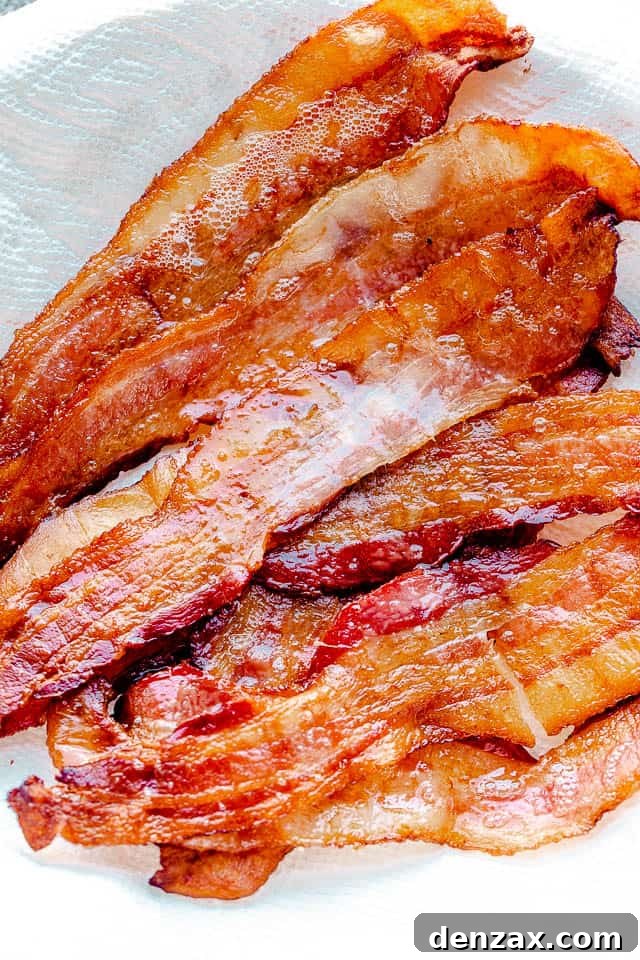
The Ultimate Guide to Perfectly Crispy Oven Baked Bacon
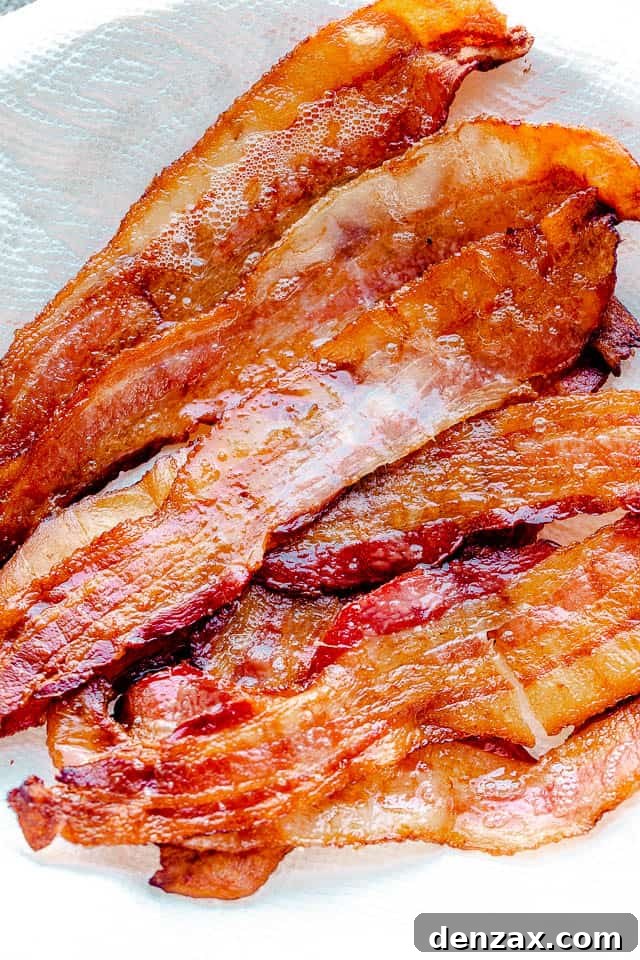
Tired of grease splatters, unevenly cooked strips, and standing over a hot stove just to get a few pieces of bacon? Imagine achieving perfectly crispy, uniformly cooked bacon every single time, with minimal effort and virtually no mess. This isn’t a culinary dream; it’s the reality of oven baked bacon. This foolproof method is a game-changer for anyone who loves bacon but dreads the cooking process. Whether you’re making a quick breakfast, adding a savory crunch to lunch, or elevating a dinner dish, mastering oven-baked bacon will transform your kitchen experience.
Bacon, glorious bacon! It truly makes everything better, doesn’t it? From being a foundational component in a hearty breakfast casserole to lending its smoky flavor to savory roasted potatoes, or even adding an unexpected crunch to a comforting crack chicken soup, its versatility knows no bounds. Some adventurous palates even find ways to incorporate it into desserts! Yet, the traditional stovetop method often comes with frustrating challenges: constant vigilance, the risk of burning, and the inevitable grease explosion that coats your kitchen. That’s where the magic of oven baking steps in. It’s the effortless, hands-off solution for cooking perfectly crispy bacon that will liberate your mornings and simplify your meal prep.
Why Oven Baked Bacon is Your New Favorite Method
Once you experience the ease and superior results of baking bacon in the oven, you’ll wonder why you ever cooked it any other way. Here’s why this method stands head and shoulders above the rest:
- Effortless and Convenient: Say goodbye to constant flipping and dodging hot oil. With oven baked bacon, you simply arrange the slices and let your oven do the work. This frees you up to prepare other components of your meal, enjoy your coffee, or simply relax. It’s perfect for busy mornings or when you’re cooking for a crowd, as you can easily prepare large batches simultaneously.
- Unwavering Consistency: Achieving that ideal level of crispness on the stovetop often feels like a gamble. Oven baking eliminates this guesswork. The enclosed, consistent heat of the oven cooks each strip evenly and uniformly, ensuring every slice reaches your preferred level of doneness, from slightly chewy to perfectly shatter-crisp. No more burnt edges or undercooked middles!
- Significantly Less Greasy: One of the most common complaints about traditional bacon is its excessive greasiness. The oven method allows the rendered fat to drip away from the bacon, either directly into the baking sheet or through a wire rack. This results in bacon that is lighter, crisper, and less oily, enhancing both flavor and texture. Utilizing parchment paper and a baking rack further optimizes grease reduction.
- Remarkably Adaptable: This technique works beautifully with virtually any type of bacon. Whether you prefer regular-cut, thick-cut, uncured, smoked, or flavored varieties like maple or peppered bacon, the oven will handle it with grace. You also have complete control over the final texture, easily adjusting cooking times to achieve anything from pliable to extra-crispy results.
- Minimal Cleanup: Perhaps the most underrated benefit is the incredibly easy cleanup. By lining your baking sheet, you essentially contain all the grease. Once the bacon is cooked and removed, allow the fat to cool and solidify, then simply roll up the lining and discard it. No scrubbing pans, no greasy stovetop, and certainly no pouring hot grease down your drain!
Essential Ingredients & Equipment
The beauty of this method lies in its simplicity. You don’t need fancy gadgets, just a few kitchen staples to achieve bacon perfection.
Ingredients:
- Bacon: The star of the show! Choose your favorite variety. Whether you prefer classic pork bacon, turkey bacon, or a specific cut like thick-sliced or thin-sliced, this method is incredibly versatile. For best results, use good quality bacon.
Equipment:
- Rimmed Baking Sheet(s): Essential for containing the bacon and the rendered fat. A standard half-sheet pan (13×18 inches) works well for about 10-12 slices. If cooking a larger quantity, use two baking sheets. The rim is crucial to prevent grease overflow.
- Wire Rack (Optional, but Recommended): For the crispiest bacon possible, a wire rack that fits inside your baking sheet is ideal. It elevates the bacon, allowing air to circulate around each strip and the fat to drip away freely, resulting in a superior crispy texture.
- Parchment Paper or Aluminum Foil: Your secret weapon for easy cleanup! Line your baking sheet (and rack, if using) with parchment paper or heavy-duty aluminum foil. Parchment paper is often preferred as bacon is less likely to stick to it.
- Tongs: For safely handling the hot bacon once it’s cooked and transferring it to a cooling rack or plate.
- Paper Towels: To blot any residual grease from the cooked bacon, ensuring maximum crispiness.
Step-by-Step Guide: How to Bake Bacon in the Oven
Follow these simple steps for perfectly cooked, crispy bacon every time. This hands-off approach will quickly become your preferred method!
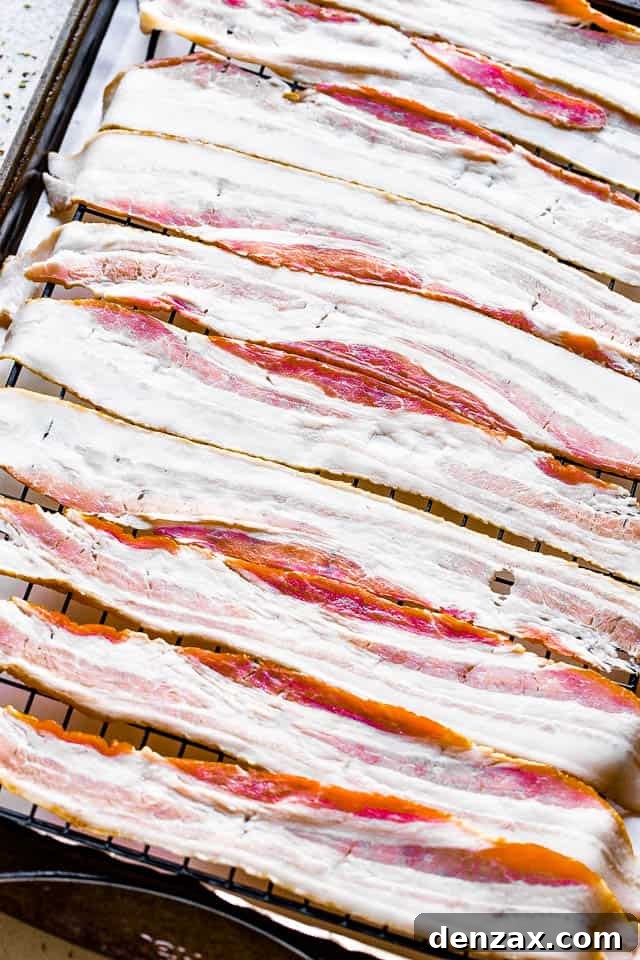
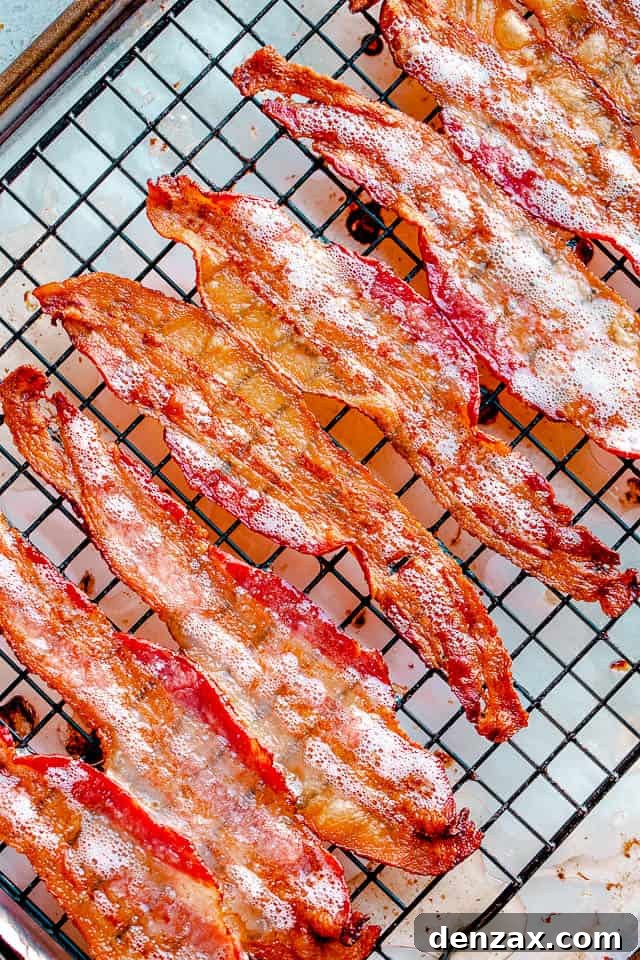
- Preheat Your Oven Thoroughly: Begin by preheating your oven to 400°F (200°C). For the most consistent results, allow the oven to reach the target temperature and then hold it there for an additional 10 minutes. This ensures the oven cavity is fully heated and stable, which is crucial for even cooking and achieving that perfect crispiness without fluctuations in temperature when you open the door.
- Prepare Your Baking Sheets: Line a large, rimmed baking sheet with heavy-duty aluminum foil or parchment paper. If you desire extra crispy bacon and easier fat drainage, place an oven-safe wire rack on top of the lined baking sheet. The foil or parchment will catch all the rendered grease, making cleanup incredibly simple. If using multiple pans, prepare them all this way.
- Arrange the Bacon Slices: Lay the bacon strips in a single layer across the wire rack or directly on the lined baking sheet. It’s okay if the slices slightly touch, as they will shrink considerably as they cook. However, ensure there is no significant overlapping, which would prevent even cooking and crisping. For optimal results, avoid overcrowding the pan; if necessary, use a second baking sheet.
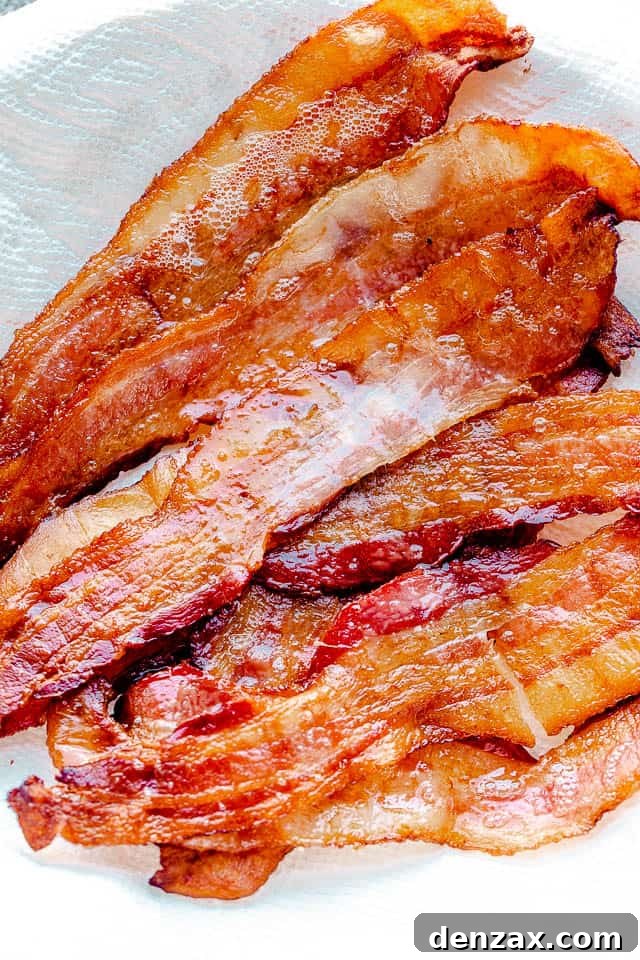
- Bake to Perfection: Place the baking sheet (or sheets) in the preheated oven. Bake until the bacon reaches your desired level of crispness. This typically takes between 15 and 22 minutes for regular-cut bacon, and 22 to 28 minutes for thick-cut varieties. Start checking around the 15-minute mark, especially if it’s your first time cooking bacon in your particular oven. Oven temperatures can vary, so visual cues are key. The bacon should be golden brown and bubbling, firming up as it crisps. For even cooking, especially if using a single pan or an older oven, consider rotating the baking sheet halfway through the cooking time.
Optimal Baking Time and Temperature
I find that baking bacon at 400°F (200°C) consistently yields the quickest cooking time and crispiest results. For regular-cut bacon, plan for approximately 15-20 minutes. For thicker-cut bacon, you’ll need closer to 22-28 minutes. Remember, these are guidelines; the exact timing will depend on your oven’s calibration, the thickness of your bacon, and how crispy you prefer it. Always begin checking on your bacon around the 15-minute mark and adjust accordingly.

Expert Tips for the Best Oven Baked Bacon
Elevate your bacon game with these simple yet effective tips:
- The 400°F Advantage: The consistent high heat of 400°F (200°C) ensures that bacon renders its fat quickly and crisps up beautifully without drying out. Allowing your oven to fully preheat and hold at this temperature for 10 minutes before adding the bacon helps prevent temperature drops when the oven door is opened, promoting an even cook from start to finish.
- Don’t Overcrowd the Pan: While a slight overlap is fine initially as bacon shrinks, avoid stacking or heavily overlapping slices. For optimal crispiness and even cooking, bacon needs room to breathe. A standard half-sheet pan can typically accommodate 10-12 slices without overcrowding. If you’re cooking for a crowd, don’t hesitate to use two or even three baking sheets, placing them on separate racks for better air circulation.
- No Flipping Required: Unlike stovetop frying where flipping is essential, oven-baked bacon cooks evenly on both sides thanks to the circulating heat within the oven. You’ll still achieve a perfectly crispy texture without the extra step. However, for extremely large batches or if you notice uneven browning, rotating the pan halfway through the cooking time can help.
- Efficient Draining: One of the perks of oven baking is how much less greasy the bacon comes out. The wire rack method encourages most of the rendered fat to drip directly into the lined pan below. Once cooked, use tongs to transfer the crispy bacon to a plate lined with several layers of paper towels. This allows any remaining excess grease to be absorbed, ensuring maximum crispness. You can also gently blot the tops of the bacon with an additional paper towel.
- Hassle-Free Cleanup: This method simplifies post-cooking chores tremendously. After removing the bacon, simply let the baking sheet sit until the rendered bacon fat hardens. Once solid, you can easily roll up the aluminum foil or parchment paper and discard it in the trash. This prevents pouring hot grease down your sink, which can clog drains, and keeps your kitchen much cleaner.
- Saving Bacon Grease: Don’t let that flavorful rendered fat go to waste! Once cooled and solidified in the lined pan, you can carefully separate it from the foil/parchment and store it in an airtight container in the refrigerator. Bacon grease adds incredible depth of flavor to fried eggs, roasted vegetables, cornbread, and many other dishes.
Serving Suggestions: Beyond Breakfast
Crispy oven-baked bacon is incredibly versatile and can elevate nearly any meal. While it’s a classic breakfast staple, don’t limit its potential!
Breakfast & Brunch Favorites:
- Classic Pairings: Serve alongside fluffy eggs (scrambled, fried, or poached), crispy potatoes, and warm toast.
- Sweet & Savory Combos: The salty crunch of bacon perfectly complements sweet dishes like light and airy waffles, golden French toast sticks, or a hearty stack of pancakes.
- Egg Dishes: Crumble it into a cheesy frittata, a savory quiche, or a creamy eggs Benedict casserole.
Lunch & Dinner Enhancements:
- Salad Topper: Add a delightful crunch to any salad, like a vibrant chicken bacon avocado salad or a classic Cobb.
- Pasta Perfection: Crumble it into rich pasta dishes such as chicken bacon ranch pasta or a comforting carbonara.
- Comfort Food Upgrades: Elevate a creamy bacon mac and cheese, a loaded baked potato, or a hearty soup.
- Sandwiches & Wraps: Essential for a classic BLT or a flavorful club sandwich.
- Burgers & Hot Dogs: A crispy strip of bacon takes any burger or hot dog to the next level.
Creative Culinary Uses:
- Bacon Wrapped Delights: Use partially cooked bacon to wrap around shrimp, scallops, dates, or asparagus spears before finishing in the oven.
- Flavor Infusion: Crumble into savory muffins, cornbread, or even use the rendered fat to sauté vegetables.
No matter how you choose to enjoy it, perfectly crispy oven-baked bacon is a delightful addition to almost any meal, promising flavor and texture that will keep everyone coming back for more!
Frequently Asked Questions About Baking Bacon
Can I reuse bacon grease?
Absolutely! Bacon grease is a flavorful cooking fat that can be reused. Once the grease has cooled and solidified in the baking sheet, carefully scrape it into an airtight container. Store it in the refrigerator for up to several weeks. It’s fantastic for sautéing vegetables, frying eggs, or adding a smoky depth to savory dishes.
What’s the difference between using parchment paper and aluminum foil?
Both parchment paper and aluminum foil work well for lining your baking sheet for easy cleanup. Parchment paper is generally preferred because bacon is less likely to stick to it, and it prevents any potential reactions between the salt in the bacon and the aluminum foil. However, heavy-duty foil is a perfectly acceptable alternative.
Can I cook turkey bacon in the oven using this method?
Yes, you can! Turkey bacon typically contains less fat than pork bacon, so it may cook slightly faster and render less grease. Arrange it in a single layer on a parchment-lined baking sheet (a wire rack isn’t as critical here, but can still aid crisping). Bake at 400°F (200°C), checking frequently after 10-12 minutes, until it reaches your desired crispness.
How do I store cooked bacon?
Allow cooked bacon to cool completely. Store it in an airtight container or a resealable bag in the refrigerator for up to 4-5 days. For longer storage, you can freeze cooked bacon for up to 1 month. Thaw in the refrigerator before reheating.
What’s the best way to reheat oven-baked bacon?
To reheat bacon, you have a few options:
- Oven: Place bacon on a baking sheet and reheat at 350°F (175°C) for 5-10 minutes, until crispy and warmed through.
- Microwave: Lay bacon on a paper towel-lined plate and microwave in 15-30 second intervals until warm. This method might make it slightly less crispy.
- Air Fryer: Reheat at 350°F (175°C) for 3-5 minutes for a quick crisp.
Other Delicious Bacon Recipes to Explore
Once you master oven-baked bacon, you’ll be ready to incorporate this delicious ingredient into even more incredible dishes. Here are some other fantastic bacon-centric recipes:
- Grilled Bacon Wrapped Shrimp
- Spinach Bacon Stuffed Chicken Breasts
- Gnocchi and Bacon Casserole
- Eggs Benedict Casserole
- Quiche Lorraine
Oven Baked Bacon Recipe
Print Recipe
Oven Baked Bacon
Katerina | Easy Weeknight Recipes
The easiest way to bake bacon in the oven! Learn how to get perfectly crispy slices every time with less mess, whether you’re cooking a small batch or feeding a crowd.
5 minutes
15 minutes
20 minutes
4
Ingredients
- 6-12 slices bacon
Instructions
-
Prep. Preheat oven to 400°F (200°C). Let the oven sit at 400°F for 10 minutes to ensure it’s fully heated.
-
Prepare the baking sheets. Line a large, rimmed baking sheet with parchment paper. For crispier bacon, place an oven-safe wire rack on top of the parchment paper.
-
Bake. Arrange the bacon slices over the rack in a single layer, ensuring no significant overlapping. Bake until the bacon is crisped to your liking, about 15-20 minutes for regular-cut bacon and 22-28 minutes for thick-cut bacon. Begin checking around the 15-minute mark and adjust timing as needed.
Equipment
- Baking sheet
- Parchment paper
Nutritional info is an estimate and provided as courtesy. Values may vary according to the ingredients and tools used. Please use your preferred nutritional calculator for more detailed info.