
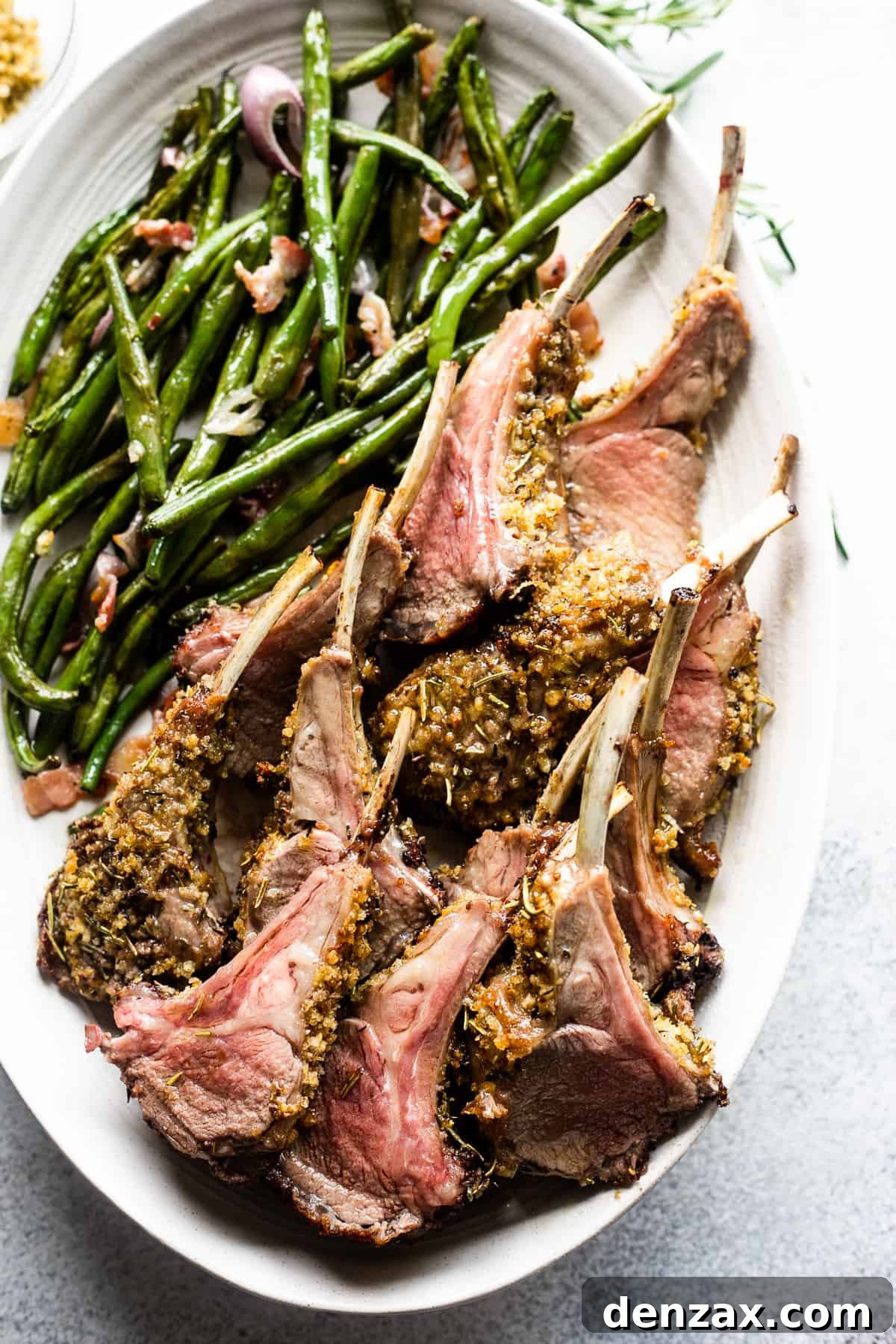
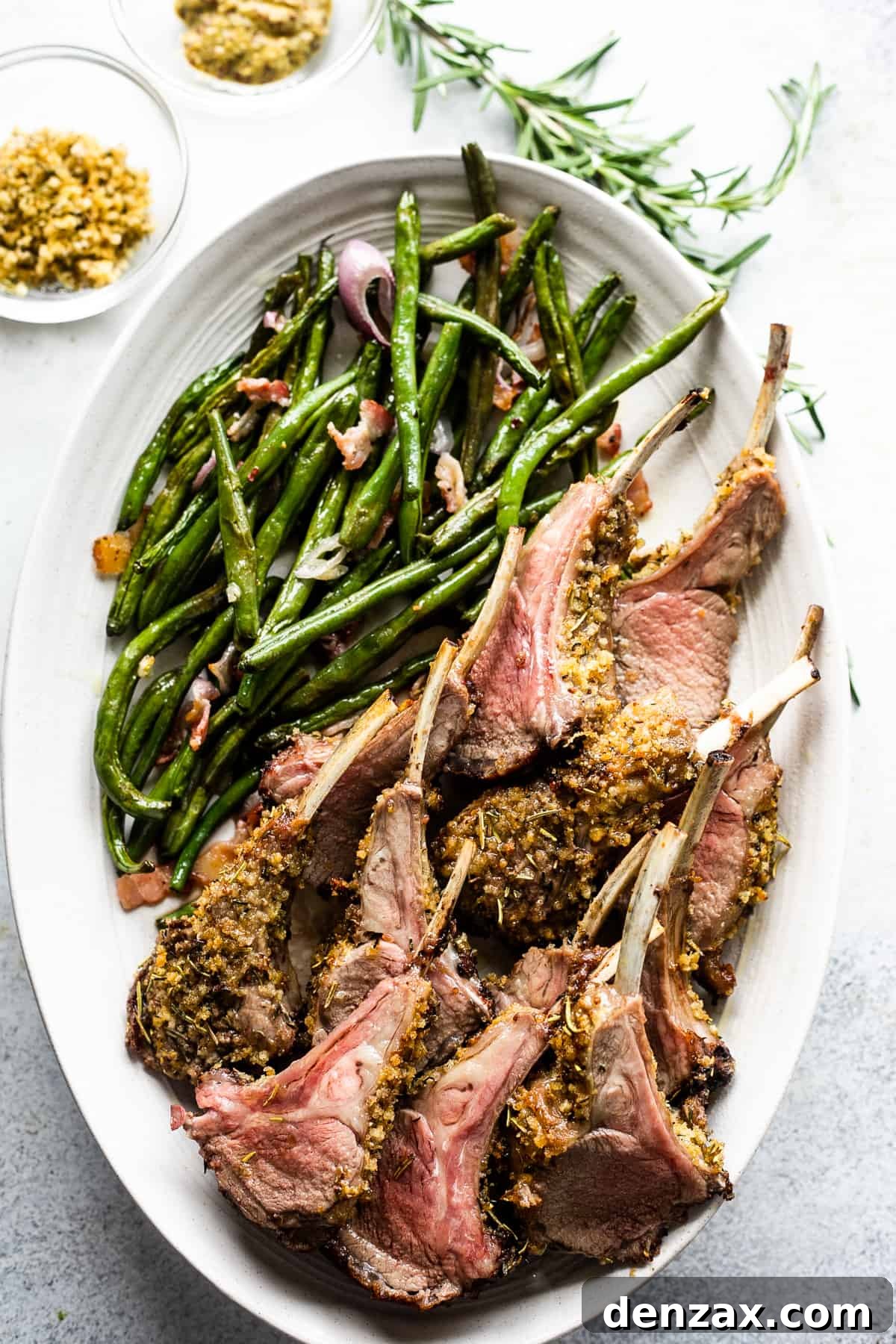
Unlock the secret to an effortlessly elegant meal with this sensational recipe for Herb-Crusted Rack of Lamb. Imagine tender, succulent lamb, perfectly cooked to a juicy pink, encased in a vibrant, aromatic crust of Dijon mustard and a savory breadcrumb-herb blend. This luxurious dish, often reserved for special occasions, is surprisingly simple to master, making it an ideal choice for both seasoned home cooks and those new to preparing lamb.
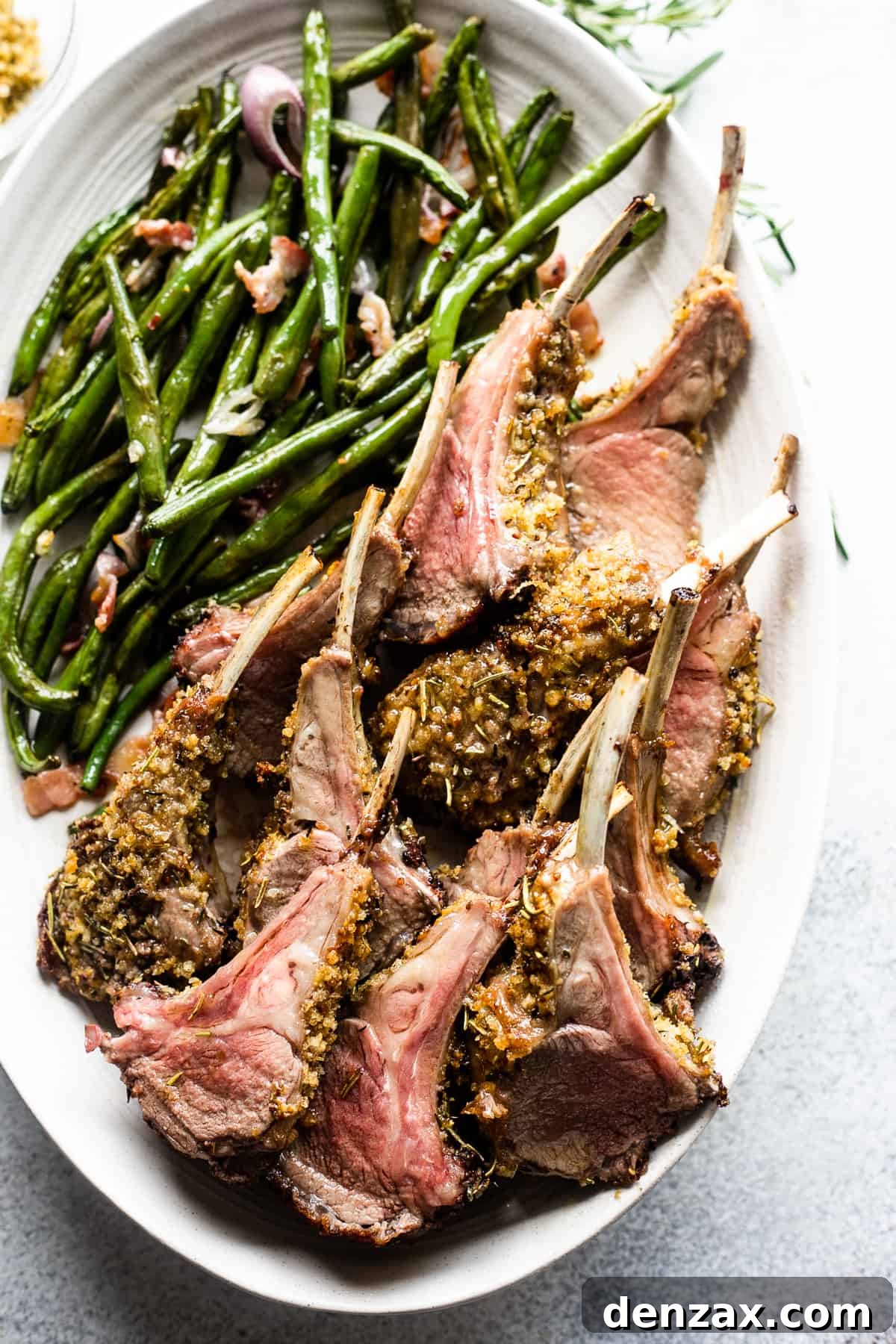
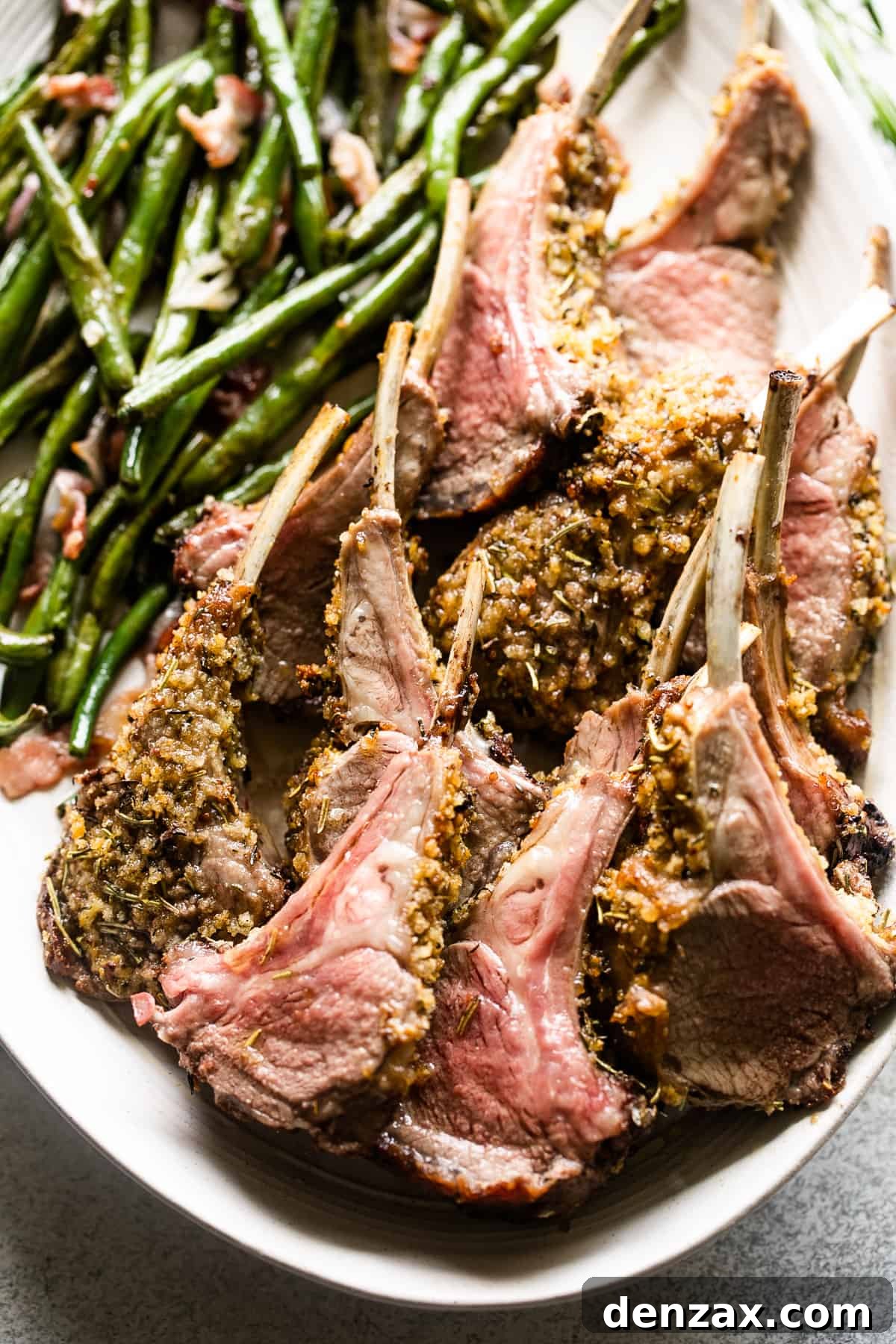
If you’re searching for a dinner recipe that promises both impressive presentation and unparalleled flavor, your quest ends here. This roasted rack of lamb delivers a gourmet experience with minimal fuss. The combination of a perfectly seared exterior, a crunchy herbed crust, and tender, juicy lamb cooked to your preferred doneness, makes every bite a true delight. We’ll guide you through each step, from selecting the finest lamb to achieving that coveted pink perfection, simplifying what might seem like a complex culinary feat. Utilizing a reliable meat thermometer will be your best friend, ensuring flawless results every time and making this dish virtually foolproof. Prepare to impress your guests and treat your taste buds to an extraordinary meal.
What Exactly Is a Rack of Lamb?
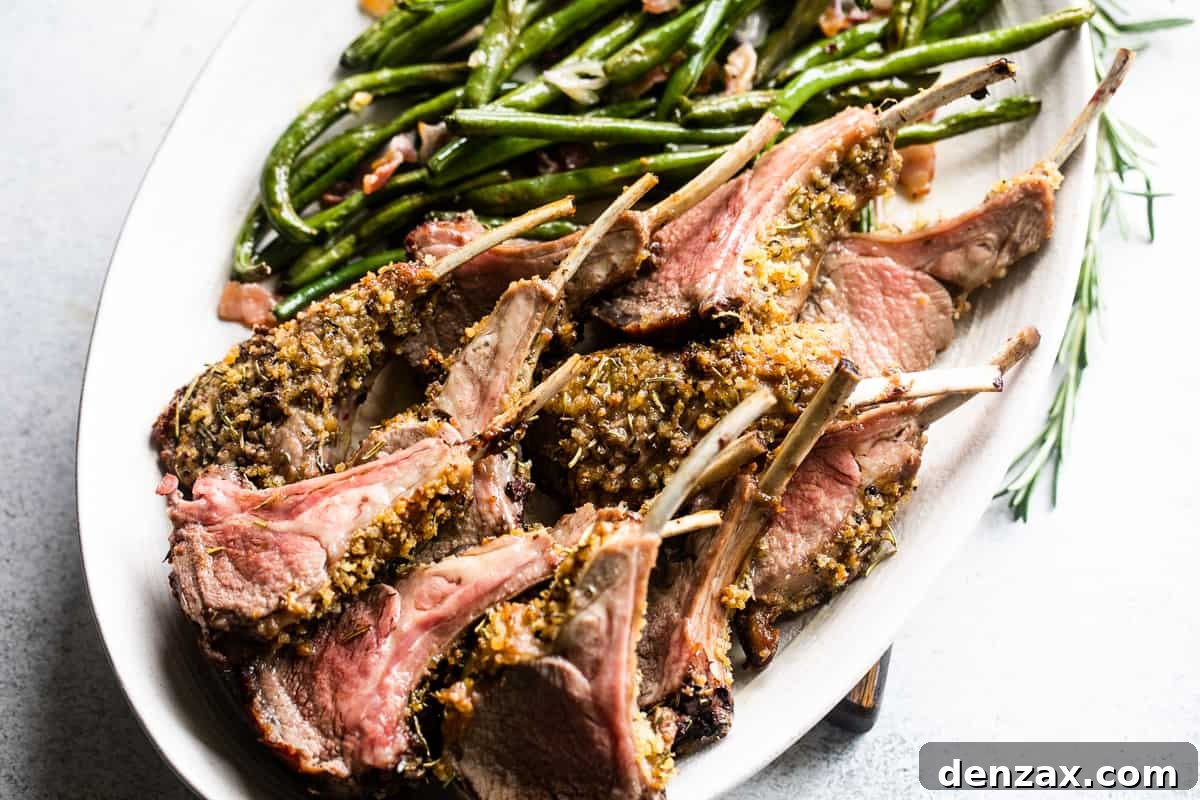
A rack of lamb is a premium cut of meat, comprising a section of lamb ribs, typically 8 to 10 bones, still attached. Think of it as the lamb equivalent of a beef prime rib roast, but smaller and inherently more tender. This cut, often referred to as “lamb chops on a stick” once carved, is prized for its exquisite tenderness and delicate flavor. It’s often “frenched,” a culinary technique where the meat and fat are trimmed from the ends of the rib bones, exposing them for an elegant presentation. Due to its tenderness, rack of lamb is best enjoyed cooked to rare or medium-rare, allowing its natural juiciness and flavor to shine through. While it carries an air of luxury, its straightforward cooking process makes it accessible for anyone looking to create a memorable meal.
Why Choose Rack of Lamb for Your Next Dinner?
Beyond its reputation as a gourmet offering, the rack of lamb holds several advantages that make it a fantastic choice for any occasion, from intimate family dinners to festive holiday gatherings. First and foremost is its undeniable “wow” factor. A beautifully roasted and carved rack of lamb is a showstopper, instantly elevating any meal. Despite its sophisticated appearance, it’s surprisingly quick and easy to cook. Unlike larger roasts that require hours in the oven, a rack of lamb can be ready in under an hour, including prep time, making it suitable even for weeknight indulgence. Its rich, yet delicate flavor pairs wonderfully with a wide array of seasonings and side dishes, offering versatility in meal planning. Furthermore, lamb is a source of high-quality protein, essential vitamins, and minerals, offering a nutritious option for your table. Opting for a rack of lamb means choosing a dish that combines elegance, ease, and exceptional taste.
Essential Ingredients for a Perfect Herb-Crusted Rack of Lamb
Crafting this classic dish requires only a handful of fresh, quality ingredients. Each component plays a crucial role in developing the complex and utterly delightful flavors that define this recipe. Here’s a detailed look at what you’ll need to create your magnificent herb-crusted rack of lamb:
- Breadcrumbs: The foundation of our flavorful crust. You have several options here: traditional breadcrumbs for a finer texture, panko crumbs for an extra crispy crunch, or even pork rind crumbs for a gluten-free and low-carb alternative.
- Herbs: A fragrant blend of crushed dried rosemary and thyme infuses the crust with an earthy, aromatic essence that perfectly complements lamb. While dried herbs are convenient, fresh herbs can also be used; simply chop them very finely to integrate well into the crust.
- Garlic Powder: This provides a concentrated, savory garlic flavor that enhances the overall depth of the herb crust without adding moisture.
- Olive Oil: Essential for binding the breadcrumb mixture and creating a golden, crisp crust during roasting. A good quality extra virgin olive oil or your preferred neutral cooking oil will work beautifully.
- Rack of Lamb: This recipe is designed for one 8-to-10 bone rack of lamb, typically weighing between 1.5 to 2 pounds. Ensure it’s trimmed and frenched for the best presentation. For optimal cooking and even results, allow the lamb to come to room temperature for about 30-60 minutes before you begin preparing it.
- Salt and Freshly Ground Black Pepper: Simple yet vital seasonings to bring out the lamb’s natural flavors. Season generously.
- Fresh Garlic: Crushed fresh garlic, briefly seared with the lamb, adds an incredible depth of flavor to the meat itself. No need for meticulous mincing; a simple crush releases its potent aroma.
- Dijon Mustard: This acts as a flavorful adhesive for the herb crust, imparting a subtle tang and a rich, pungent note that beautifully cuts through the richness of the lamb. While Dijon is highly recommended, any robust mustard you have on hand can be used as a substitute.
How to Prepare Your Rack of Lamb: Trimming and Frenching
Proper preparation of your lamb rack is key to both its appearance and how evenly it cooks. While many butchers sell racks already “frenched,” understanding the process is beneficial. Frenching involves removing the meat, fat, and sinew from the ends of the rib bones, leaving them clean and exposed. This creates a classic, elegant presentation and also allows for more even cooking, as thinner parts cook faster. If your lamb rack is not frenched, you can easily do it yourself by carefully scraping the meat away from the top 1-2 inches of the bones with a sharp knife. Additionally, it’s crucial to trim off any thick layers of white fat from the top of the rack and any tough silver skin you may find. Excess fat can render too much during cooking, leading to a greasy crust, while silver skin can become tough and chewy. However, resist the urge to portion out the rack into individual chops before cooking. Roasting the rack whole helps maintain its moisture and tenderness. The individual chops are best carved after the entire rack has been roasted and rested, ensuring maximum juiciness.
Step-by-Step Guide to Cooking a Succulent Rack of Lamb
Cooking rack of lamb is a swift process, so it’s advisable to prepare your side dishes in advance or start them before you embark on the main course. Follow these steps for a perfectly cooked, herb-crusted rack of lamb:
- Prepare Your Oven and Herb Crust: Begin by preheating your oven to a high temperature of 450˚F (232˚C). Position an oven rack in the center. In a shallow, wide bowl (a square or rectangular baking dish works best for coating), combine the breadcrumbs, crushed dried rosemary, dried thyme, garlic powder, and two tablespoons of olive oil. Mix thoroughly until the breadcrumbs are evenly moistened and aromatic. Set this aside.
- Season the Lamb: Pat the entire rack of lamb dry with paper towels. This step is crucial for achieving a good sear. Season it generously all over with salt and freshly ground black pepper.
- Sear the Meat for Flavor: Heat two tablespoons of olive oil (or vegetable oil) in a large, oven-safe skillet over high heat until it shimmers. Add the crushed fresh garlic to the hot oil. Immediately place the seasoned lamb rack in the skillet, fat-side down, to sear for 1 to 2 minutes per side, or until beautifully browned. Searing creates a delicious crust and locks in the juices, contributing to a richer flavor.
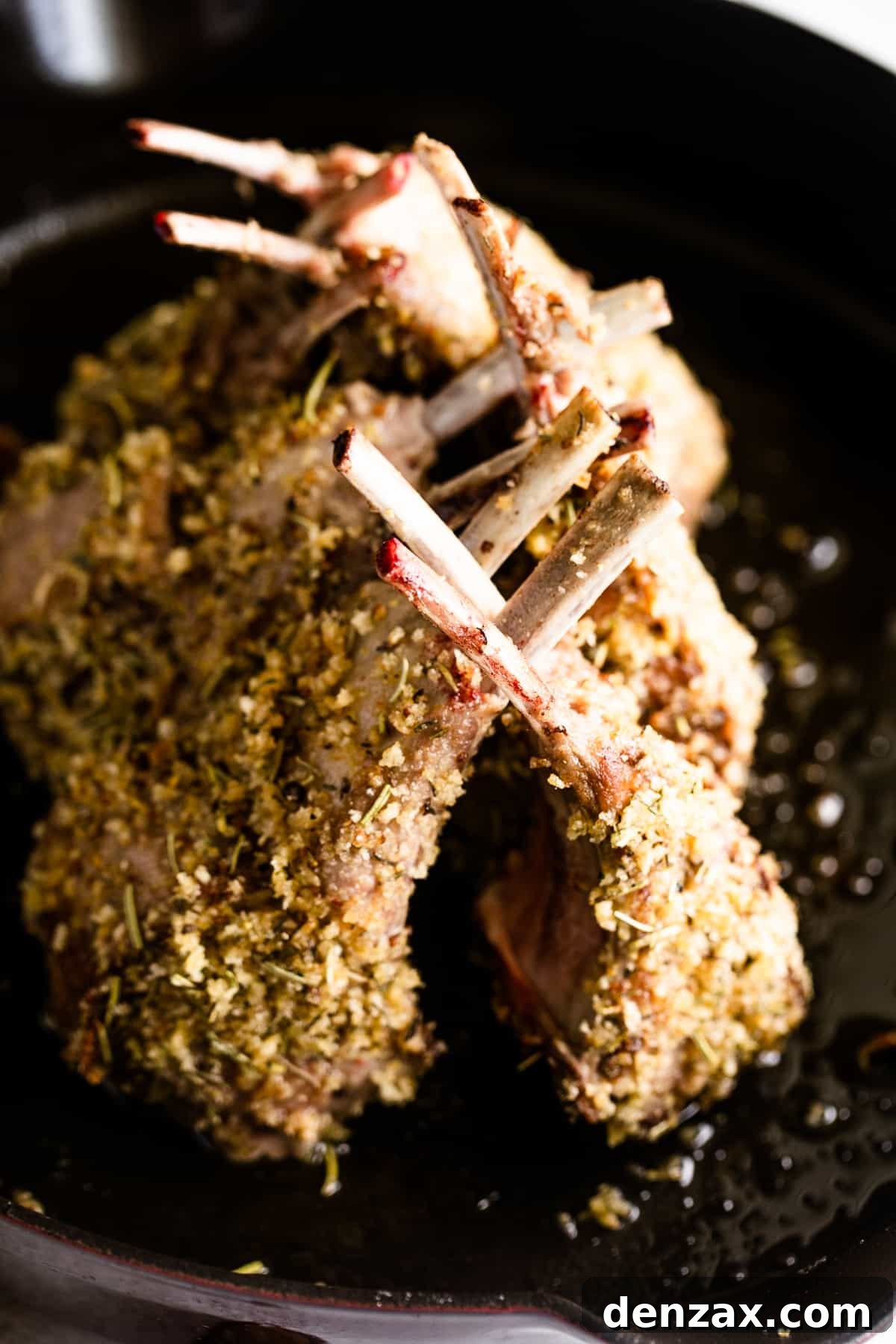
- Apply the Herb Crust: Carefully remove the skillet from the heat and transfer the seared lamb rack to a plate or cutting board. Generously brush the entire seared surface of the lamb with Dijon mustard. Then, roll the mustard-coated lamb in your prepared breadcrumb mixture, pressing gently to ensure an even, thick coating.
- Prepare for Roasting: Return the crusted lamb rack to the same oven-safe skillet. To prevent the exposed rib bones from burning, loosely cover them with a small piece of aluminum foil. This protects them while the meat roasts.
- Roast to Perfection: Place the skillet in the preheated oven and roast for 15 to 22 minutes. The cooking time will vary depending on your desired level of doneness. For rare lamb, aim for an internal temperature of 125˚F (52˚C). For medium-rare, target 135˚F (57˚C). This is where an instant-read meat thermometer is indispensable for accurate results. Begin checking the temperature around the 15-minute mark.
- Rest the Lamb: Once the lamb reaches your desired internal temperature, remove it from the oven and transfer it to a clean cutting board. Tent it loosely with aluminum foil and let it rest for at least 10 minutes. This resting period is critical, allowing the juices to redistribute throughout the meat, resulting in a more tender and succulent final product.
- Carve and Serve: After resting, carve the rack of lamb by slicing down between each rib bone to create individual chops. Garnish with fresh parsley if desired, and serve immediately with your chosen side dishes. Enjoy every exquisite bite!
Expert Tips for a Flawless Rack of Lamb
Achieving lamb perfection is simple with a few insider tricks. Here are some helpful tips to ensure your herb-crusted rack of lamb is nothing short of magnificent:
- Selecting the Best Lamb: The quality of your lamb significantly impacts the final dish. Look for a rack that is rosy-red or light pink in color, indicating freshness and tenderness. Avoid lamb that appears dark red, as it may be older and tougher, with a less desirable flavor. The fat cap should be pure white and finely grained, without any discoloration or a coarse texture.
- Understanding Frenched vs. Untrimmed: As discussed, “frenched” lamb has had the meat and fat removed from the rib bones, creating an elegant presentation. While this is the classic look for a rack of lamb, it’s not strictly necessary for flavor. Some gourmands actually prefer the flavorful, slightly chewy rib meat and fat left on for an extra layer of taste. The choice is yours, but for a formal presentation, frenched is ideal.
- Room Temperature Lamb: Always bring your rack of lamb to room temperature for 30-60 minutes before cooking. This ensures more even cooking throughout the entire cut, preventing the outside from overcooking while the inside remains raw.
- The Right Skillet Matters: Use a heavy-bottomed, oven-safe skillet, such as cast iron. This type of pan retains heat exceptionally well, leading to a superior sear and consistent cooking in the oven.
- Don’t Skip the Rest: The resting period post-roasting is non-negotiable. As the lamb cools, the muscle fibers relax, allowing the internal juices to redistribute. Cutting into the lamb too soon will result in a dry, less flavorful chop as the juices will run out onto your cutting board.
- Portion Planning: Compared to beef or pork, lamb chops are generally smaller. Plan for 2 to 3 chops per person for a satisfying serving. If you’re hosting more than three or four diners, consider preparing two racks of lamb to ensure everyone gets enough.
Serving Suggestions for Your Gourmet Lamb
The herb-crusted rack of lamb is undoubtedly the star, so side dishes should complement rather than overshadow its exquisite flavor. Simple, yet flavorful accompaniments are often the best choice. Here are some tried-and-true favorites that will elevate your meal:
- Roasted Carrots: A classic pairing with lamb (and beef!), roasted carrots bring a touch of sweetness and vibrant color. Try these Honey Balsamic Roasted Carrots for an extra special touch. Their caramelized edges and sweet-tart glaze beautifully contrast the savory lamb.
- Potatoes, Prepared Your Way: Potatoes are incredibly versatile and always a crowd-pleaser. Whether you opt for creamy Classic Creamy Mashed Potatoes, crispy roasted potato wedges, or tender baked potatoes, they provide a comforting and satisfying base for the lamb.
- Fresh Green Beans or Asparagus: A simple steamed or sautéed green vegetable adds freshness and a pop of color. Lemon-garlic green beans or blanched asparagus are excellent choices.
- Vibrant Veggie Medley: Boost both the color and nutritional value of your meal with a medley of seasonal vegetables. Grilled Vegetables with Lemon Dressing offer a refreshing and zesty counterpoint to the rich lamb, especially delightful during warmer months.
- Hearty Grains: Consider serving a side of couscous, quinoa, or wild rice pilaf. These absorb the flavorful pan juices and add another textural element to the plate.
How to Store and Reheat Leftover Lamb Properly
While a rack of lamb is often enjoyed fresh, sometimes there are delicious leftovers. Proper storage and reheating are crucial to maintain its quality and prevent it from drying out.
- Storing Leftovers: Once cooled, transfer any leftover lamb chops to an airtight container or wrap them tightly in plastic wrap. Store them in the refrigerator for up to 3 days. For longer storage, you can freeze the cooked lamb for up to 2 months. Ensure it’s well-wrapped to prevent freezer burn. Thaw frozen lamb in the refrigerator overnight before reheating.
- Reheating Gently: The key to reheating lamb is to do so gently to avoid overcooking and drying it out. You can serve cold lamb chops at room temperature if preferred. To reheat, place the chops in a covered skillet over medium-low heat. Add a tablespoon or two of water or broth to the pan to create steam and keep the lamb moist. Heat just until warmed through. Alternatively, you can reheat in a preheated oven at a low temperature (around 275°F / 135°C) for about 10-15 minutes, again, ensuring it’s covered to retain moisture. Always be vigilant not to overcook the lamb during reheating.
Variations and Customizations for Your Herb Crust
While the classic rosemary and thyme crust is delightful, don’t hesitate to get creative and customize your herb crust to suit your palate. Here are a few ideas to inspire you:
- Citrus Zest: Add finely grated lemon or orange zest to your breadcrumb mixture. The citrus brightens the flavor and adds a wonderful aromatic note that pairs beautifully with lamb.
- Nutty Crunch: Incorporate finely chopped nuts like pistachios, walnuts, or pecans into the crust mixture. This adds an extra layer of texture and a rich, earthy flavor.
- Spicy Kick: For those who enjoy a little heat, a pinch of red pepper flakes or a dash of smoked paprika can add an exciting dimension to the crust.
- Different Herbs: Experiment with other fresh or dried herbs such as oregano, marjoram, sage, or a blend of Italian herbs. Fresh mint, finely chopped, can also be a unique and refreshing addition, especially with lamb.
- Cheese Infusion: A small amount of finely grated Parmesan or Pecorino Romano cheese can be mixed into the breadcrumbs for a savory, umami-rich crust.
Classic Rack of Lamb Recipe
- Recipe Name:
- Classic Rack of Lamb
- By:
- Katerina | Easy Weeknight Recipes
- Summary:
- Rack of lamb coated in Dijon mustard and a rich breadcrumb crust. It’s a great recipe for entertaining and for the holidays!
- Prep Time:
- 10 minutes
- Cook Time:
- 30 minutes
- Resting Time:
- 15 minutes
- Total Time:
- 1 hour
- Servings:
- 4
Ingredients
FOR THE CRUST
- ½ cup bread crumbs (or panko crumbs, or pork rind crumbs)
- 1 teaspoon crushed dried rosemary
- 1 teaspoon dried thyme
- 1 teaspoon garlic powder
- 2 tablespoons olive oil
FOR THE RACK OF LAMB
- 8 to 10 bone rack of lamb (about 1.5 to 2 pounds, trimmed and frenched)
- ¾ teaspoon salt (or to taste)
- ½ teaspoon fresh ground black pepper (or to taste)
- 2 tablespoons olive oil
- 4 cloves garlic (crushed)
- 2 tablespoons dijon mustard
Instructions
- Preheat oven to 450˚F (232˚C) and set oven rack in the center position.
- In a square or rectangular baking dish, combine the bread crumbs, dried rosemary, thyme, and garlic powder. Add 2 tablespoons olive oil and stir until thoroughly combined. Set aside. (Using a baking dish rather than a mixing bowl makes coating the lamb much easier).
- Pat the lamb rack dry with paper towels, then season it generously with salt and pepper all around.
- Heat 2 tablespoons olive oil in a large oven-safe skillet over high heat.
- When the oil is hot, stir in the crushed garlic and sear the rack of lamb for about 1 to 2 minutes per side, or until just browned.
- Remove the skillet from heat; remove lamb from the skillet.
- Brush the lamb with Dijon mustard and roll it in the bread crumb mixture to coat evenly.
- Return lamb to the skillet and cover the exposed ribs with foil so they do not burn while roasting.
- Roast for 15 to 22 minutes, or until the internal temperature registers at 125˚F (52˚C) for RARE, or 135˚F (57˚C) for medium-rare. Please use an Instant Read Meat Thermometer for accurate results, and start checking around the 15-minute mark.
- Remove lamb from the oven; transfer to a cutting board and loosely cover with foil. Let rest for 10 minutes before cutting.
- Cut in between the ribs, garnish with parsley, and serve.
Video
For a visual guide on preparing this recipe, please refer to instructional videos available on culinary platforms. While a specific video player is not included here, many resources can provide step-by-step demonstrations for visual learners.
Nutrition
Nutritional information is an estimate and provided as a courtesy. Values may vary according to the ingredients and tools used. Please use your preferred nutritional calculator for more detailed info.
- Calories:
- 652 kcal
- Carbohydrates:
- 12 g
- Protein:
- 21 g
- Fat:
- 58 g
- Saturated Fat:
- 21 g
- Polyunsaturated Fat:
- 5 g
- Monounsaturated Fat:
- 28 g
- Cholesterol:
- 94 mg
- Sodium:
- 688 mg
- Potassium:
- 300 mg
- Fiber:
- 1 g
- Sugar:
- 1 g
- Vitamin A:
- 17 IU
- Vitamin C:
- 1 mg
- Calcium:
- 61 mg
- Iron:
- 3 mg
Common Questions About Cooking Rack of Lamb
For those new to cooking this exquisite cut, a few questions often arise. Here are answers to some frequently asked questions to help you feel more confident in the kitchen:
- How can I tell if my lamb is truly “frenched”? A frenched rack of lamb will have the top 1 to 2 inches of the rib bones exposed, with all meat and fat trimmed away, leaving clean, white bone handles. If the bones are still covered with a layer of meat and fat, it’s untrimmed.
- What if I don’t have an oven-safe skillet? No problem! After searing the lamb in a regular skillet, you can transfer it to a baking sheet or a roasting pan before applying the crust and roasting it in the oven.
- Can I use fresh herbs instead of dried? Absolutely! If using fresh rosemary and thyme, you’ll generally need about three times the amount of fresh herbs compared to dried, as fresh herbs are less concentrated in flavor. Chop them finely for the crust.
- Is it okay to cook lamb beyond medium-rare? While medium-rare is recommended for optimal tenderness and flavor, you can cook lamb to medium (140-145°F / 60-63°C) if preferred. However, cooking lamb to well-done often results in a tougher, drier texture and less pronounced flavor.
- What are good alternatives to Dijon mustard? If you don’t have Dijon, you can use whole-grain mustard, spicy brown mustard, or even a mix of yellow mustard and a splash of white wine vinegar to mimic the tanginess. The key is a mustard with good flavor and adhesive quality.
More Classic Main Courses to Explore
If you enjoyed preparing this elegant lamb dish, you might be interested in exploring other equally impressive and delicious main courses from our collection:
- Salmon Florentine
- Roast Pork Tenderloin with Potatoes
- Creamy Chicken Marsala