
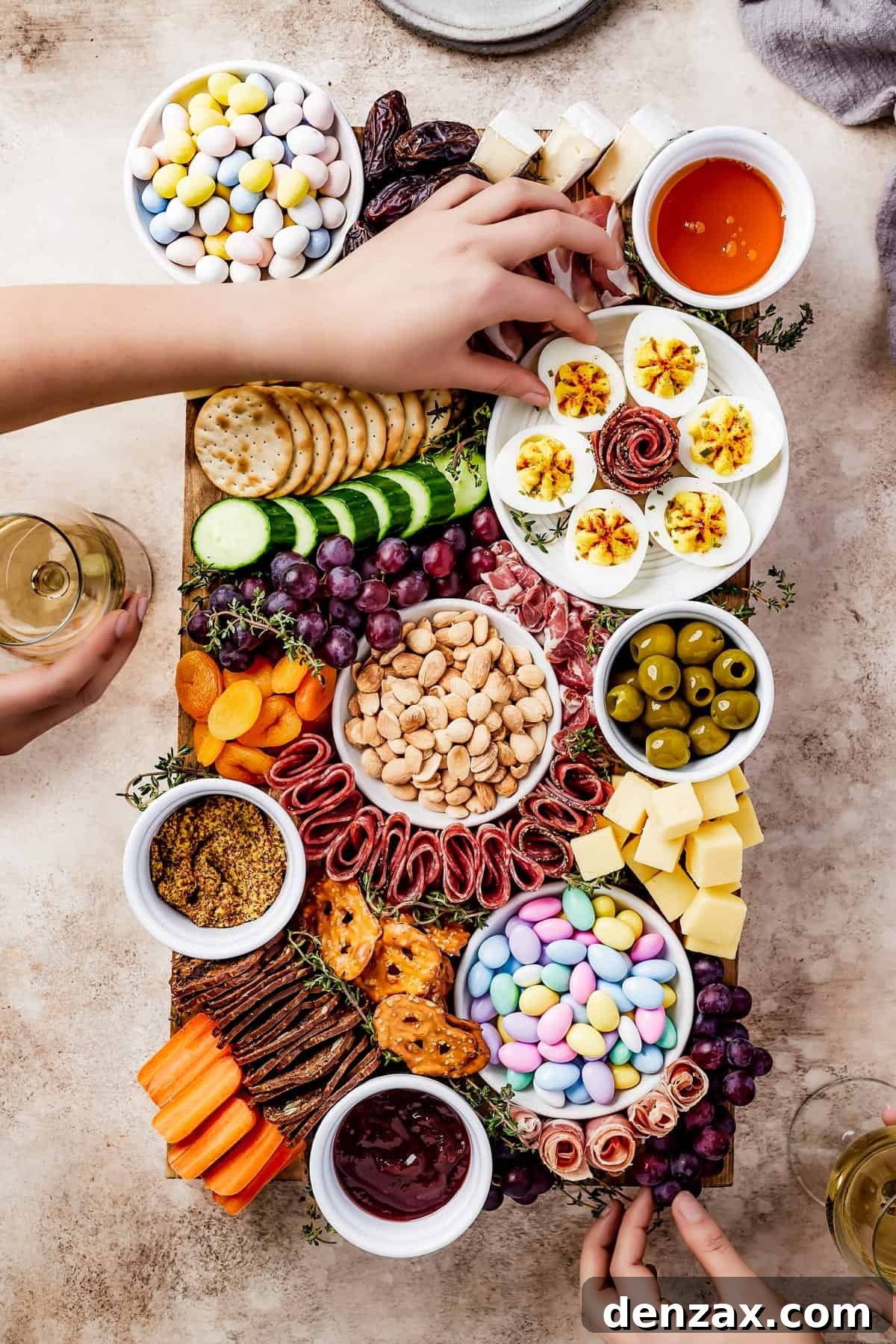
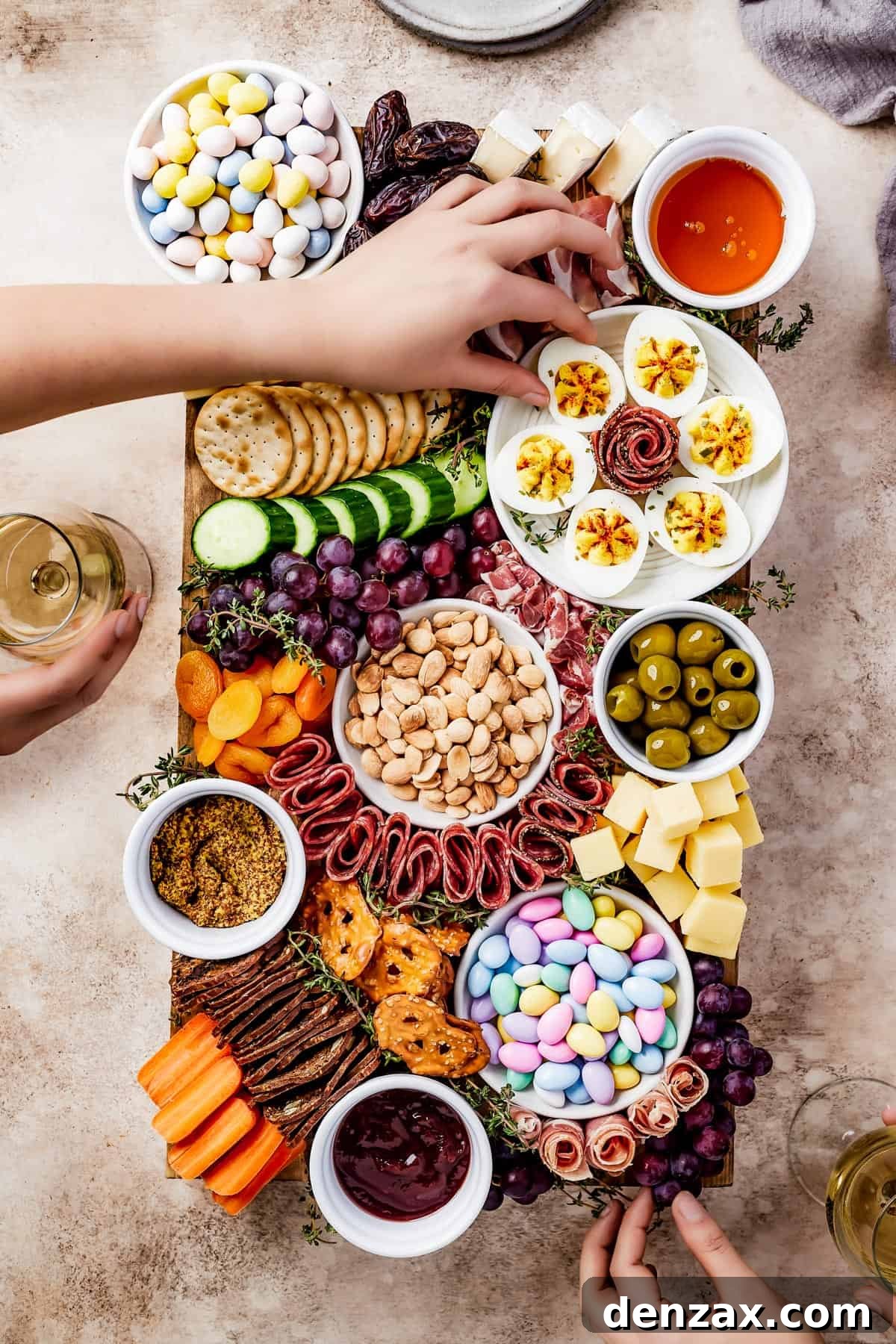
My Easter Charcuterie Board is a beautiful and festive appetizer sampler. From cheeses and cured meats to fresh fruit, crunchy crackers, and deviled eggs, it offers a balanced selection of flavors and textures that guests will love.
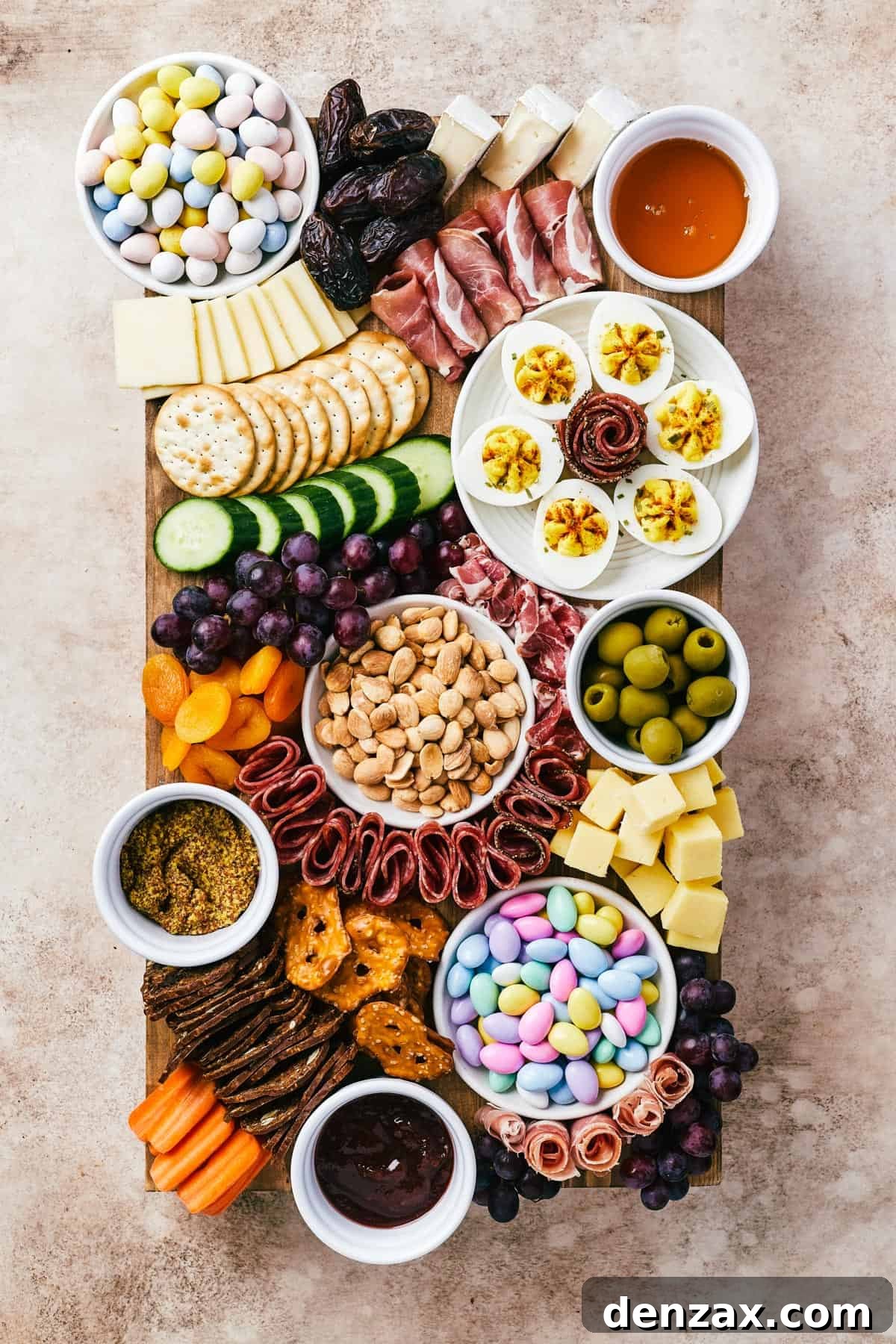
A Festive, Spring-Inspired Charcuterie Board
Hosting an Easter brunch and not sure what to serve? A charcuterie board is an ideal choice: easy to assemble, visually appealing, and adaptable to many tastes. It’s perfect for entertaining because guests can graze and choose what they like, and you can customize it to suit dietary preferences or the number of people attending.
This spring-themed arrangement is simple to put together and looks impressive whether you prepare it ahead of time or assemble it just before guests arrive. The variety of colors, textures, and flavors makes it a delightful centerpiece for any holiday table.
What Is Typically on a Charcuterie Board?
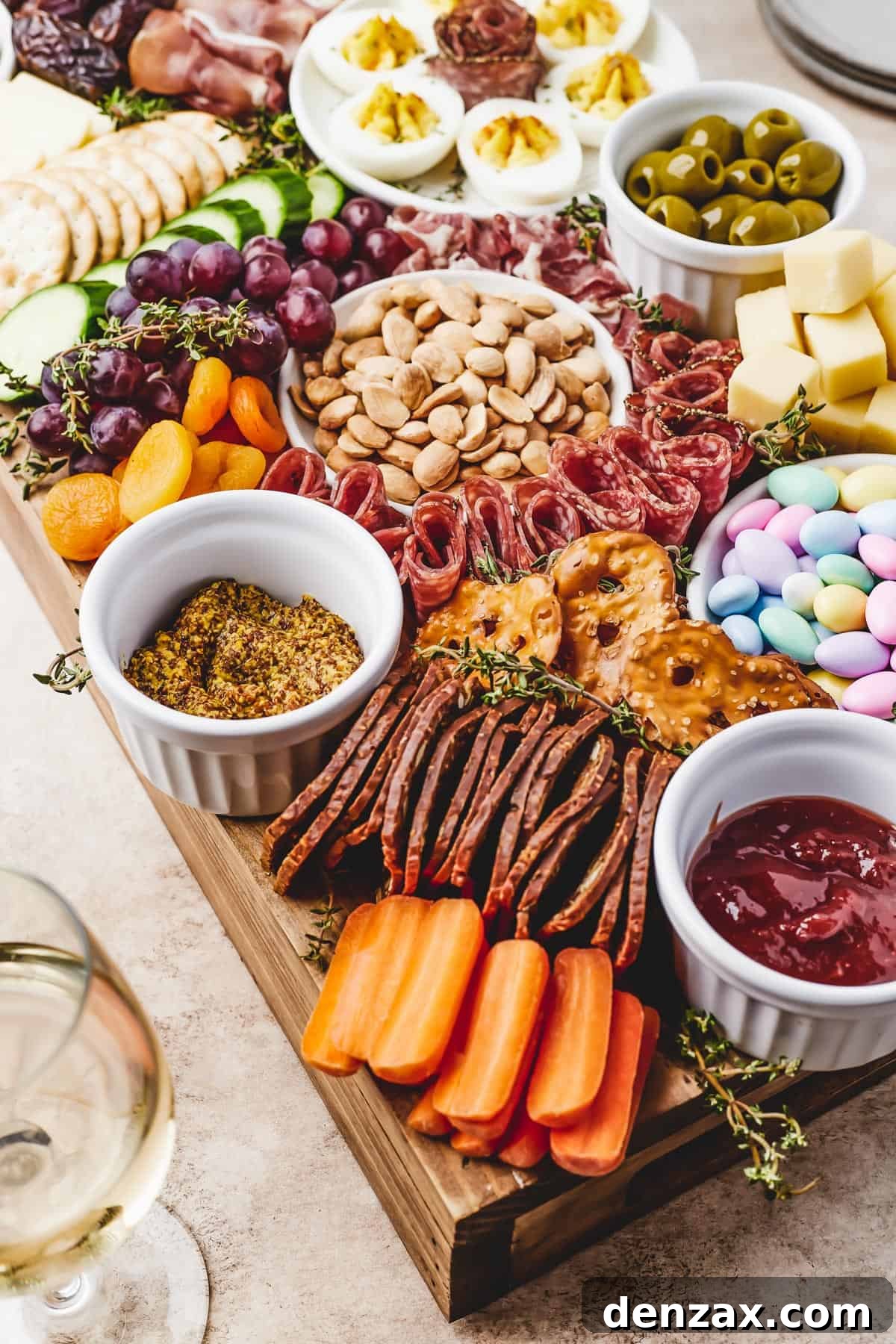
A charcuterie board is a curated display of finger foods arranged on a platter or board. Common components include cured meats (like salami and prosciutto), a variety of cheeses, crackers and crisps, fresh and dried fruits, nuts, olives, and a few condiments such as jams, honey, or mustard. For this Easter board, I also include deviled eggs and a few seasonal touches—tiny chocolate eggs and Jordan almonds—for a festive finish.
The Ingredients You’ll Need
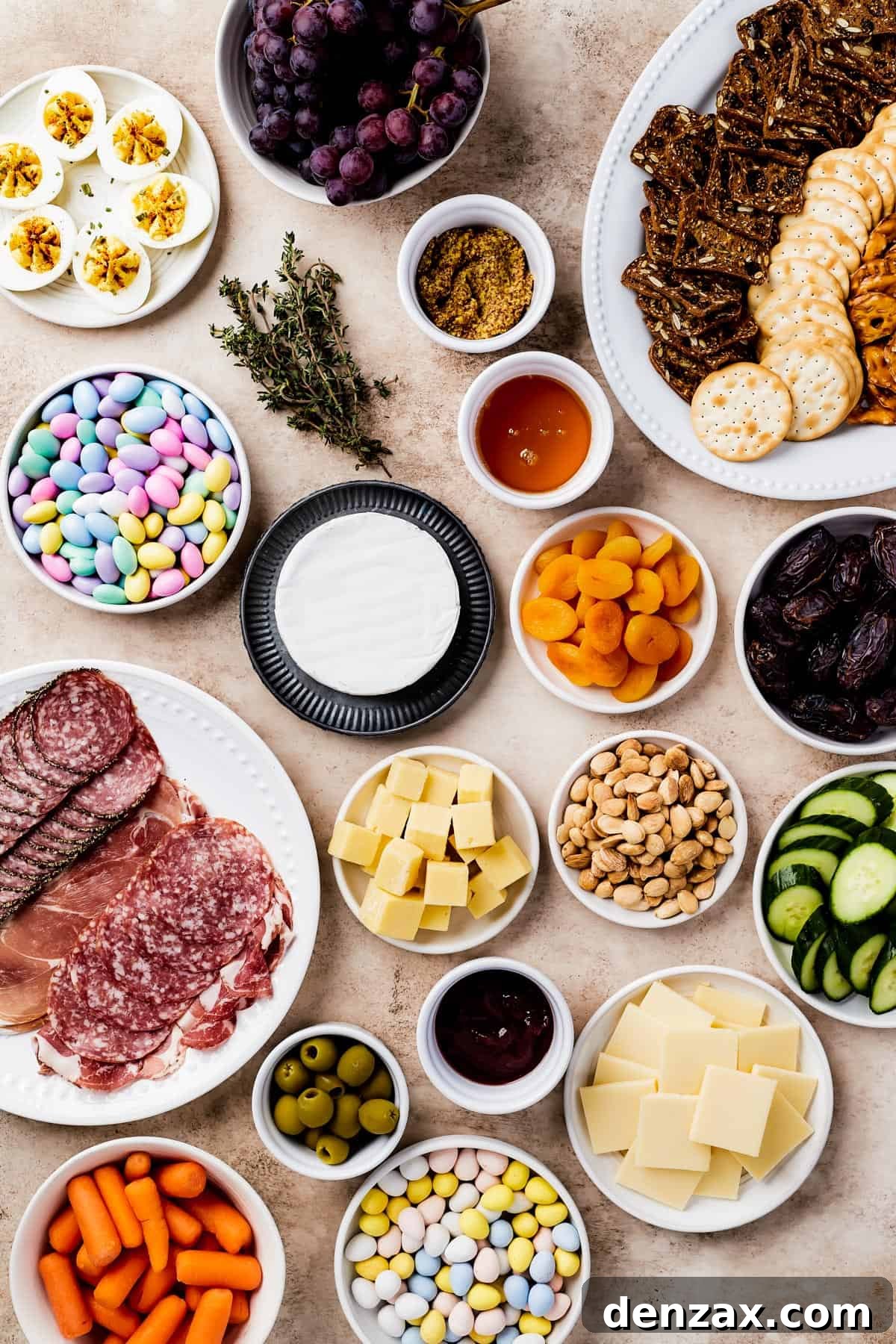
Below are the items I typically use for my Easter charcuterie board. These ingredients represent categories you’ll want to include; feel free to substitute based on preference or availability.
- Prepared Foods: Deviled eggs (6–8).
- Condiments: Honey, whole grain mustard, and strawberry preserves.
- Nuts & Olives: Castelvetrano olives and Marcona almonds.
- Candies: Jordan almonds and chocolate egg candies.
- Meats: Salami, prosciutto, and coppa.
- Cheeses: Brie, white cheddar, and gouda.
- Crackers & Crisps: Water crackers, pretzel crisps, and fig crackers.
- Fruits: Seedless red grapes, Medjool dates, and dried apricots.
- Vegetables: Baby carrots and a large sliced English cucumber.
- Herbs: Fresh thyme sprigs for garnish (optional).
Let’s Make a Charcuterie Board!
Arranging a charcuterie board can feel daunting, but following a few simple steps will give you an attractive, balanced presentation.
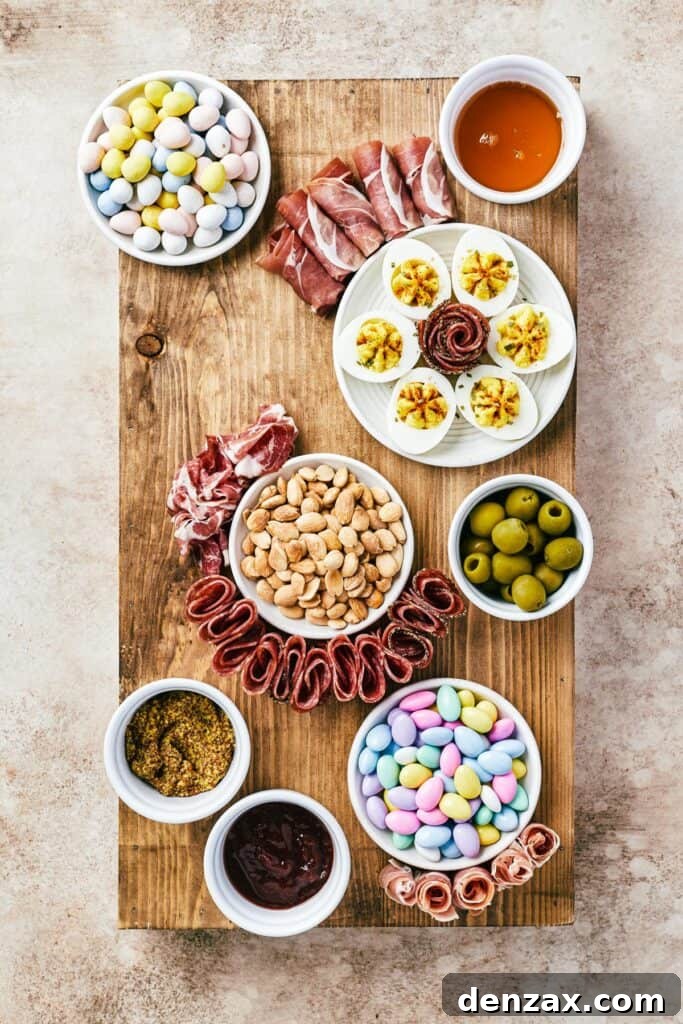
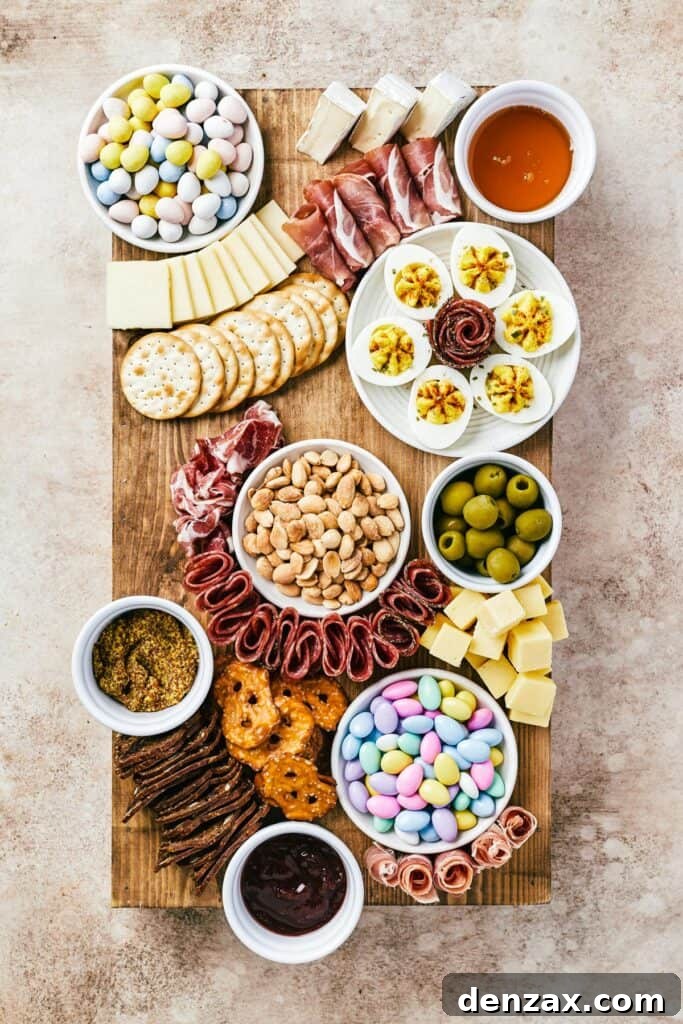
- Place plates and bowls first. Transfer anything that could roll or spill—dips, olives, nuts, candies, and deviled eggs—into small bowls or plates and position them around the board.
- Add meats, cheeses, and crackers. Fold or roll sliced meats and place them near the bowls. Cut cheeses into wedges, slices, or cubes and arrange them beside the meats. Add crackers, leaning them against bowls if you need to prop them up.
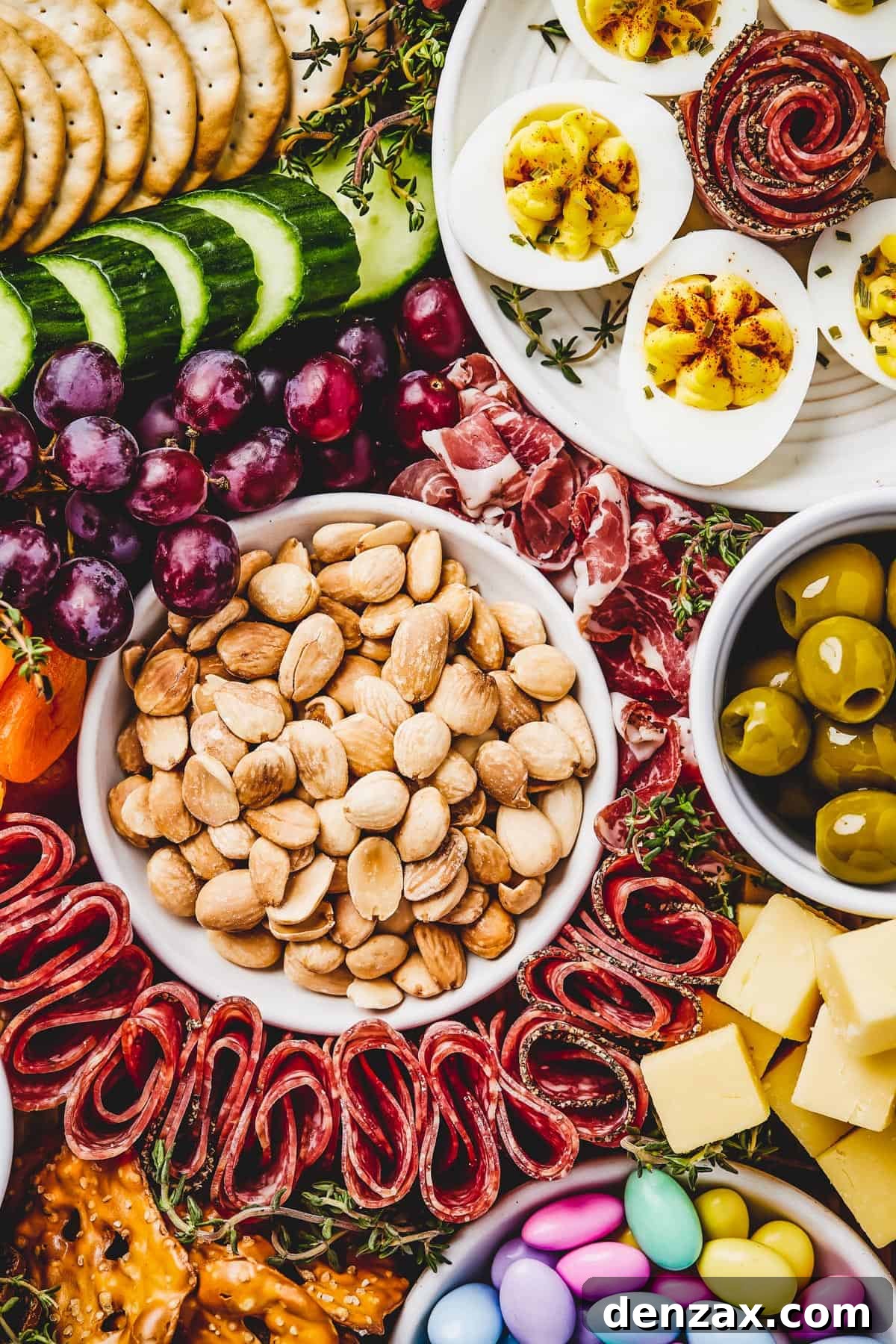
- Fill gaps and finish. Tuck fruit, dried fruit, and vegetables into the remaining spaces to add color and texture. Garnish with fresh thyme or rosemary if desired.
Does a Charcuterie Board Have to Be Wood?
No. Wooden boards are classic, but any large platter or tray works well — glass, ceramic, or marble can be beautiful choices. Avoid using a board that’s been used for raw meat unless it’s been thoroughly cleaned and sanitized.
Tips for Building a Great Board
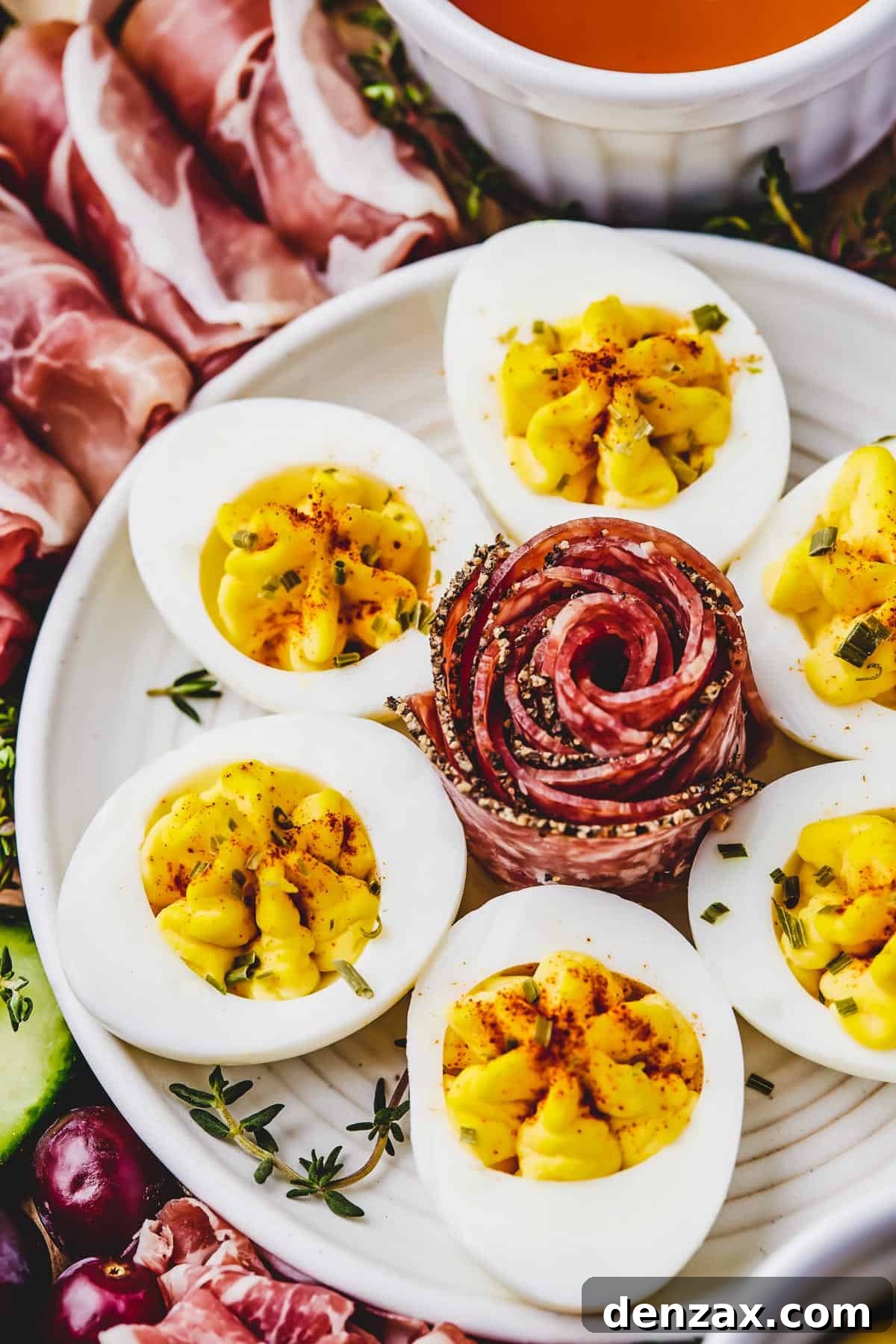
This board should reflect your taste—these are simply helpful guidelines I’ve found useful when building a crowd-pleasing platter.
- Structure the layout: Start with bowls, then layer meats, cheeses, and crackers around them to create balance.
- Use toothpicks: Toothpicks help secure rolled meats and make small items easier to pick up.
- Mind food safety: Keep perishable items like eggs, meats, and soft cheeses refrigerated until just before serving, and don’t leave them out for more than two hours.
More Charcuterie Options
There are endless ways to vary a charcuterie board. Here are additional ideas to inspire your own combinations.
- Condiments: Hummus, spinach-artichoke dip, honey mustard, or a savory tapenade.
- Meats: Swap pork-based charcuterie for roast beef, turkey, or smoked chicken, or try soppressata, pepperoni, or mortadella.
- Cheeses: Add sharp cheddar, chèvre, feta, fresh mozzarella, or a spicy pepper jack.
- Nuts: Use walnuts, pecans, pistachios, or flavored mixes for variety.
- Fruits & Veggies: Fresh berries, apple slices (tossed with lemon), watermelon cubes, or pickled vegetables all make great additions.
Storing Leftover Charcuterie
- Store crackers and nuts in airtight bags or containers at room temperature for up to three days.
- Keep remaining perishable items—meats, cheeses, and prepared foods—in airtight containers in the refrigerator for up to 24 hours.

Easter Charcuterie Board
Ingredients
Prepared Foods:
- 6 to 8 deviled eggs
Condiments:
- 1/4 cup honey
- 1/4 cup whole grain mustard
- 1/4 cup strawberry preserves
Nuts, Olives, and Candies:
- 1 cup Castelvetrano olives
- 1 cup Marcona almonds
- 1 cup Jordan almonds
- 1 cup chocolate egg candy
Meats:
- 8 ounces salami
- 6 ounces prosciutto
- 4 ounces coppa
Cheeses:
- 8 ounces brie
- 8 ounces white cheddar
- 6 ounces gouda
Crackers & Crisps:
- 4 to 6 ounces water crackers
- 4 to 6 ounces pretzel crisps
- 4 to 6 ounces fig crackers
Fruits & Vegetables:
- 1 lb seedless red grapes
- 8 ounces Medjool dates
- 6 ounces dried apricots
- 8 ounces baby carrots
- 1 large English cucumber, sliced
Optional Garnish:
- Fresh thyme sprigs
Instructions
-
Arrange deviled eggs on a plate. Place dips, nuts, olives, and candies into small bowls and set them on the board.
-
Fold or roll the meats and arrange them around the bowls.
-
Cut cheeses into wedges, slices, or cubes and tuck them among the meats and bowls.
-
Distribute crackers and crisps across the board; use bowls for support if needed.
-
Fill remaining gaps with fruits and vegetables.
-
Garnish with thyme sprigs if desired, then serve.
Notes
Nutrition
|
Carbohydrates: 56 g
|
Protein: 20 g
|
Fat: 33 g
Nutritional info is an estimate and provided as a courtesy. Values may vary based on ingredients used.
More Easter Recipes
- Slow Cooker Ham with Brown Sugar Glaze
- Garlic Herb Lamb Chops
- Scalloped Potatoes