
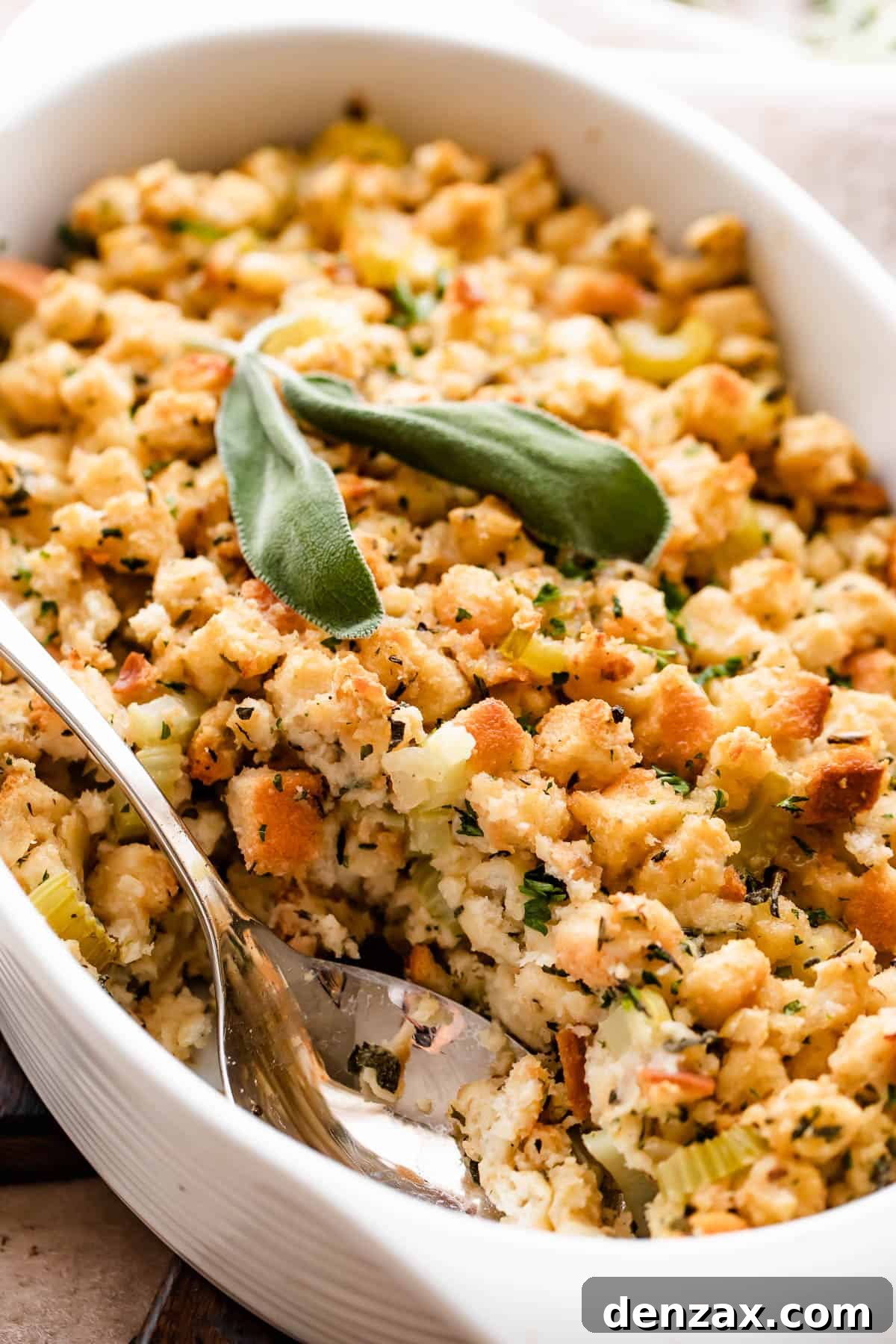
Elevate your holiday table with this incredibly flavorful and Easy Herb Stuffing. Crafted from a base of perfectly toasted French bread, infused with real butter, a medley of fresh herbs, tender vegetables, and a hint of wine, this dish is destined to become a cherished family favorite. Forget complicated recipes; this simple yet elegant stuffing promises to be devoured by everyone!
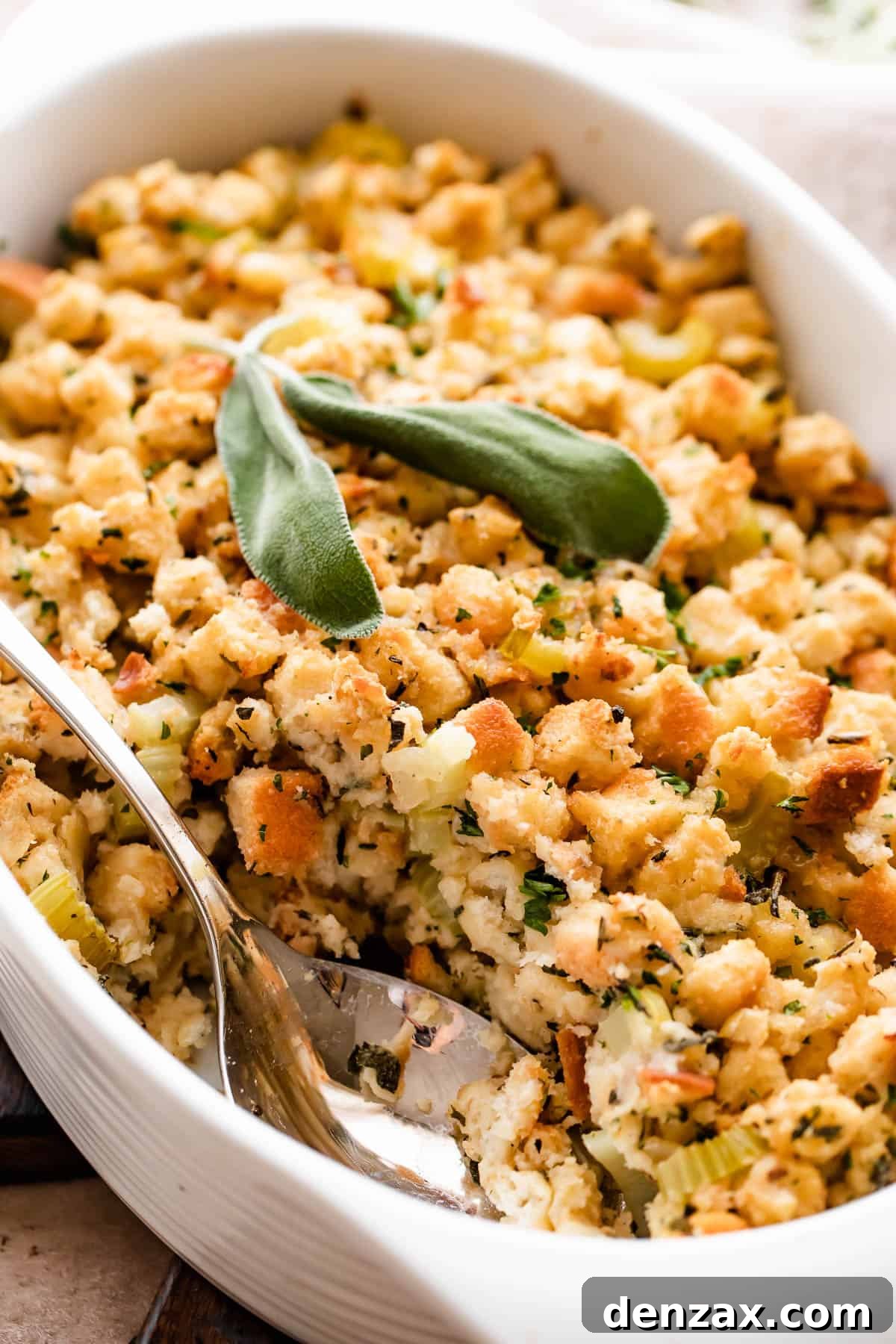
Easy Herb Stuffing: A Classic Holiday Side Dish with Rich Butter and Fragrant Herbs
Are you a devoted admirer of holiday side dishes? Do you find joy in the comforting medley of starch, fresh vegetables, and aromatic herbs? If so, prepare to fall in love with this remarkably easy recipe for baked stuffing. It features robust toasted French bread cubes, vibrant fresh herbs, sweet onions, crisp celery, and savory broth, all coming together in a symphony of flavors and textures.
This buttery, golden-brown side dish is designed to be baked in a casserole dish, separately from your holiday roast turkey or goose. This method is a game-changer for several reasons. Firstly, it completely eliminates the risk of undercooked stuffing, ensuring food safety without compromise. Secondly, it prevents your poultry from drying out, as the stuffing won’t absorb precious juices from the bird, leaving you with perfectly moist meat every time. It’s a win-win for both your stuffing and your main course!
The addition of a subtle hint of garlic and a splash of dry white wine takes this dish to an entirely new level. This thoughtful touch introduces a sophisticated, almost Julia Child-esque French flair, beautifully complementing the traditional American classic. Furthermore, a couple of whole eggs act as a binding agent, holding the mixture together while contributing a delightful richness and depth of flavor that makes every bite truly satisfying.
Stuffing vs. Dressing: Understanding the Delightful Debate
The great “stuffing or dressing” debate is a culinary conversation as old as time, varying widely depending on regional traditions and personal preference. Whether you call this beloved dish stuffing, dressing, or even “filling,” its core essence remains the same: a delectable combination of savory bread (or sometimes cornbread or rice) mingled with flavorful broth and tender vegetables. The primary distinction often lies in its preparation method.
Traditionally, if the savory mixture is cooked inside the cavity of the bird, it’s referred to as “stuffing.” If it’s baked separately in a casserole dish, it’s typically called “dressing,” as it “dresses” the main dish rather than being “stuffed” within it. However, culinary lines blur, and many home cooks, myself included, use the terms interchangeably. I usually refer to this recipe as “stuffing,” even though I bake it proudly on the side to achieve that perfectly crispy exterior and moist interior.
Regardless of what you choose to call it, the end result is universally adored. This dish brings comfort, warmth, and a festive spirit to any gathering, making it a non-negotiable part of holiday meals. The rich aromas that fill your kitchen as it bakes are truly intoxicating, signaling that a delicious feast is well underway.
The Essential Ingredients for Perfect Herb Stuffing
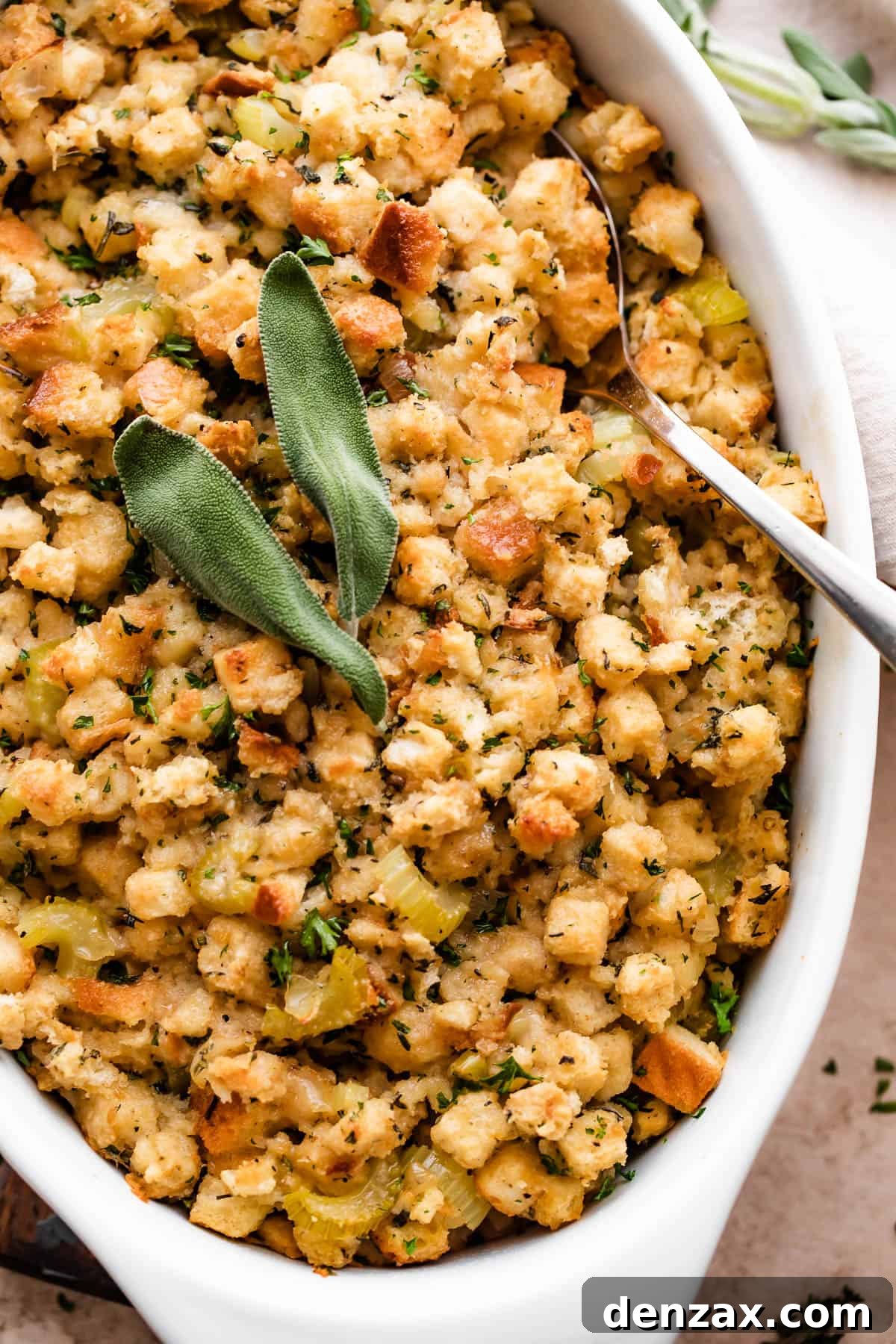
What exactly transforms a humble loaf of bread and a few vegetables into a pan of irresistible stuffing? It’s all about selecting the right components and combining them with care. While countless variations exist, our basic recipe is delightfully straightforward, ensuring fantastic results even for novice cooks. Here’s a closer look at the key ingredients you’ll need to create this classic holiday side:
- Sturdy Bread: The foundation of great stuffing! My top recommendation is a whole loaf of white French bread, diced into uniform, bite-sized cubes. Its robust texture holds up beautifully to the moisture, ensuring a delightful chewiness.
- Rich Butter: For optimal flavor and control over seasoning, unsalted butter is highly recommended. It provides that signature rich, golden crust and tender interior.
- Aromatic Onion: Diced onion is indispensable for stuffing, lending a sweet and savory base note. Yellow onions are a classic choice, but white or sweet onions also work wonderfully.
- Crisp Celery: Another stuffing essential! Chopped celery adds a crucial textural contrast and a subtle, refreshing peppery flavor. Ensure to cut each rib in half lengthwise before chopping into small, consistent pieces.
- Fresh Garlic: While not all traditional recipes include it, I believe freshly minced garlic adds an irresistible, mouthwatering depth. Four cloves, minced or pressed, will enhance the savory profile. Feel free to omit if you prefer a milder taste.
- Salt and Pepper: The foundational seasonings that bring all the flavors into harmony. Adjust to your personal preference.
- Dry White Wine: A culinary secret weapon! A small amount of dry white wine introduces a beautiful complexity and helps to cut through the richness of the butter and bread, elevating the entire dish.
- Abundant Fresh Herbs: This is where the “herb” in “herb stuffing” truly shines! A delightful blend of fresh parsley, sage, rosemary, and thyme creates an incredibly fragrant and festive profile. If possible, always opt for fresh herbs over dried for the best flavor; simply mince the leaves (remove rosemary and thyme from their woody stems).
- Savory Broth: Crucial for moistening the bread cubes and infusing them with flavor. Chicken broth is my go-to, providing a rich, savory backbone.
- Large Eggs: Two large, whole eggs act as a natural binder, helping the stuffing hold its shape and contributing a pleasant, subtle richness.
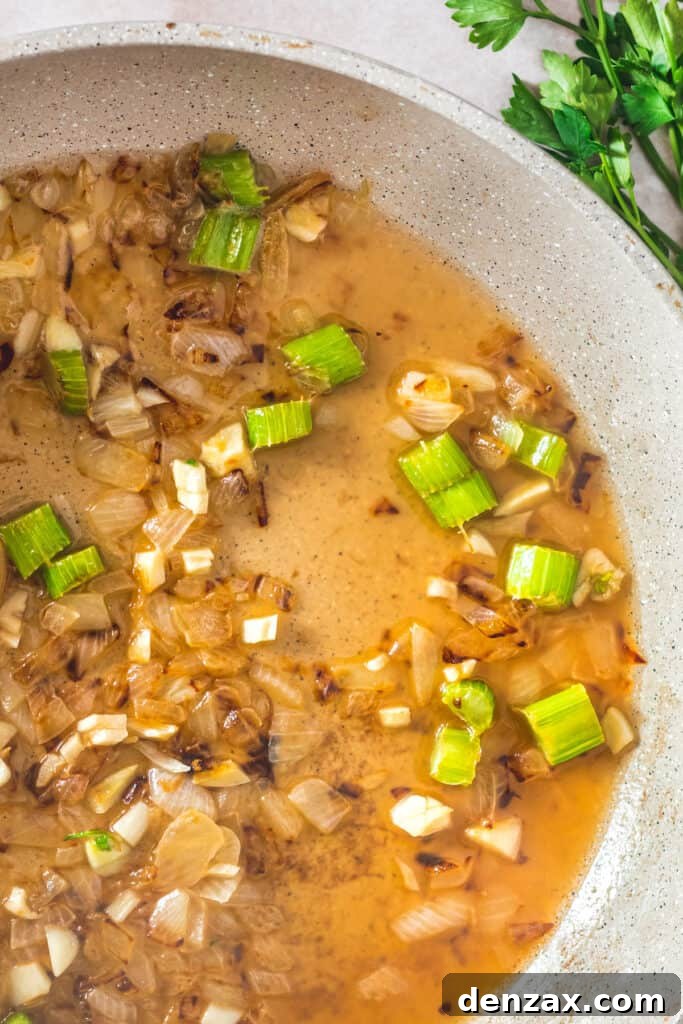

How to Make Homemade Herb Stuffing: A Simple Step-by-Step Guide
If the idea of making stuffing from scratch seems daunting, worry no more! This recipe is incredibly forgiving and simple, essentially a mix-and-bake casserole that yields spectacular results every time. Follow these easy steps to create your own homemade herb stuffing:
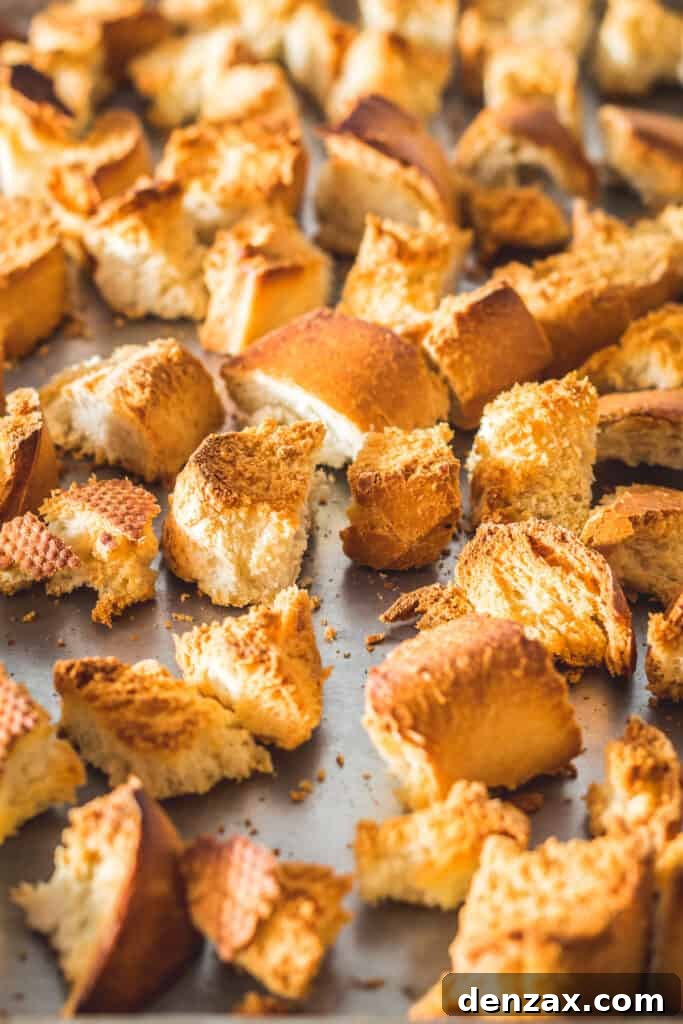
- Prepare and Toast the Bread Cubes: Begin by preheating your oven to 350°F (175°C). While the oven heats, spread your diced French bread cubes in a single, even layer on a large baking sheet. Once the oven is hot, bake the bread for about 10 minutes, or until the cubes feel dry to the touch and are lightly toasted. This crucial step prevents soggy stuffing. Transfer the toasted bread cubes to a very large mixing bowl and set aside. Keep the oven on, as you’ll be baking the stuffing shortly.
- Sauté the Aromatics: In a large sauté pan, melt 2 tablespoons of unsalted butter over medium-high heat. Add the diced onion and chopped celery to the pan. Cook, stirring occasionally, until the vegetables are tender-crisp and just beginning to turn a beautiful golden color, typically 7 to 8 minutes. Next, stir in the minced garlic, salt, and black pepper, and continue to cook for another 4 minutes, allowing the flavors to meld. Finally, pour in the dry white wine and let it simmer until the liquid has reduced by half, which usually takes about 5 minutes. This step creates a rich, concentrated flavor base.
- Assemble the Stuffing Mixture: Carefully transfer the sautéed vegetable and wine mixture into the large bowl with the toasted bread cubes. Sprinkle in the minced fresh parsley, sage, rosemary, and thyme. Pour in 1 cup of the chicken broth. Gently toss all the ingredients together until thoroughly combined, ensuring the bread begins to absorb the savory liquids. In a separate small bowl, whisk together the two large eggs with the remaining 1 cup of chicken broth until well blended. Pour this egg and broth mixture over the bread and vegetable mixture. Toss again to ensure all components are evenly moistened.
- Bake to Golden Perfection: Lightly grease a 9×13 inch baking dish (or similar size). Pour the prepared stuffing mixture into the greased dish, spreading it evenly. Take the remaining ¼ cup of unsalted butter, dice it into small pieces, and scatter these butter pieces over the top of the stuffing. This will help create an irresistibly golden and crispy crust. Bake for 35 to 40 minutes, or until the top is beautifully browned and the stuffing is heated through to the center. Serve warm and enjoy!
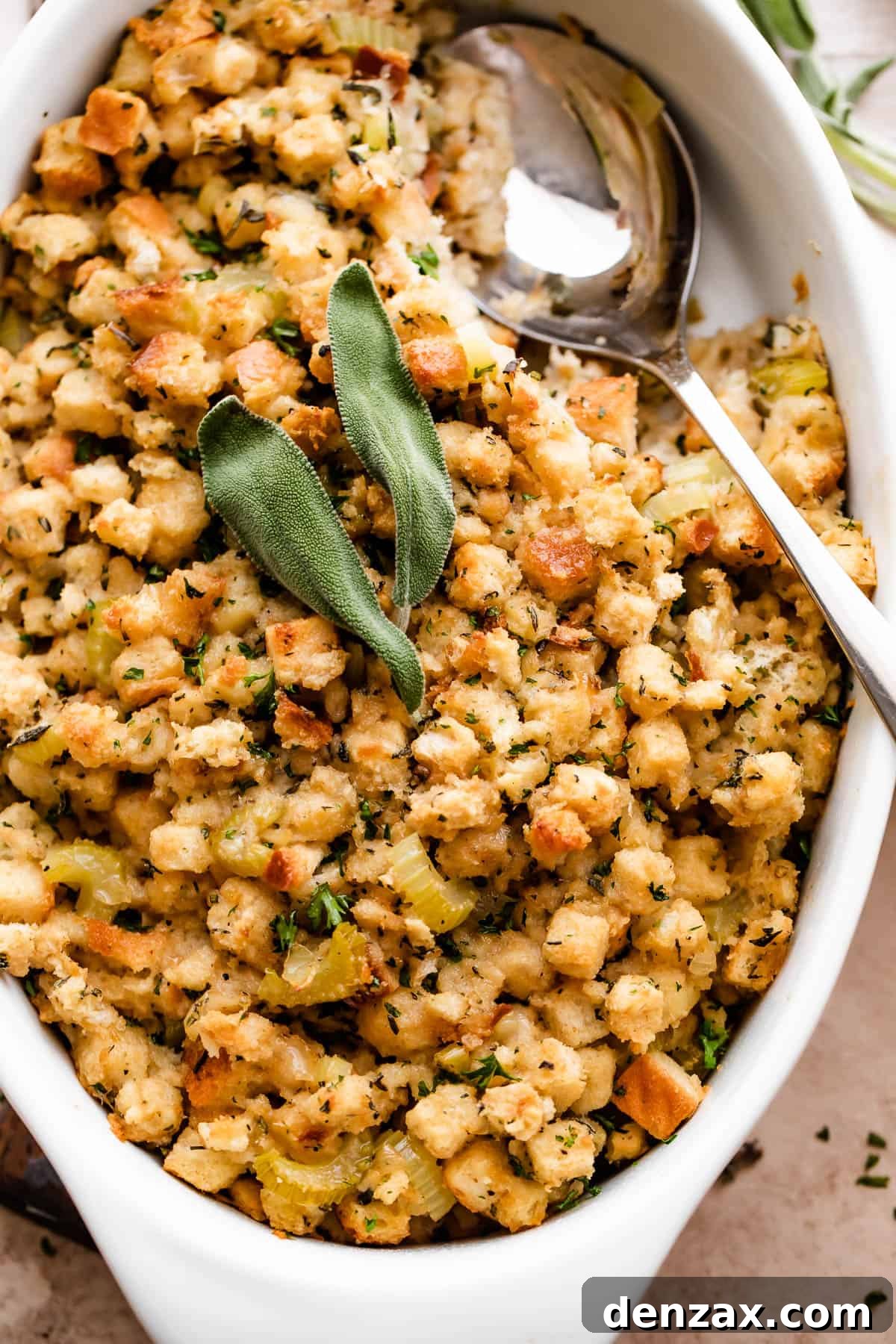
Expert Tips for Perfect Herb Stuffing, Every Time
This recipe provides a fantastic base for classic herb stuffing, easily made with common pantry ingredients. But to truly master the art of stuffing and adapt it to your preferences, consider these helpful tips and variations:
- Bread Choices: While French bread is superb, almost any sturdy bread will work beautifully as long as it’s dried and toasted. Consider sourdough, challah, or even gluten-free bread. For a delightful twist, try a combination of half regular bread and half cornbread for added sweetness and texture.
- Broth Flexibility: Chicken broth provides a classic flavor, but feel free to substitute it with turkey broth (especially if you’re making this for Thanksgiving) or even vegetable broth for a vegetarian option.
- Add Protein for Heartiness: To make your stuffing even more robust and flavorful, consider adding cooked protein. Crisply cooked and crumbled bacon, or savory sausage (sage or fennel sausage is particularly good for a classic holiday taste), can be folded into the mixture with the vegetables.
- Make It Vegan-Friendly: This recipe is easily adaptable for dietary needs. Use vegetable broth for a vegetarian version. To go fully vegan, substitute the butter with your favorite plant-based butter and replace the eggs with an equivalent egg substitute (such as flax eggs or a commercial vegan egg replacer).
- Creative Presentation Ideas: For elegant individual servings, bake your stuffing in muffin tins until golden. Another clever way to achieve the classic “stuffed turkey” look without the food safety risks is to cook your turkey separately, then gently “stuff” it with the pre-baked stuffing just before serving.
- Achieve the Perfect Texture: Don’t overmix the stuffing once the liquid is added. Gentle tossing ensures the bread cubes absorb moisture without becoming mushy. For a crispier topping, avoid covering the dish during the last 10-15 minutes of baking.
- Flavor Boosters: For an extra layer of flavor, sauté a diced apple (like a Granny Smith) or some chopped mushrooms with your onions and celery. A pinch of nutmeg or a dash of poultry seasoning can also enhance the overall aroma.
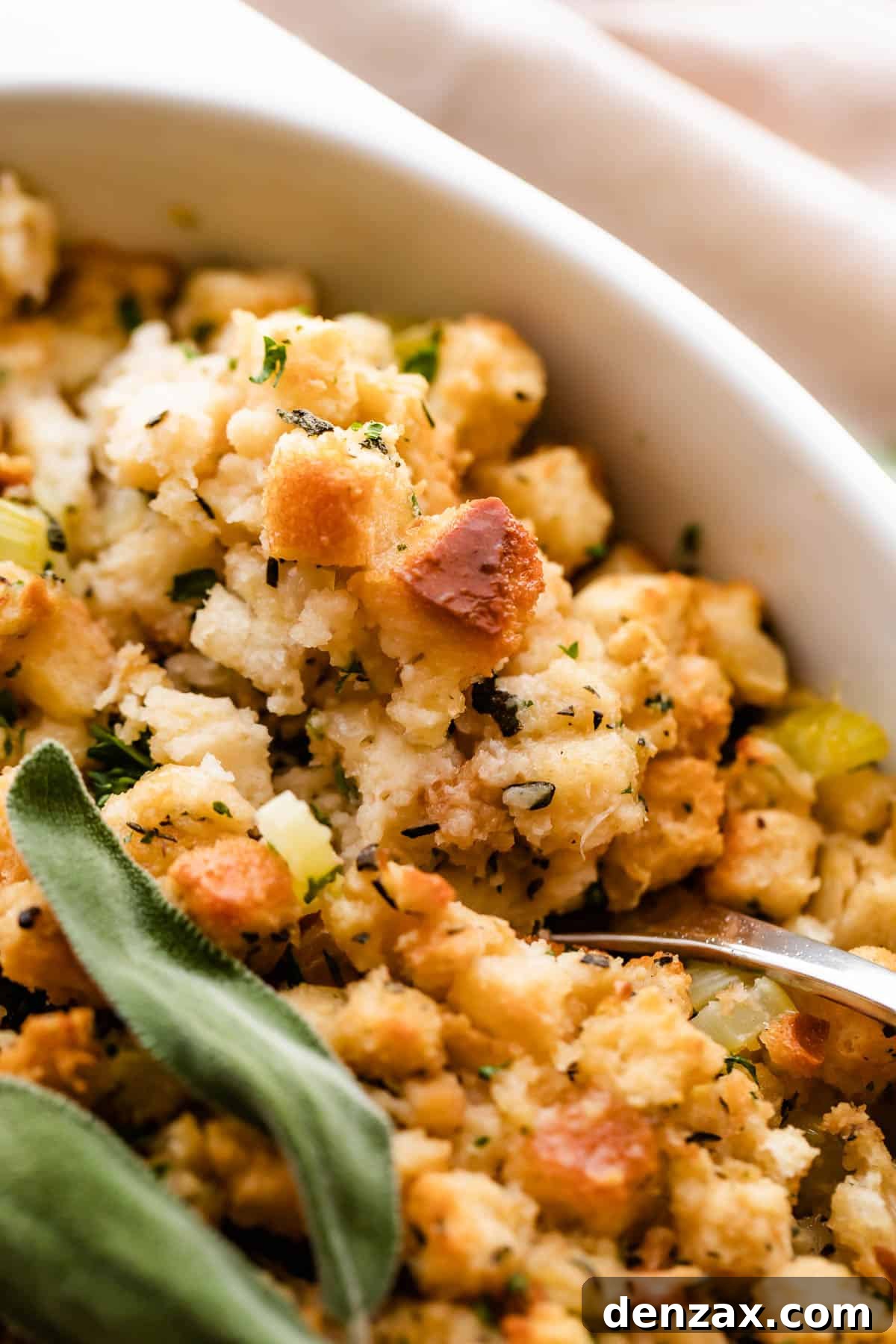
Make It In Advance for Stress-Free Holidays
Holiday meal preparation can be hectic, which is why this herb stuffing recipe is perfect for making ahead. Preparing components or even the entire dish in advance frees up valuable time on the big day, allowing you to relax and enjoy the festivities. Here’s how to manage it:
- Assemble and Refrigerate: You can fully assemble the stuffing mixture (combining all ingredients in the baking dish) up to one day in advance. Cover the baking dish tightly with plastic wrap or foil and refrigerate until you’re ready to bake.
- Bring to Room Temperature: Approximately 30 minutes before you plan to bake, remove the stuffing from the refrigerator. Allowing it to come to room temperature ensures more even baking and reduces overall cooking time.
- Bake as Directed: Proceed with baking the stuffing according to the recipe’s instructions. You may need to add an extra 5-10 minutes to the baking time if the stuffing is still very cold when it goes into the oven.
What to Do with Leftover Stuffing: Creative & Delicious Ideas
Let’s be honest, sometimes the leftovers are just as good, if not better, than the main meal! While I adore simply reheating a generous portion of stuffing alongside leftover turkey and cranberry sauce, or even enjoying a midnight snack straight from the microwave, leftover stuffing offers incredible versatility. Don’t let a single crumb go to waste! Here are some fantastic and creative ways to transform your leftover herb stuffing into exciting new dishes:
- Stuffing Waffles: Dust off your waffle maker for a truly unique and savory breakfast or brunch! For every two cups of leftover stuffing, whisk one egg with a splash of milk or extra broth. Stir this into the stuffing mixture. Spread a thin, even layer onto a preheated, greased waffle iron and cook until golden brown and heated through. Serve with gravy, a fried egg, or more cranberry sauce.
- The Ultimate Leftover Sandwich: Elevate your classic turkey sandwich by adding a few spoonfuls of stuffing. This adds incredible flavor and texture. For bonus points, layer in some cranberry sauce, a dollop of gravy, or even a slice of cheese.
- Meatballs or Meatloaf Makeover: Stuffing can be an excellent binder and flavor enhancer in meat dishes. Substitute some or all of the breadcrumbs in your favorite meatloaf or meatball recipe with leftover stuffing. It adds moisture and a delicious herbaceous note.
- Savory Stuffing Hash: Perfect for breakfast, lunch, or a light dinner. Begin by sautéing one or two diced potatoes in a skillet over medium heat until softened. Add your leftover stuffing, diced cooked turkey, and a knob of butter to the pan. Sauté everything together until heated through and slightly crispy. Season as needed and top with perfectly fried or poached eggs for a hearty meal.
Storing and Reheating Leftovers: Freshness Guaranteed
Proper storage and reheating are key to enjoying your delicious herb stuffing long after the initial meal. Follow these guidelines to keep your leftovers fresh and flavorful:
- Refrigeration: Store any leftover stuffing in airtight containers or sealed zip-top bags in the refrigerator for up to 2-3 days.
- Freezing: For longer storage, leftover stuffing freezes beautifully. Transfer it to freezer-safe bags or airtight containers and store for up to 2 months. Thaw overnight in the refrigerator before reheating.
- Reheating:
- Microwave: For quick individual servings, microwave stuffing in 1-minute intervals, stirring in between, until heated through. You might want to add a tablespoon of broth to keep it moist.
- Oven: For larger quantities or to restore some crispness, bake leftover stuffing in an oven-safe dish at 350°F (175°C), covered with foil, for 20-30 minutes, or until heated through. Uncover for the last 5-10 minutes if you prefer a crispier top.
Easy Herb Stuffing Recipe
This simple yet elegant herb stuffing, featuring toasted French bread, savory butter, fresh herbs, and a touch of wine, is the ultimate holiday side dish. It’s guaranteed to be a crowd-pleaser and a staple on your festive table!
By: Katerina | Easy Weeknight Recipes
Prep Time: 10 minutes
Cook Time: 25 minutes
Baking Time: 40 minutes
Total Time: 1 hour 15 minutes
Servings: 8
Ingredients
- 1 whole loaf (1 pound) white French bread, diced
- ¼ cup unsalted butter plus 2 tablespoons
- 1 large yellow onion, diced
- ½ cup celery, chopped
- 4 cloves garlic, minced
- 1 teaspoon salt
- 1 teaspoon black pepper
- ½ cup dry white wine
- ½ cup flat leaf parsley, minced
- 2 tablespoons fresh sage leaves, minced
- 2 tablespoons fresh rosemary, leaves only, minced
- 2 tablespoons fresh thyme, leaves only, minced
- 2 cups chicken broth
- 2 large eggs
Instructions
- Preheat the oven to 350°F (175°C).
- Spread the diced bread cubes in a single layer on a baking sheet and bake for 10 minutes, or until dry and lightly toasted. Transfer the bread cubes to a large mixing bowl and set aside.
- In a large sauté pan, melt 2 tablespoons of butter over medium-high heat. Add the diced onion and chopped celery, and cook until softened and lightly browned, about 7-8 minutes.
- Add the minced garlic, salt, and black pepper to the vegetables. Sauté for another 4 minutes.
- Pour in the dry white wine and cook until the liquid is reduced by half, about 5 more minutes.
- Remove the vegetable mixture from the heat and transfer it to the bowl with the toasted bread cubes. Stir in the minced parsley, sage, rosemary, and thyme, along with 1 cup of the chicken broth. Toss well to combine.
- In a small bowl, whisk together the eggs with the remaining 1 cup of chicken broth. Pour this mixture over the bread and vegetable mixture, and toss thoroughly to ensure even moisture.
- Transfer the stuffing mixture to a greased 9×13 inch baking dish. Dice the remaining ¼ cup of butter into small pieces and sprinkle them evenly over the top of the stuffing.
- Bake for 40 minutes, or until the top is golden brown and the stuffing is hot in the middle. Serve warm.
Nutrition (Estimated per serving)
Calories: 277 kcal | Carbohydrates: 36g | Protein: 9g | Fat: 10g | Saturated Fat: 6g | Polyunsaturated Fat: 1g | Monounsaturated Fat: 3g | Trans Fat: 1g | Cholesterol: 61mg | Sodium: 888mg | Potassium: 235mg | Fiber: 2g | Sugar: 2g | Vitamin A: 738 IU | Vitamin C: 14mg | Calcium: 72mg | Iron: 3mg
Nutritional information is an estimate and provided as a courtesy. Values may vary based on ingredients and tools used. For precise details, please use your preferred nutritional calculator.
Did you make this recipe? We’d love to hear your feedback! Share your experience or leave a rating in the comments section below!
Discover More Easy Holiday Side Dishes
Looking to complete your festive meal? Explore these other delightful and easy-to-make holiday side dishes that pair perfectly with your Herb Stuffing:
- Easy Roasted Vegetables: A simple and healthy accompaniment to any holiday spread.
- Perfect Homemade Cranberry Sauce: Far superior to canned, this tangy-sweet sauce is a must-have.
- The Best Sweet Potato Casserole: A decadent and comforting dish that’s always a hit.