
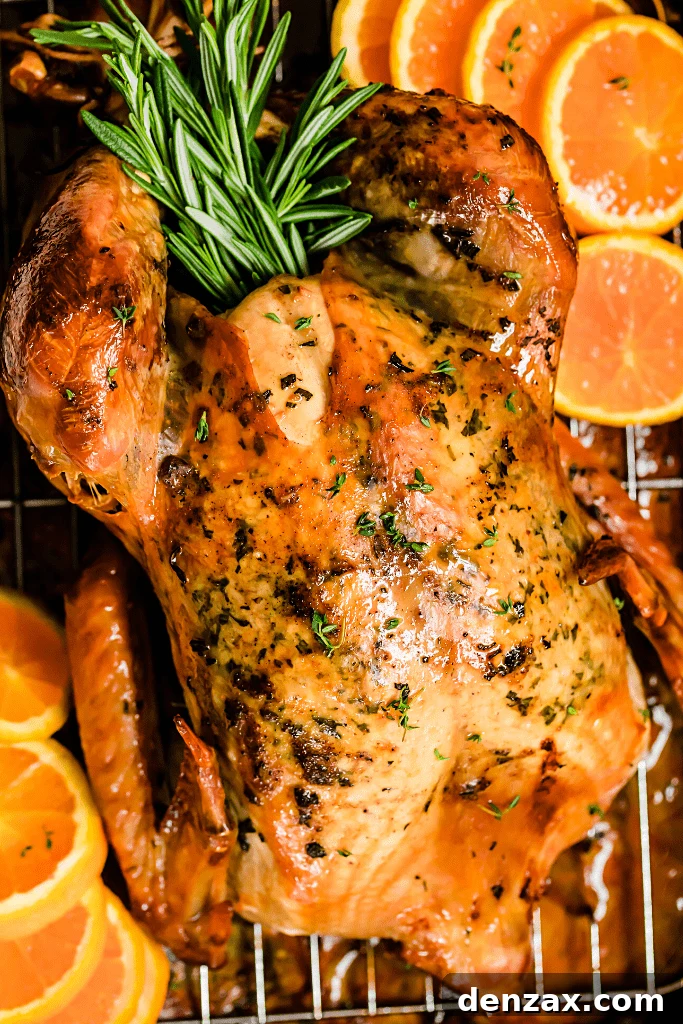
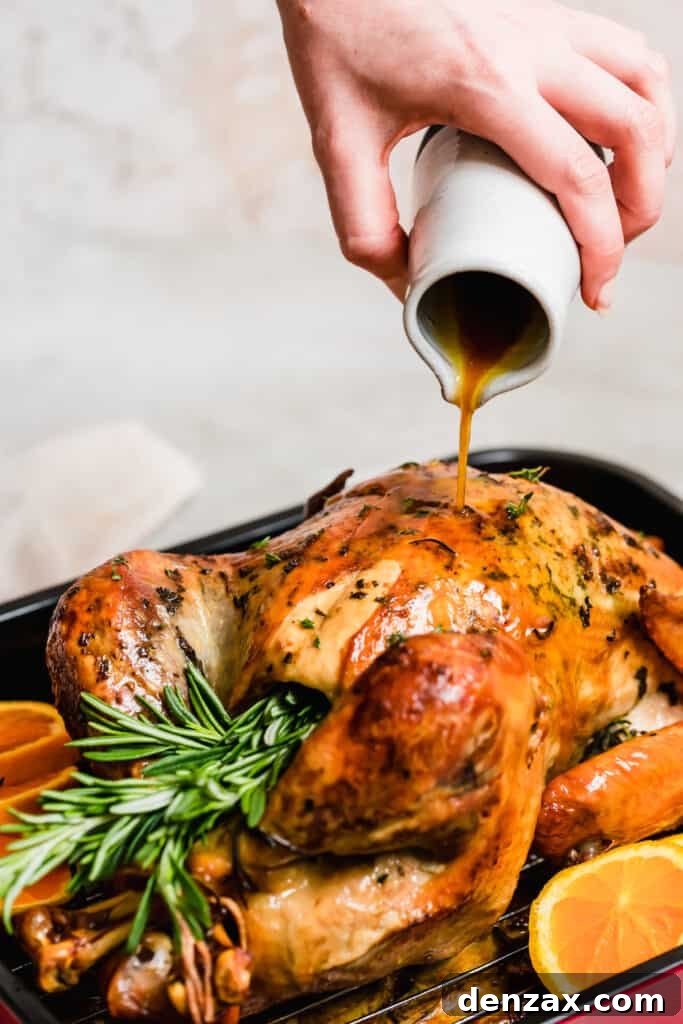
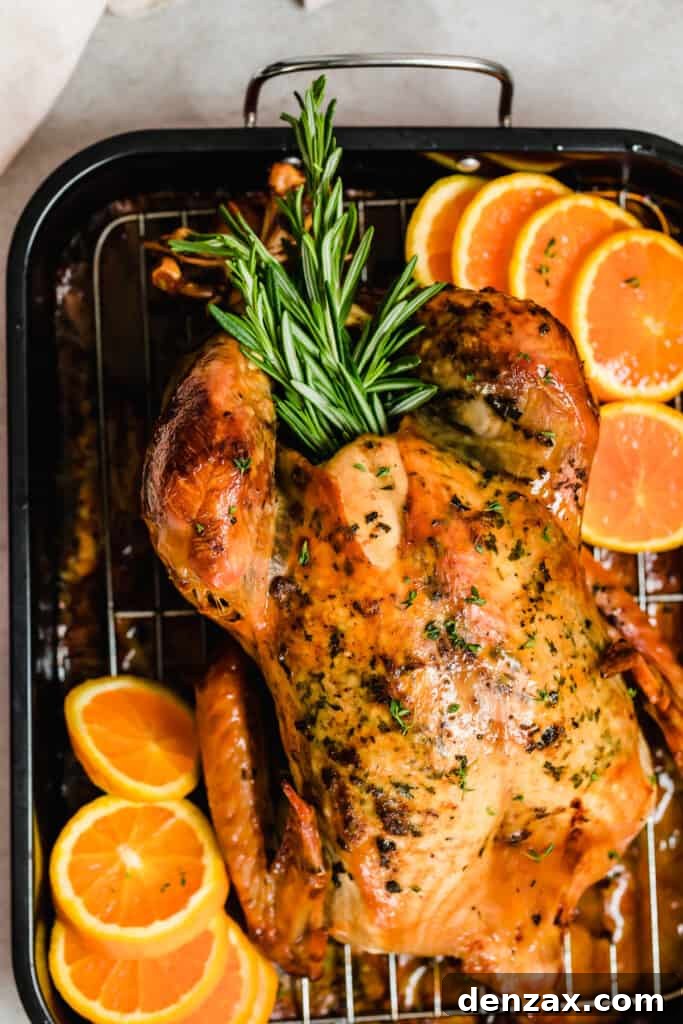
Nothing says festive celebrations quite like a beautifully cooked, golden-brown Whole Roast Turkey. This recipe promises not just a stunning centerpiece for your holiday table, but an incredibly easy and flavorful experience that will delight everyone. Infused with the bright zest of fresh lemon, the aromatic warmth of rosemary, the richness of butter, and the pungent kick of garlic, this turkey is a testament to simple ingredients yielding extraordinary results. Prepare yourself for a succulent, tender bird that will leave a lasting impression on your friends and family. This isn’t just a meal; it’s a memory waiting to be made.
Why This Roast Turkey Recipe Will Be Your Holiday Favorite
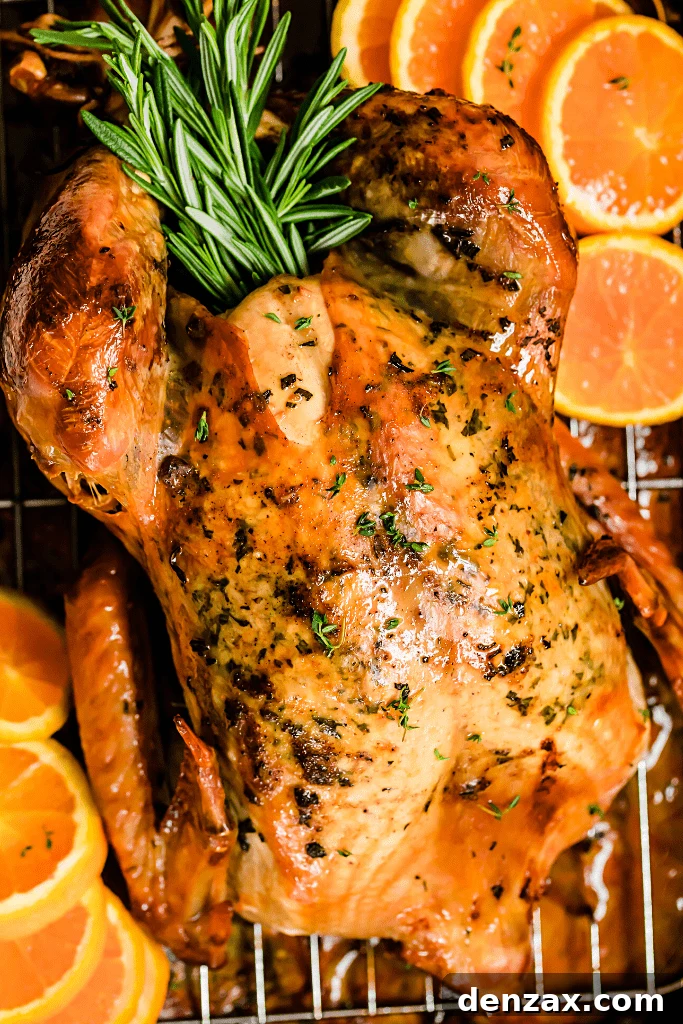
While the culinary world offers an endless array of roast turkey recipes, each with its unique twist, there’s an undeniable charm and satisfaction in a classic, traditional approach. Our recipe champions this timeless elegance, offering a version that is remarkably light on effort yet heavy on flavor. It allows the natural goodness of the turkey to shine, perfectly complemented by a harmonious blend of creamy butter, vibrant fresh lemon, and fragrant rosemary.
The resulting flavor profile is exquisitely balanced, promising a juicy, tender bird that will fill your home with an irresistible aroma. Imagine the joy of serving a turkey that is not only visually stunning but also incredibly tender and bursting with flavor, creating an unforgettable experience for everyone gathered around your table. This recipe ensures a stress-free cooking process, leaving you more time to enjoy the festivities.
Selecting the Best Turkey for Your Feast
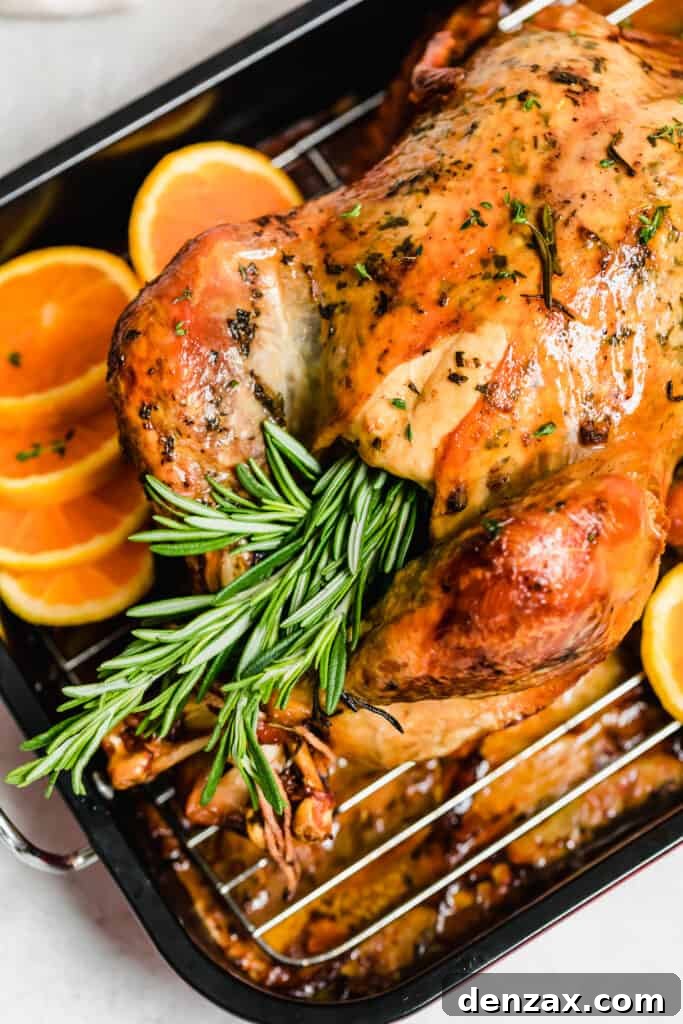
Choosing the right turkey is the first crucial step towards a magnificent holiday meal. With so many options available, it can feel daunting, but these simple guidelines will help you navigate the poultry section with confidence.
Understanding Turkey Weight: How Much Do You Need?
A common rule of thumb is to calculate one pound of turkey per guest. However, it’s always wise to budget for a couple of extra pounds, especially if you want plenty of delicious leftovers or if your guests have hearty appetites. For a gathering of 10 people, a 10-12 pound bird is typically sufficient, but if you’re aiming for ample servings and leftovers, consider a slightly larger one.
Fresh vs. Frozen Turkey: A Crucial Decision
The primary considerations when choosing between a frozen and a fresh turkey are cost and convenience. Frozen turkeys are generally more budget-friendly, making them an attractive option for many. However, they require significant thawing time – typically 24 hours for every five pounds. This means a 15-pound turkey could need three full days to thaw in the refrigerator, demanding careful advance planning.
Fresh turkeys, on the other hand, offer the convenience of being ready to prepare almost immediately, eliminating the lengthy thawing process. While they might come with a higher price tag, the time saved can be invaluable during busy holiday preparations. Weigh these factors based on your schedule and budget.
Navigating Special Turkey Labels
When you browse the poultry aisle, you’ll encounter a variety of labels like “Kosher,” “organic,” “free-range,” and “all-natural.” Each label signifies different farming practices and can influence the turkey’s flavor, texture, and price. Understanding these distinctions can help you make an informed choice that aligns with your preferences and values. For instance, a Kosher turkey is brined as part of its processing, often resulting in a naturally seasoned and juicy bird. Organic and free-range options focus on the turkey’s diet and living conditions, which many believe contributes to better flavor and quality. Do a quick search for a comprehensive guide to understand what each label truly means for your holiday bird.
Essential Pre-Roasting Preparations for a Flavorful Bird
Proper preparation is key to achieving a perfectly roasted turkey. These steps ensure your bird is ready to absorb all the delicious flavors and cook evenly.
Thawing Your Turkey Safely and Effectively
If you’ve opted for a frozen turkey, allow ample time for thawing in the refrigerator. A general guideline is 24 hours for every 5 pounds of turkey. So, a 10-pound turkey will require approximately 48 hours. Ensure the turkey remains in its original packaging and is placed on a tray or in a pan to catch any drips, preventing cross-contamination in your refrigerator. Never thaw a turkey at room temperature, as this can encourage bacterial growth.
To Wash or Not to Wash? The Debate Settled
Many home cooks instinctively wash their turkey before cooking, but food safety experts advise against it. Washing raw poultry can spread bacteria from the turkey to your sink, countertops, and other surfaces through splashing water, increasing the risk of cross-contamination. Instead of washing, simply pat your turkey thoroughly dry with paper towels before preparing it. This also helps achieve crispier skin during roasting.
Brining for Unmatched Juiciness and Flavor
For an exceptionally moist and flavorful turkey, consider brining. Brining involves soaking the turkey in a solution of salted water, herbs, and spices. This process helps the turkey absorb moisture and seasoning, resulting in a more tender and juicy bird that’s seasoned throughout, not just on the surface. You can choose between a wet brine (submerging the turkey in liquid) or a dry brine (rubbing it with salt and seasonings). If you have the time, this step is highly recommended for elevating your turkey game. This tutorial on brining offers great insights.
The Art of Trussing: Even Cooking and Presentation
Trussing, or tying up, your turkey is a simple technique that yields significant benefits. By tying the legs together and tucking the wings underneath, you create a more compact and uniform shape. This promotes more even cooking, preventing the delicate breast meat from drying out before the thigh meat is done. Additionally, a trussed turkey looks much more appealing and professional when presented at the table. For this recipe, a simple tying of the legs and tucking of the wings is all you need for an impressive result.
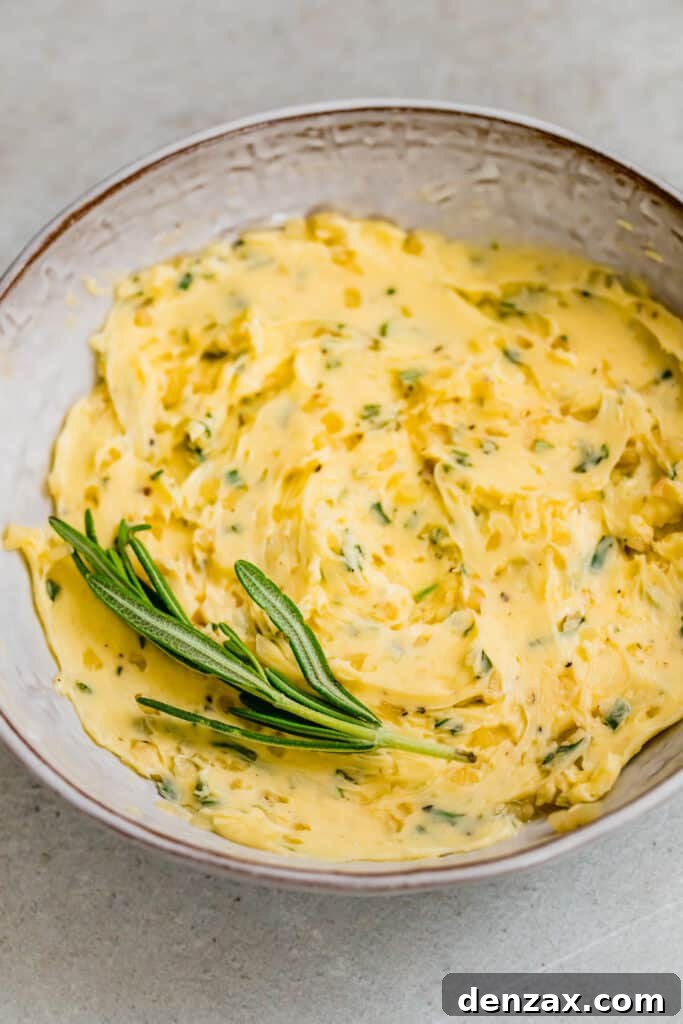
Crafting Your Herb-Infused Butter: The Secret to a Juicy Turkey
The heart of this recipe’s incredible flavor and juiciness lies in the herb-infused butter. This compound butter, artfully tucked under the turkey’s skin, melts slowly during roasting, basting the meat from the inside out and delivering deep, aromatic flavors directly into the breast and thighs.
Key Ingredients for the Aromatic Herb Butter
- A Whole Turkey: We recommend a 10-12 pound bird, fully thawed and ready for preparation.
- Butter: One stick (½ cup) of unsalted butter, softened to room temperature, is essential for creating a spreadable, flavorful mixture.
- Fresh Rosemary: You’ll need about 1 tablespoon of finely chopped fresh rosemary for the butter mixture, plus a few whole sprigs for the cavity. Ensure woody stems are removed before chopping.
- Fresh Garlic: Three cloves of minced or pressed garlic will infuse the butter with a pungent depth. You’ll also use five whole cloves for the turkey cavity.
- Zest of One Lemon: The bright, zesty notes of lemon cut through the richness of the butter and complement the rosemary beautifully.
Additional Cavity Aromatics
To further enhance the turkey’s flavor from the inside, you’ll place these simple aromatics into the cavity:
- Onion: One whole onion, cut in half, contributes a sweet, savory base.
- Whole Garlic Cloves: Five whole garlic cloves will release their gentle flavor during roasting.
- Rosemary Sprigs: Three additional sprigs of fresh rosemary will add their signature fragrance.
Flavorful Basting Liquid
A simple yet effective basting liquid ensures the turkey remains moist and develops a beautiful, golden crust:
- Chicken Stock: Four cups of chicken stock (low-sodium, homemade, or bone broth) will form the base.
- Fresh Rosemary: An additional tablespoon of chopped fresh rosemary for the stock, enhancing the overall herb notes.
- Minced Onion: Two tablespoons of minced onion adds another layer of savory depth to the basting liquid.
Essential Seasoning
- Seasoning Salt: Two tablespoons of your favorite seasoning salt will provide a balanced blend of flavors for the exterior of the turkey. Feel free to use a homemade mix if you prefer.
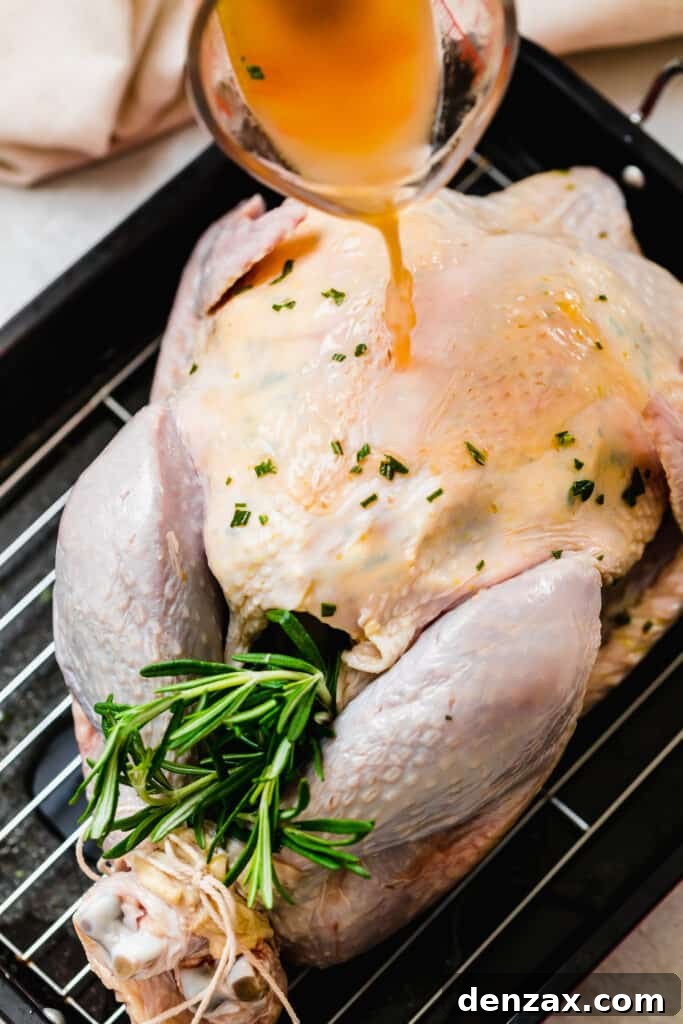
Stuffing the Turkey: A Personal Preference
The question of whether or not to stuff the turkey is a long-standing culinary debate. While it’s certainly a traditional practice, there are important considerations regarding food safety and cooking efficiency. If you choose to stuff your turkey, it’s crucial to ensure both the turkey and the stuffing reach safe internal temperatures. Stuffing cooked inside the bird absorbs juices and flavor, but it also increases the overall cooking time of the turkey. For safety guidelines, always refer to reliable sources like this helpful guide.
Many cooks, including myself, prefer to prepare stuffing on the side in a separate baking dish. This approach offers several advantages: it ensures the stuffing cooks thoroughly and safely, allows the turkey to cook more evenly and often faster, and makes for easier serving and presentation. A beautifully roasted turkey takes center stage, while a delicious side dish of stuffing complements it perfectly.
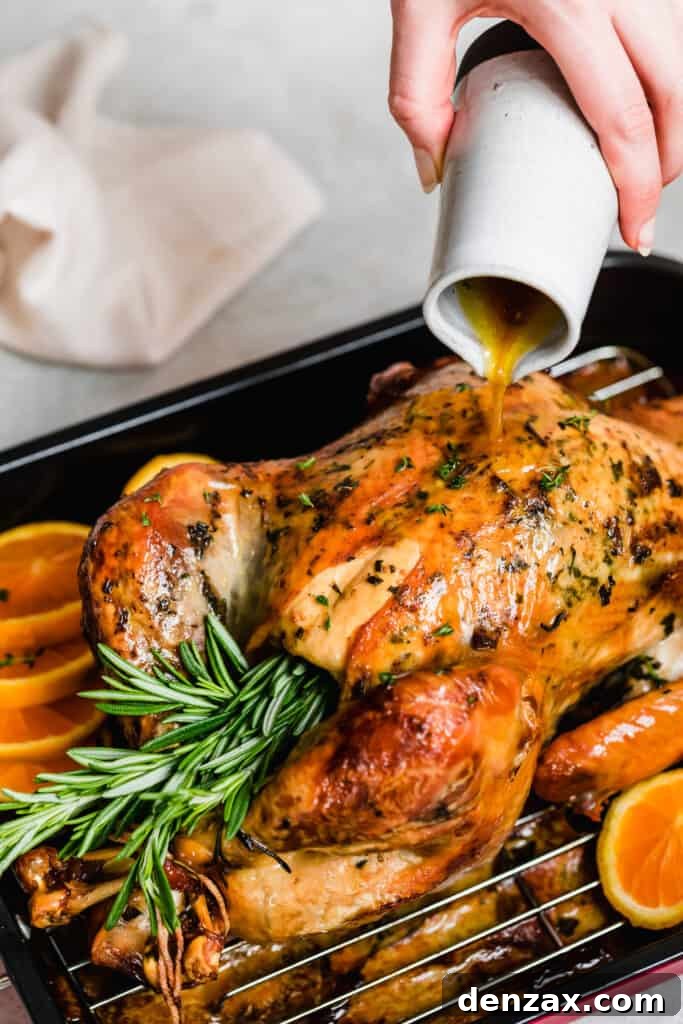
Step-by-Step Guide: Roasting Your Perfect Thanksgiving Turkey
Achieving a golden-brown, juicy turkey is simpler than you might think. Follow these steps for a holiday meal that’s both stress-free and spectacular.
- Preheat Oven: Begin by preheating your oven to 350°F (175°C).
- Prepare the Turkey: Pat the thawed turkey completely dry with paper towels, both inside and out. Remove and discard the giblets from the cavity. Place the turkey on a rack set in a sturdy roasting pan.
- Make Herb Butter: In a small bowl, combine the softened butter, chopped fresh rosemary, minced garlic, and lemon zest. Mix until well combined.
- Apply Herb Butter: Gently separate the skin over the turkey breast to create pockets. Carefully spread the herb butter mixture under the skin, pushing it down towards the thighs as well. This will infuse the meat with incredible flavor and moisture.
- Fill Cavity and Truss: Place the halved onion, five whole garlic cloves, and three rosemary sprigs into the turkey cavity. Use kitchen twine to tie the turkey legs together, and tuck the wings firmly underneath the turkey body.
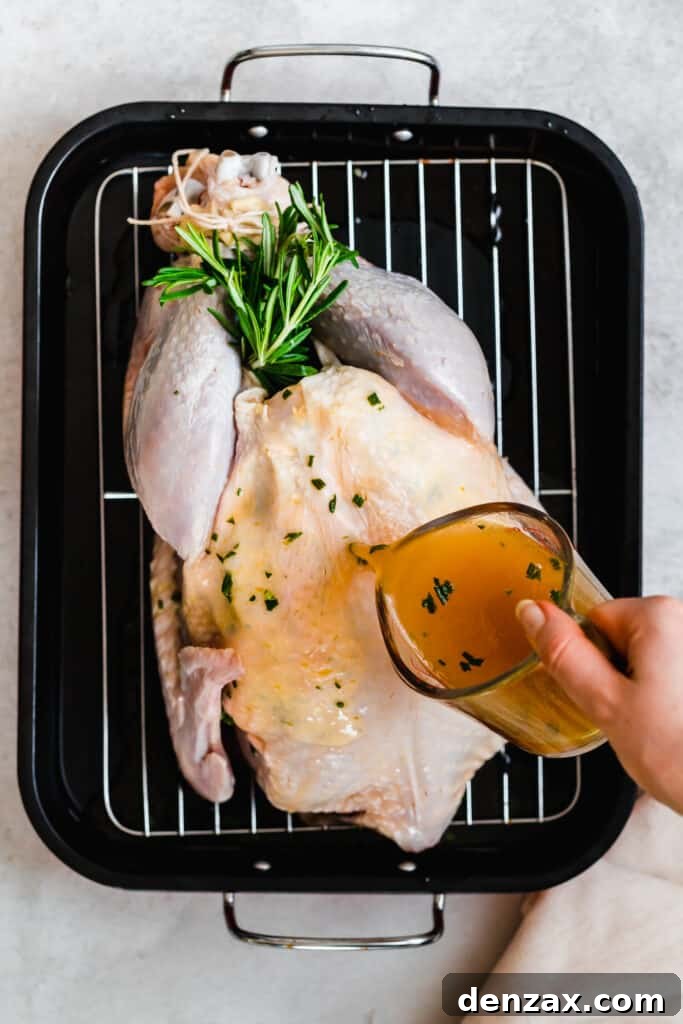
- Prepare Basting Liquid: In a medium bowl, whisk together the chicken stock, an additional tablespoon of chopped rosemary, and the minced onion.
- Season and Pour: Pour the stock mixture around the base of the turkey in the roasting pan. Then, generously sprinkle the seasoning salt all over the exterior of the turkey.
- Initial Roasting: Cover the turkey loosely with aluminum foil to prevent excessive browning. Roast in the preheated oven for 3½ to 4 hours. The roasting time will vary significantly based on the turkey’s size (refer to the roasting time chart below). The turkey is done when an instant-read thermometer inserted into the thickest part of the thigh (not touching bone) reads 170°F (77°C) and the breast registers 160°F (71°C).
- Basting Process: After approximately 40 minutes, carefully remove the turkey from the oven (close the oven door quickly to retain heat). Using a baster, generously baste the turkey with the flavorful juices accumulated in the bottom of the pan. Cover the turkey with foil again and return it to the oven. Repeat this basting process every 40 minutes throughout the roasting time.
- Achieve Golden Brown Skin: For the last 45 minutes of roasting, remove the foil completely. This allows the skin to crisp up and achieve that beautiful, golden-brown color.
- The Essential Rest: Once the turkey reaches its target internal temperature, remove it from the oven and transfer it to a large cutting board or platter. Cover it loosely with foil and let it rest for at least 30 minutes, and ideally up to an hour, before carving. This crucial resting period allows the juices to redistribute throughout the meat, ensuring every slice is incredibly moist and tender. Do not skip this step – cutting too early will result in dry turkey.
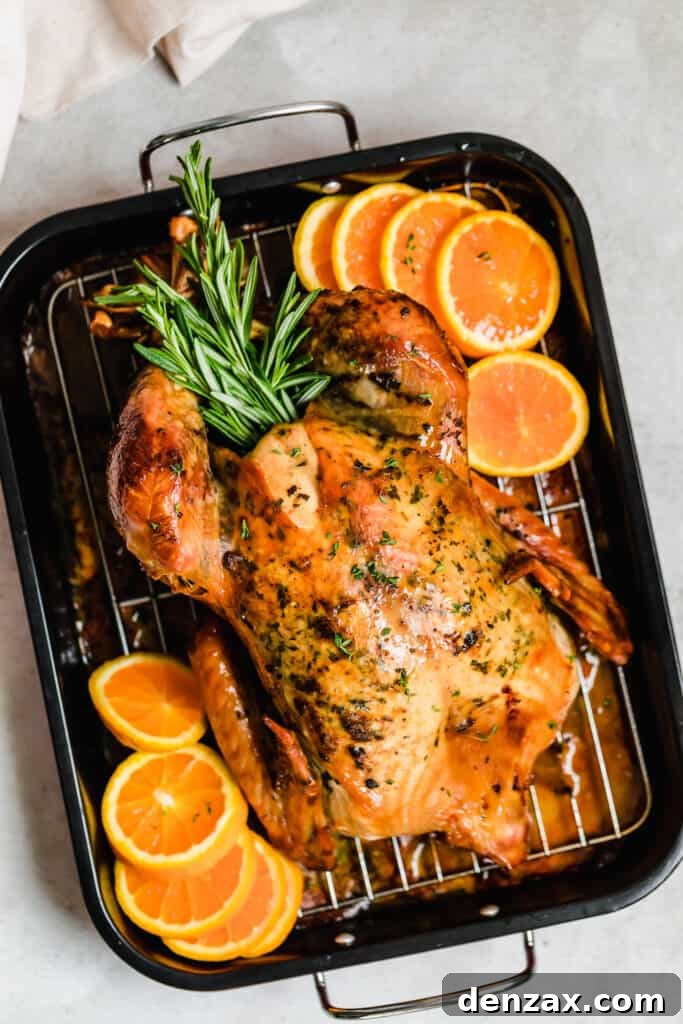
Mastering Turkey Roasting Times and Doneness
One of the most common questions when roasting a turkey is, “How long will it take?” The answer depends primarily on the size of your bird and whether it’s stuffed or unstuffed. A general rule to remember is approximately 20 minutes per pound for an unstuffed turkey. However, always use a meat thermometer to confirm doneness, as oven calibration and turkey variations can affect cooking times.
Roasting Times for an Unstuffed Turkey
For an unstuffed turkey, here are approximate roasting times at 350°F (175°C):
- 6-8 lbs: 2.5 to 3 hours
- 8-12 lbs: 3 to 4 hours
- 12-16 lbs: 4 to 5 hours
- 16-20 lbs: 5 to 5.5 hours
- 20-24 lbs: 5.5 to 6 hours
Roasting Times for a Stuffed Turkey
If you choose to stuff your turkey, remember that the stuffing will also need to reach a safe internal temperature of 165°F (74°C). This typically adds to the overall roasting time. Here are approximate times for a stuffed turkey at 350°F (175°C):
- 6-8 lbs: 3 to 3.5 hours
- 8-12 lbs: 3.5 to 4.5 hours
- 12-16 lbs: 4.5 to 5.5 hours
- 16-20 lbs: 5.5 to 6 hours
- 20-24 lbs: 6 to 6.5 hours
The Ultimate Test: How to Confirm Your Turkey is Done
The only reliable way to tell if your turkey is safely cooked and perfectly juicy is by using a high-quality meat thermometer. An instant-read thermometer is your best tool for accuracy. Begin checking for doneness around 3 hours into the roasting process.
The turkey is fully cooked when the internal temperature reaches 160°F (71°C) in the thickest part of the turkey breast and 170°F (77°C) in the thickest part of the thigh. When inserting the thermometer, be sure it goes into the meat and does not touch any bones, as bones conduct heat differently and can give a false reading. Always check multiple spots to ensure even cooking.
Expert Tips for an Unforgettable Holiday Turkey
Beyond the core recipe, a few extra tricks can elevate your roasted turkey from good to truly exceptional. These insights will help you achieve the best flavor, texture, and presentation for your holiday centerpiece.
Create a Natural Roasting Rack
If your roasting pan doesn’t come with a rack, don’t fret! You can easily create a flavorful and functional one using sturdy vegetables. Simply line the bottom of your roasting pan with thick wedges of onion, whole washed carrots, and robust celery sticks. This natural rack lifts the turkey slightly, allowing for better air circulation and more even cooking, while also infusing the pan drippings with delicious vegetable essence that’s perfect for gravy.
The Non-Negotiable Rest Period
We’ve mentioned it before, but it bears repeating: resting your turkey after roasting is perhaps the most critical step for a juicy bird. After the turkey comes out of the oven, cover it loosely with foil and let it rest for at least 30 minutes, or up to an hour for larger birds. This resting period allows the muscle fibers to relax and reabsorb the juices, which would otherwise spill out onto the cutting board if carved immediately. A well-rested turkey is a juicy turkey, and it’s also much easier to carve.
Achieving Golden, Crispy Skin
Everyone loves crispy turkey skin! To achieve that perfect golden crunch, ensure your turkey is thoroughly patted dry before roasting. The herb butter under the skin also contributes to crispiness. Removing the foil during the last 45 minutes of cooking is essential for browning. For an extra crisp, some chefs briefly increase the oven temperature to 400-425°F (200-220°C) for the last 15-20 minutes, keeping a close eye to prevent burning.
Making Delicious Gravy from Pan Drippings
Don’t let those flavorful pan drippings go to waste! After removing the turkey, pour the drippings through a fine-mesh sieve into a heatproof measuring cup. Allow the fat to separate and rise to the top. Skim off most of the fat (reserving some if you like), then use the remaining flavorful liquid as the base for a rich, homemade gravy. Whisk it with a roux (butter and flour) and extra stock for a truly exceptional accompaniment to your turkey.
Gracefully Carving Your Roast Turkey
Carving a whole roast turkey can seem intimidating, but with a sharp knife and a bit of practice, you can do it like a pro. Remember to let the turkey rest adequately before you begin – this is key to preserving its juiciness.
- Remove the Legs: Start by separating the legs from the body. Carefully cut through the skin between the breast and the thigh, then locate the joint connecting the thigh to the body. Cut through the joint to remove the entire leg (thigh and drumstick together). Repeat on the other side.
- Separate Thigh and Drumstick: Place each leg skin-side down on the cutting board. Cut through the joint that connects the drumstick and thigh. You can serve the drumsticks whole or slice the thigh meat from the bone.
- Carve the Breast Meat: Find the center breastbone and run your knife carefully along one side, cutting downwards and slightly angled, following the contour of the rib bones. This will remove one large breast half. Repeat on the other side. Slice the breast meat against the grain into desired thickness and arrange on your platter.
- Remove the Wings: Finally, cut the wings away from the body at the joint. You can serve them whole as part of the meal or set them aside for another use, such as making stock.
For those who prefer a visual guide, this video tutorial offers excellent detailed instructions.
What to Serve with Your Juicy Roasted Turkey
A magnificent roast turkey deserves an equally impressive spread of side dishes. Here are some delectable pairings that will complete your holiday feast and create a truly memorable dining experience.
- Roasted Vegetables: A medley of seasonal roasted vegetables is always a winner. Our Easy Oven Roasted Vegetables recipe, featuring carrots, potatoes, and Brussels sprouts, is simple to prepare and perfectly complements the rich flavor of the turkey. Their caramelized edges and tender interiors provide a delightful contrast.
- Potatoes, Glorious Potatoes: No holiday meal is complete without potatoes. While classic mashed potatoes are always a hit, consider something a little different this year. Our Hedgehog Roasted Potatoes are not only incredibly delicious with their crispy edges and fluffy centers but also add a touch of playful elegance to your table.
- Cranberry Sauce: A vibrant, tangy cranberry sauce is a must-have accompaniment. Whether homemade or store-bought, its bright flavor provides a refreshing counterpoint to the savory turkey.
- Fresh Bread or Rolls: Warm dinner rolls or a crusty loaf of bread are perfect for soaking up delicious gravy and pan juices.
- Sweet Indulgences: End your feast on a sweet note with a decadent dessert. My delicious Carrot Sheet Cake is a crowd-pleaser, yielding plenty of servings and offering a comforting, spiced sweetness that’s ideal for the holidays.
How to Store and Reheat Leftovers
One of the best parts of roasting a whole turkey is the abundance of delicious leftovers! Proper storage and reheating will ensure you can enjoy your turkey for days to come.
- Storage: To keep leftover turkey fresh and safe, promptly remove all meat from the bone. Store the carved turkey in shallow, airtight containers or heavy-duty food storage bags. This helps prevent exposure to air, which can dry out the meat.
- Refrigerator Life: Properly stored leftover turkey will remain fresh in the refrigerator for up to three days.
- Freezer Life: For longer storage, freeze your cooked turkey. It will maintain its quality in the freezer for up to two months. Thaw frozen turkey in the refrigerator overnight before reheating.
- Reheating: To reheat, place the desired amount of turkey in a covered baking dish. Add a splash of chicken stock or broth to the dish to prevent the meat from drying out. Bake at 350°F (175°C) until heated through, typically about 20-30 minutes, depending on the amount. Avoid reheating to a high temperature, which can make the meat tough.
Whole Roast Turkey Recipe
A classic whole roast turkey recipe, featuring fresh lemon, rosemary, garlic, and butter, yielding a juicy and flavorful centerpiece.
5 from 1 vote
Whole Roast Turkey
by Katerina | Easy Weeknight Recipes
A classic whole roast turkey recipe, featuring fresh lemon, rosemary, garlic, and butter.
Prep Time: 20 minutes
Cook Time: 4 hours
Total Time: 5 hours
Servings: 10
Ingredients
- 1 10 to 12 pound whole turkey, thawed
- ½ cup unsalted butter, softened (recommended product)
- 1 tablespoon fresh rosemary, chopped
- 3 cloves garlic, minced
- Zest of 1 lemon
- 1 onion, halved
- 5 garlic cloves (whole)
- 3 sprigs of rosemary (whole)
- 4 cups chicken stock (recommended product)
- 1 tablespoon fresh rosemary, chopped (for stock)
- 2 tablespoons minced onion (for stock)
- 2 tablespoons seasoning salt (recommended product)
Instructions
- Preheat oven to 350°F (175°C).
- Pat dry the turkey and discard the giblets. Place turkey on a rack set in a roasting pan.
- In a small bowl, combine the butter, fresh rosemary, minced garlic, and lemon zest.
- Separate the skin over the breast to make pockets and fill with the butter mixture; rub it all around and to the thighs.
- Place the halved onion, garlic cloves, and rosemary sprigs into the turkey cavity.
- Tie the legs together with kitchen twine and tuck the wings under the turkey.
- In a medium bowl, combine the stock, rosemary, and minced onion.
- Pour the stock mixture over the turkey and then sprinkle over the seasoning salt.
- Cover the turkey with foil, and bake at 350°F (175°C) for 3½ to 4 hours, or until the internal temperature of the turkey reaches 170°F (77°C) at the thigh and 160°F (71°C) at the breast. (Roasting time will depend on turkey size – see chart above or notes below.)
- After about 40 minutes remove the turkey from the oven (close the door to keep the heat in) and baste with the juices in the pan. Cover with foil again and put the turkey back in the oven. Repeat basting every 40 minutes.
- For the last 45 minutes or so, remove the foil so the turkey can brown.
- Once the turkey has tested done with a thermometer – internal temperature should register at 160°F (71°C) at the breast – remove from the oven and cover loosely with foil. Let rest for at least 30 minutes before carving. Don’t cut it before resting – if you do, you will lose all the juice and end up with dry turkey meat.
Notes
Roasting Times for an Unstuffed Turkey
- 6-8lbs = 2.5 to 3 hours
- 8-12lbs = 3 to 4 hours
- 12-16lbs = 4 to 5 hours
- 16-20lbs = 5 to 5.5 hours
- 20-24lbs = 5.5 to 6 hours
Nutrition (Estimated Per Serving)
Calories: 559kcal | Carbohydrates: 3g | Protein: 72g | Fat: 28g | Saturated Fat: 11g | Cholesterol: 256mg | Sodium: 1866mg | Potassium: 828mg | Fiber: 1g | Sugar: 1g | Vitamin A: 476IU | Vitamin C: 2mg | Calcium: 49mg | Iron: 3mg
Nutritional information is an estimate and provided as a courtesy. Values may vary according to the ingredients and tools used. Please use your preferred nutritional calculator for more detailed info.
Your Best Thanksgiving Turkey Yet!
With these comprehensive tips and our easy-to-follow recipe, you are well-equipped to roast a magnificent, juicy, and flavorful whole turkey that will be the undisputed highlight of your holiday meal. From selecting the perfect bird to mastering the carving technique, every step is designed to ensure success. So gather your ingredients, embrace the festive spirit, and prepare to impress your loved ones with a show-stopping Thanksgiving turkey. Happy cooking!